+
India Must Reinvest in Civilisational Values for Prosperity: Bangur
ECONOMY & POLICY

India Must Reinvest in Civilisational Values for Prosperity: Bangur

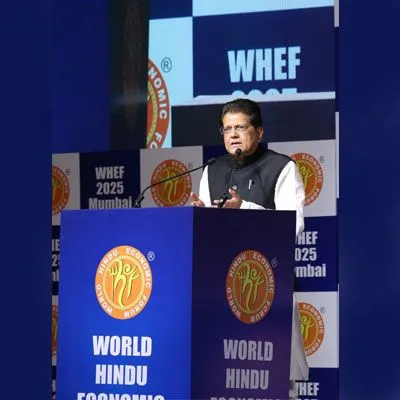
The World Hindu Economic Forum (WHEF) 2025 was inaugurated in Mumbai, marking the start of a two-day conference themed Innovation, Self Reliance and Prosperity. The opening ceremony was led by Devendra Fadnavis, Chief Minister, Maharashtra, and attended by Mohan Yadav, Chief Minister, Madhya Pradesh, along with Swami Vigyananand, Founder, WHEF, Rajesh Sharma, Chairman, WHEF Organising Committee, senior policymakers and leading industrialists.

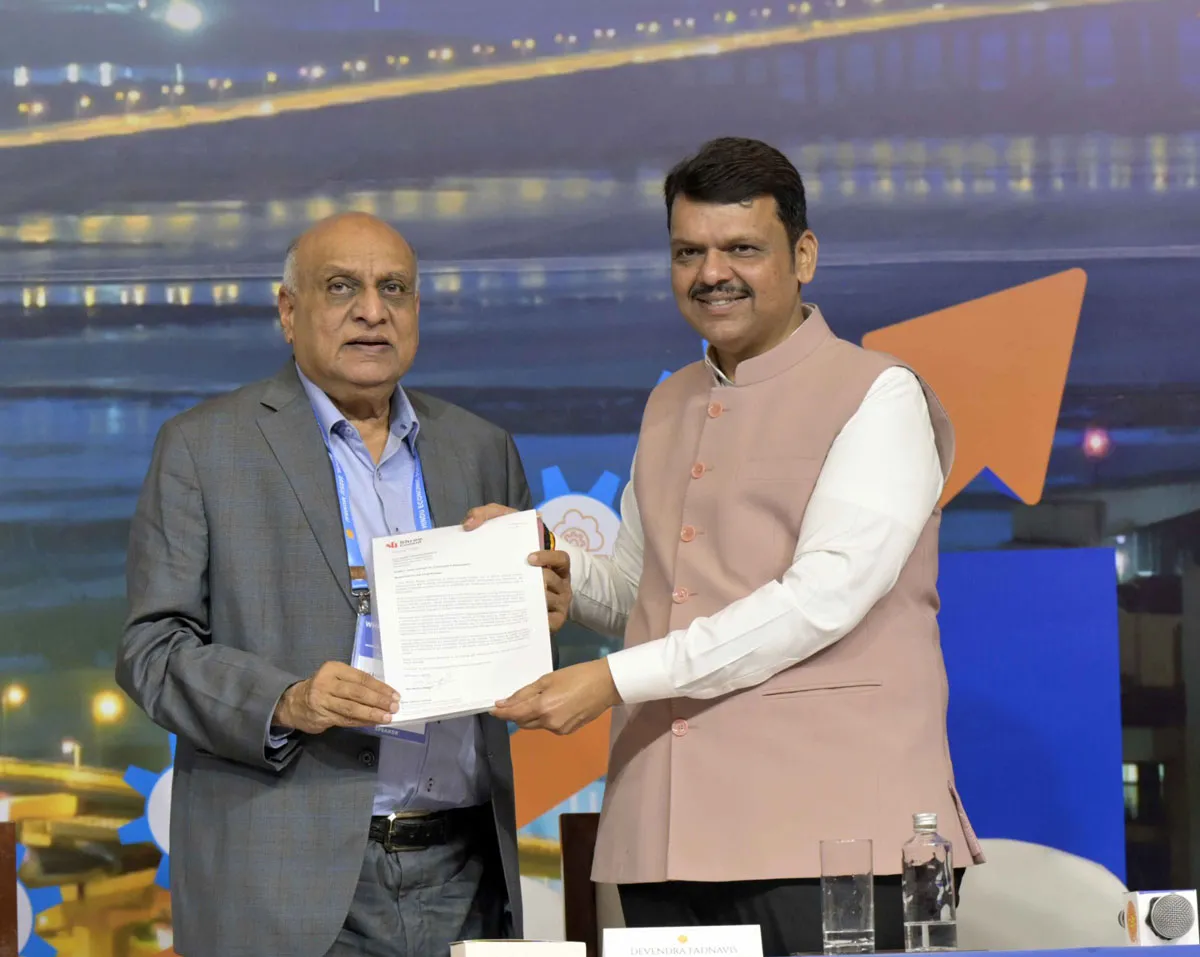
A major highlight of the inaugural session was the address by Hari Mohan Bangur, Chairman, Shree Cement Ltd, who underscored India’s inherent strengths in talent, resources and technology, asserting that the country need not look beyond its own civilisation for inspiration. On the occasion, Bangur also presented a letter of intent to invest ₹2,000 crore in Maharashtra to Devendra Fadnavis.

Emphasising the ethical roots of Indian economic thinking, Bangur said that in Indian culture, dharma guides artha, and profitability must be aligned with responsibility. “We must get out of the Macaulayan education system and reinvest in our old values. For centuries India alone accounted for nearly 30 per cent of the world economy. But something negative happened with the coming of Europeans who successfully looted the country. A Hindu Economic Forum was necessary and it has been created and is working fine. The Forum may take a year or 10 years, but it will surely be successful,” he said.

Sharing Shree Cement’s experience in innovation, Bangur highlighted advances in energy efficiency that enabled power plants to operate at lower capacity utilisation, reducing coal consumption. “We should unshackle ourselves and bring innovation in our thinking and in our education,” he added.

Addressing the gathering, Devendra Fadnavis described WHEF as an important platform for dialogue and collaboration, noting that a deeper understanding of India’s philosophical foundations could help build a prosperous and harmonious society. Meanwhile, Mohan Yadav highlighted India’s rising global standing and Madhya Pradesh’s role in driving growth across sectors including mining, energy and tourism.

The World Hindu Economic Forum (WHEF) 2025 was inaugurated in Mumbai, marking the start of a two-day conference themed Innovation, Self Reliance and Prosperity. The opening ceremony was led by Devendra Fadnavis, Chief Minister, Maharashtra, and attended by Mohan Yadav, Chief Minister, Madhya Pradesh, along with Swami Vigyananand, Founder, WHEF, Rajesh Sharma, Chairman, WHEF Organising Committee, senior policymakers and leading industrialists.A major highlight of the inaugural session was the address by Hari Mohan Bangur, Chairman, Shree Cement Ltd, who underscored India’s inherent strengths in talent, resources and technology, asserting that the country need not look beyond its own civilisation for inspiration. On the occasion, Bangur also presented a letter of intent to invest ₹2,000 crore in Maharashtra to Devendra Fadnavis.Emphasising the ethical roots of Indian economic thinking, Bangur said that in Indian culture, dharma guides artha, and profitability must be aligned with responsibility. “We must get out of the Macaulayan education system and reinvest in our old values. For centuries India alone accounted for nearly 30 per cent of the world economy. But something negative happened with the coming of Europeans who successfully looted the country. A Hindu Economic Forum was necessary and it has been created and is working fine. The Forum may take a year or 10 years, but it will surely be successful,” he said.Sharing Shree Cement’s experience in innovation, Bangur highlighted advances in energy efficiency that enabled power plants to operate at lower capacity utilisation, reducing coal consumption. “We should unshackle ourselves and bring innovation in our thinking and in our education,” he added.Addressing the gathering, Devendra Fadnavis described WHEF as an important platform for dialogue and collaboration, noting that a deeper understanding of India’s philosophical foundations could help build a prosperous and harmonious society. Meanwhile, Mohan Yadav highlighted India’s rising global standing and Madhya Pradesh’s role in driving growth across sectors including mining, energy and tourism.

Next Story
Infrastructure Transport

Second Mountain Tunnel Breakthrough in Palghar Advances High Speed Rail

The Mumbai-Ahmedabad high speed rail (MAHSR) project reached a milestone with the breakthrough of a mountain tunnel in Palghar, Maharashtra. Mountain tunnel MT-six measures 454 metres long and 14.4 metres wide and will accommodate up and down tracks. The breakthrough follows MT-five near Saphale on second January 2026 and the MT-six excavation was completed from both ends using the New Austrian Tunnelling Method. The ministry reported that the tunnelling was completed within 12 months. The New Austrian Tunnelling Method is favoured for its flexibility in complex geology and irregular tunnel s..

Next Story
Infrastructure Transport

Modi Government Pushes Atmanirbhar Container Drive With BCSL MoU

The Union Government advanced a plan to create an integrated, domestically anchored container ecosystem with the signing of a Memorandum of Understanding to establish the Bharat Container Shipping Line (BCSL). The MoU was signed by key agencies including the Shipping Corporation of India and Container Corporation of India alongside major port authorities and Sagarmala Finance Corporation Limited under the Ministry of Ports, Shipping and Waterways, in the presence of senior ministers. The initiative aligns with the Container Manufacturing Assistance Scheme announced in the Union Budget 2026–2..

Next Story
Infrastructure Urban

Ministry Reports Gains In Mobility For Marginalised Communities

The Ministry of Social Justice and Empowerment is implementing skill development, education and rehabilitation schemes to promote socio-economic mobility and sustainable livelihoods for marginalised and disadvantaged communities across the country. Programmes target Scheduled Castes, Other Backward Classes, Economically Weaker Sections, De-notified Tribes and Safai Karamcharis through specialised implementing corporations and empanelled training institutes. Pradhan Mantri Dakshata Aur Kushalta Sampann Hitgrahi Yojana, or PM-DAKSH, provided skill training and placement support through the Nati..

Advertisement

Subscribe to Our Newsletter

Get daily newsletters around different themes from Construction world.

STAY CONNECTED

Advertisement

Advertisement

Advertisement

Open In App