+
Kishan Reddy Urges State To Secure Koyagudem Block Three
ECONOMY & POLICY

Kishan Reddy Urges State To Secure Koyagudem Block Three

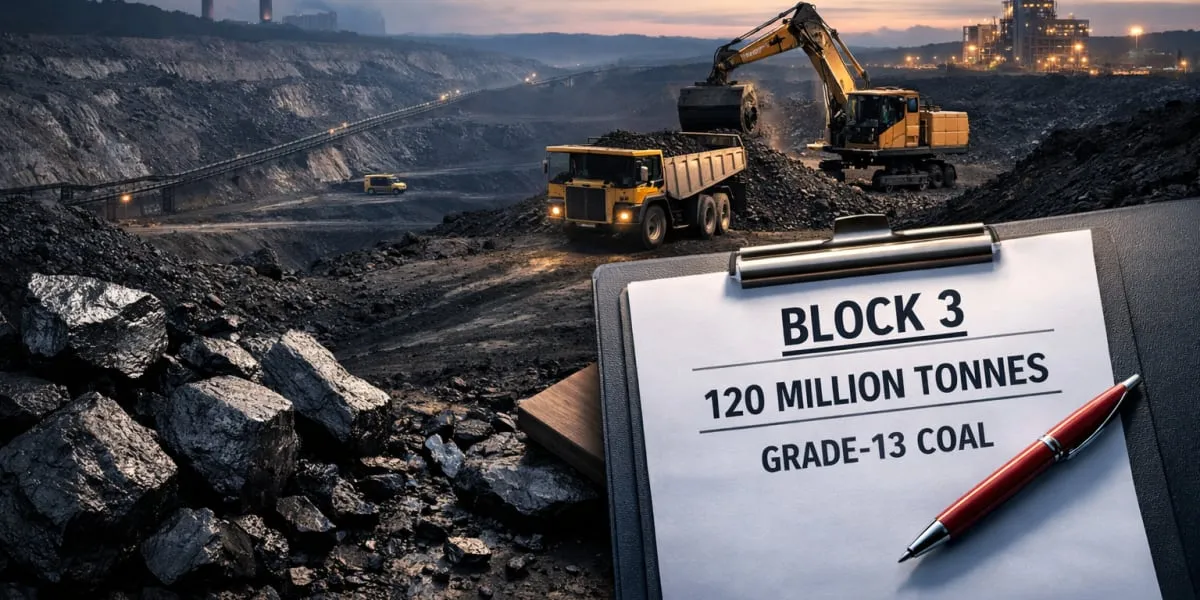
Union Minister for Coal and Mines G Kishan Reddy sought cooperation from the Telangana government over Koyagudem Block Three in Bhadradri Kothagudem district, saying the private firm that had won the auction failed to commence production within the stipulated timeframe. The allocation was cancelled and the centre has pursued allocation to Singareni Collieries. The block holds the potential to yield 120 million tonnes (mn t) of Grade-13 coal.

He said the mine had been auctioned on two occasions and that the then-ruling Bharat Rashtra Samithi had prevented Singareni from participating, which allowed a private firm to secure it. As that firm failed to begin production, the block was reclaimed and reopened for allocation. Since taking office he has prioritised cutting wasteful expenditure, boosting output and securing coal allocations for Singareni.

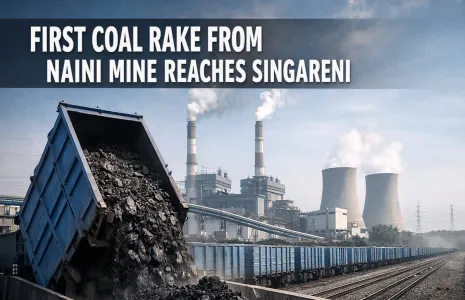
An agreement has been finalised to supply coal from the Naini coal block in Odisha to the Yadadri power plant, and steps were taken to secure the Tadicherla-Two block for Singareni. The minister also pursued the PKOC Two open-cast dip-side block and said efforts were under way to acquire a further block. He noted that GENCO had bid for the Manuguru PKOC dip-side block and that intervention ensured allocation to Singareni.

He warned that Singareni faced severe financial strain, with salaries being met through overdrafts, and that securing new coal blocks was the only sustainable remedy. He urged the state to cut wasteful spending and to release the outstanding dues of Rs 550 billion (bn) owed to Singareni, saying the stance had not changed under the previous BRS administration or the current Congress government. Withholding revenue from coal, he added, would deprive workers of the fruits of their labour and weaken the company's viability.

He appealed for cooperation to secure the Manuguru dip-side block this time and called for prompt action to expedite settlement of dues. He argued that immediate relief and continued allocation of productive blocks were essential to restore output and stabilise finances.

Union Minister for Coal and Mines G Kishan Reddy sought cooperation from the Telangana government over Koyagudem Block Three in Bhadradri Kothagudem district, saying the private firm that had won the auction failed to commence production within the stipulated timeframe. The allocation was cancelled and the centre has pursued allocation to Singareni Collieries. The block holds the potential to yield 120 million tonnes (mn t) of Grade-13 coal. He said the mine had been auctioned on two occasions and that the then-ruling Bharat Rashtra Samithi had prevented Singareni from participating, which allowed a private firm to secure it. As that firm failed to begin production, the block was reclaimed and reopened for allocation. Since taking office he has prioritised cutting wasteful expenditure, boosting output and securing coal allocations for Singareni. An agreement has been finalised to supply coal from the Naini coal block in Odisha to the Yadadri power plant, and steps were taken to secure the Tadicherla-Two block for Singareni. The minister also pursued the PKOC Two open-cast dip-side block and said efforts were under way to acquire a further block. He noted that GENCO had bid for the Manuguru PKOC dip-side block and that intervention ensured allocation to Singareni. He warned that Singareni faced severe financial strain, with salaries being met through overdrafts, and that securing new coal blocks was the only sustainable remedy. He urged the state to cut wasteful spending and to release the outstanding dues of Rs 550 billion (bn) owed to Singareni, saying the stance had not changed under the previous BRS administration or the current Congress government. Withholding revenue from coal, he added, would deprive workers of the fruits of their labour and weaken the company's viability. He appealed for cooperation to secure the Manuguru dip-side block this time and called for prompt action to expedite settlement of dues. He argued that immediate relief and continued allocation of productive blocks were essential to restore output and stabilise finances.

Related Stories

Gold Stories

Next Story
Real Estate

BMC OC Amnesty Scheme Requires Key Approvals from Mumbai Societies

The Brihanmumbai Municipal Corporation (BMC) has clarified that housing societies applying under its Occupation Certificate (OC) amnesty scheme must possess key approvals linked to the original construction. The requirements include a valid Intimation of Disapproval (IOD), an approved building plan and a Commencement Certificate (CC), along with a No Objection Certificate (NOC) from the developer or original construction applicant. The Standard Operating Procedure (SOP) makes clear that the absence of an OC alone will not qualify a building for relief. Societies must establish that their build..

Next Story
Real Estate

Gurugram Emerges as Luxury Senior Living Hub

Gurugram is emerging as a potential hub for luxury senior living, supported by available land, healthcare infrastructure, connectivity and a concentration of affluent professionals, high-net-worth individuals and non-resident Indians. These factors could give the city an advantage over land-constrained metros such as Mumbai. A report by the Association of Senior Living India (ASLI) and JLL estimates that India’s organised senior living market could represent a $10.1 bn opportunity by 2030. The sector had about 25,050 organised units as of June 2026, while penetration stood at only 1.5 per ce..

Next Story
Real Estate

Corrosion Costs India’s Infrastructure Rs. 142 bn Annually

Corrosion costs India an estimated Rs. 1.42 tn annually, equivalent to 4.3 per cent of gross domestic product, according to a report by the Confederation of Indian Industry and the National Research Institute. Infrastructure accounts for Rs. 142 bn of the annual burden, making it the sector with the largest absolute cost among those examined. The report, presented at the CII Annual Infrastructure Summit 2026, said the infrastructure-sector cost equals about 2.9 per cent of the sector’s gross domestic product. It estimated that effective measures could generate maximum savings of Rs. 495.8 bn..

Advertisement

Subscribe to Our Newsletter

Get daily newsletters around different themes from Construction world.

STAY CONNECTED

Advertisement

SPECIAL OFFER
QR Code