

Ladakh LG Approves 30 Ladakhi Smart Bus Shelters
ECONOMY & POLICY

Ladakh LG Approves 30 Ladakhi Smart Bus Shelters

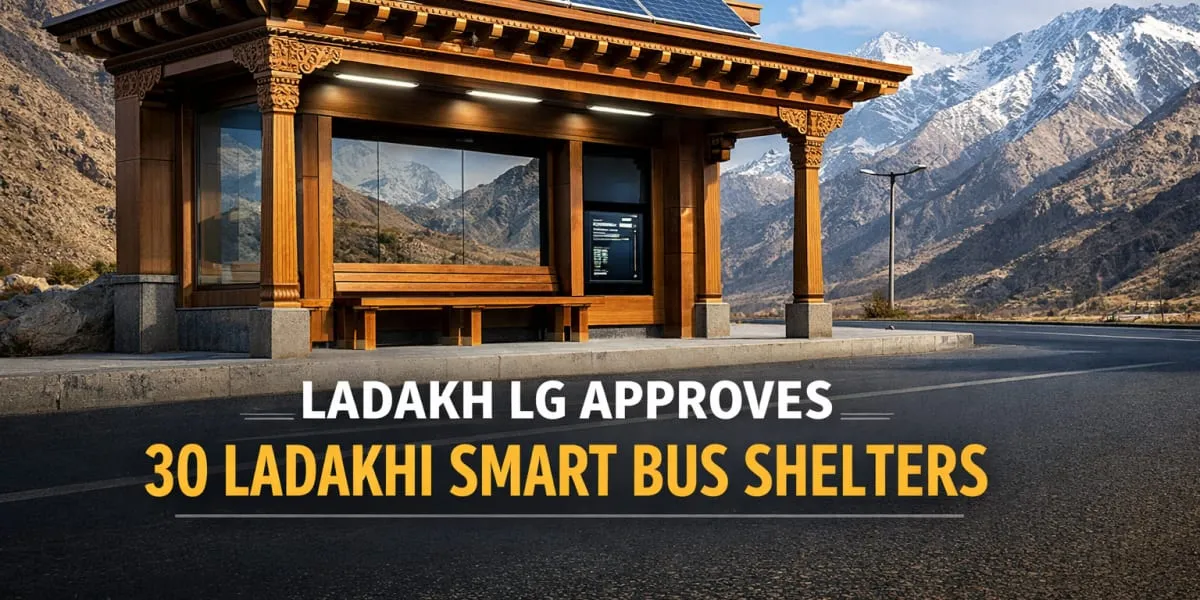
The Ladakh Lieutenant Governor has approved the construction of 30 unique Ladakhi smart bus shelters across the Union territory to improve public transport infrastructure and commuter amenities. The project forms part of a wider push to modernise urban mobility while reflecting local identity. Designs commissioned draw on traditional Ladakhi aesthetics and integrate resilience to high altitude weather conditions with contemporary utility for users.

The shelters include energy efficient systems, seating and information displays to assist commuters while preserving the landscape. Materials selection prioritises local stone and timber where feasible to reduce visual impact and to support traditional craftsmanship. Attention to insulation and wind resistance has been incorporated to ensure year round usability in harsh climatic conditions prevalent at altitude.

The shelters will enhance last mile connectivity, provide safer waiting areas and deliver reliable timetable information to reduce uncertainty for passengers. The initiative aligns with broader goals to encourage public transport use and to provide sheltered access for vulnerable groups and school children. Local transport operators are being consulted to integrate stops into existing routes and to schedule services in a manner that maximises accessibility for residents and visitors.

Implementation will be overseen by the administration in coordination with district authorities, with maintenance frameworks designed to ensure longevity of assets. Community engagement forms a component of the rollout to ensure that shelter locations and functions reflect local needs. The project will create short term employment opportunities during construction and will support small scale local suppliers through procurement of materials and services, contributing to the local economy in the near term.

Officials noted that timelines and exact locations will be finalised following surveys and consultations, with an emphasis on phased delivery to manage logistics. Monitoring arrangements are to be established to track performance and maintenance needs and community feedback periodically reviewed.

The Ladakh Lieutenant Governor has approved the construction of 30 unique Ladakhi smart bus shelters across the Union territory to improve public transport infrastructure and commuter amenities. The project forms part of a wider push to modernise urban mobility while reflecting local identity. Designs commissioned draw on traditional Ladakhi aesthetics and integrate resilience to high altitude weather conditions with contemporary utility for users. The shelters include energy efficient systems, seating and information displays to assist commuters while preserving the landscape. Materials selection prioritises local stone and timber where feasible to reduce visual impact and to support traditional craftsmanship. Attention to insulation and wind resistance has been incorporated to ensure year round usability in harsh climatic conditions prevalent at altitude. The shelters will enhance last mile connectivity, provide safer waiting areas and deliver reliable timetable information to reduce uncertainty for passengers. The initiative aligns with broader goals to encourage public transport use and to provide sheltered access for vulnerable groups and school children. Local transport operators are being consulted to integrate stops into existing routes and to schedule services in a manner that maximises accessibility for residents and visitors. Implementation will be overseen by the administration in coordination with district authorities, with maintenance frameworks designed to ensure longevity of assets. Community engagement forms a component of the rollout to ensure that shelter locations and functions reflect local needs. The project will create short term employment opportunities during construction and will support small scale local suppliers through procurement of materials and services, contributing to the local economy in the near term. Officials noted that timelines and exact locations will be finalised following surveys and consultations, with an emphasis on phased delivery to manage logistics. Monitoring arrangements are to be established to track performance and maintenance needs and community feedback periodically reviewed.

Next Story
Infrastructure Urban

Greenply Launches Ecotec Prime Plywood

Greenply Industries has launched Ecotec Prime, strengthening its economy plywood portfolio with a product designed to offer both fire and water protection. The plywood combines IS 5509 certified fire-retardant technology with Boiling Waterproof grade performance.The company said the launch addresses a gap in the affordable plywood segment, where safety-led features have largely been limited to premium categories. Backed by a 20-year warranty, Ecotec Prime is positioned for homes, offices, commercial spaces, hospitals, hotels, malls and government projects.Greenply said the product aims to make..

Next Story
Infrastructure Energy

BorgWarner Wins Two Asian Powertrain Orders

BorgWarner has secured two new conquest programme awards in Asia, strengthening its propulsion and drivetrain business. The awards include a latest-generation wet dual clutch for a Chinese OEM’s SUV platform and a torsional assist variable cam timing system for a Japanese OEM’s next-generation hybrid engine.The wet dual clutch combines high-performance wet friction materials with an optimised groove design to reduce drag torque, improving transmission efficiency and fuel economy. It also offers smoother launch and shift performance at lower actuation pressure, while an integrated wave spri..

Next Story
Real Estate

42MM Designs Climate-Responsive Summer Home

42MM Architecture has introduced Spaces That Breathe: Designing Homes Around Summer Rhythms, a residence designed around the realities of Indian summers. The home responds to heat through built form, orientation, shading and material use rather than relying primarily on applied systems.The design is arranged as layered volumes, with projecting upper floors, recessed glazing, shaded edges, vertical fins and screened facades helping reduce heat gain while supporting controlled ventilation. A central landscaped court brings light and air into the house, while living areas are oriented towards thi..

Advertisement

Subscribe to Our Newsletter

Get daily newsletters around different themes from Construction world.

STAY CONNECTED

Advertisement

Advertisement

Advertisement