
Maruti Plans Flexible EV Production
ECONOMY & POLICY

Maruti Plans Flexible EV Production

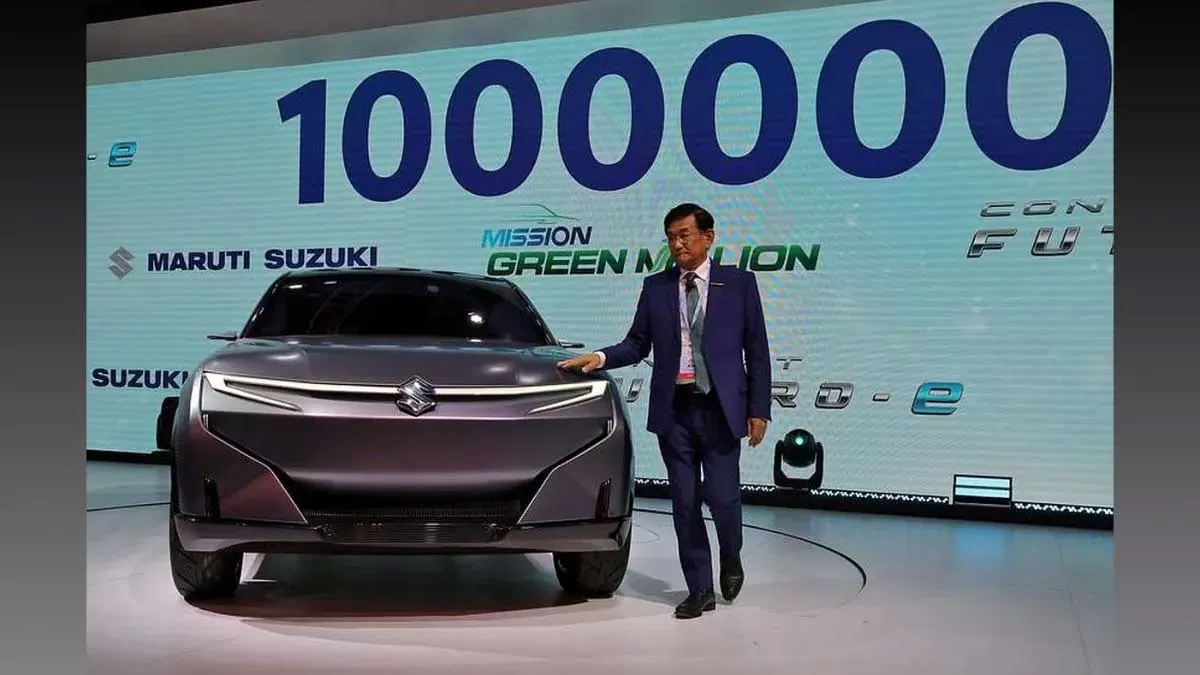
Maruti Suzuki India (MSI), the country’s largest carmaker, is preparing for a major production revamp by 2030-31, targeting an additional 2 million units in annual capacity and a portfolio of 28 different models, including electric vehicles (EVs).

Currently, MSI manufactures around 2.6 million vehicles annually from its facilities in Haryana and Gujarat. This includes 1.6 million units from its Gurugram and Manesar plants, and 750,000 units from Suzuki Motor Gujarat. The newly operational Kharkhoda plant will initially contribute 250,000 units per year, starting with the production of the Brezza compact SUV.

To future-proof its operations, Maruti is making its plants more model-agnostic and EV-ready, said Rahul Bharti, Senior Executive Officer (Corporate Affairs), during an analyst call. “Newer lines are being designed to handle heavier EV models, factoring in battery weight and reinforced body structures,” he said.

Maruti’s first electric vehicle, the e-Vitara, is scheduled for launch in September 2025, with a major portion of its initial production aimed at overseas markets. However, Bharti acknowledged that EV profitability would remain lower than internal combustion engine (ICE) models for the foreseeable future.

He emphasized that government support, such as 5% GST and incentive schemes, plays a vital role in making EVs financially viable.

Beyond EVs, Maruti aims to adopt multiple decarbonisation technologies to reduce its carbon footprint. "We will try to leverage all possible technologies to supplement our EV efforts,” Bharti noted.

On the regulatory front, MSI expects the CAFE-III norms, which target reduced CO? emissions, to be finalized within the next one to two months. The industry is actively engaging with the Ministry of Power and Bureau of Energy Efficiency on this front.

Bharti also stressed the strategic importance of exports, which could help offset lower EV margins by improving economies of scale and offering better pricing power in select global markets

"Join industry leaders at RAHSTA Expo, India's premier platform for roads, highways and traffic infrastructure. Register now to explore innovations, network with experts and shape the future of mobility."

Maruti Suzuki India (MSI), the country’s largest carmaker, is preparing for a major production revamp by 2030-31, targeting an additional 2 million units in annual capacity and a portfolio of 28 different models, including electric vehicles (EVs). Currently, MSI manufactures around 2.6 million vehicles annually from its facilities in Haryana and Gujarat. This includes 1.6 million units from its Gurugram and Manesar plants, and 750,000 units from Suzuki Motor Gujarat. The newly operational Kharkhoda plant will initially contribute 250,000 units per year, starting with the production of the Brezza compact SUV. To future-proof its operations, Maruti is making its plants more model-agnostic and EV-ready, said Rahul Bharti, Senior Executive Officer (Corporate Affairs), during an analyst call. “Newer lines are being designed to handle heavier EV models, factoring in battery weight and reinforced body structures,” he said. Maruti’s first electric vehicle, the e-Vitara, is scheduled for launch in September 2025, with a major portion of its initial production aimed at overseas markets. However, Bharti acknowledged that EV profitability would remain lower than internal combustion engine (ICE) models for the foreseeable future. He emphasized that government support, such as 5% GST and incentive schemes, plays a vital role in making EVs financially viable. Beyond EVs, Maruti aims to adopt multiple decarbonisation technologies to reduce its carbon footprint. We will try to leverage all possible technologies to supplement our EV efforts,” Bharti noted. On the regulatory front, MSI expects the CAFE-III norms, which target reduced CO? emissions, to be finalized within the next one to two months. The industry is actively engaging with the Ministry of Power and Bureau of Energy Efficiency on this front. Bharti also stressed the strategic importance of exports, which could help offset lower EV margins by improving economies of scale and offering better pricing power in select global markets

Next Story
Real Estate

Pecan Realty Completes Rs 1.5 Billion Transactions

Pecan Realty has recently completed four institutional transactions worth over Rs 1.5 billion over the past two years, strengthening its position as an execution-led real estate platform. The deals include resolution-led acquisitions, structured finance transactions and capital partnerships across its development portfolio.The transactions covered acquisitions through the National Company Law Tribunal process and helped provide repayment or exits to both private and public sector lenders. The company said the deals demonstrate its ability to resolve complex project situations, work with instit..

Next Story
Real Estate

SNN Estates Expands North Bengaluru Housing Project

SNN Estates has announced an expansion of its SNN Estates Felicity residential project in North Bengaluru following strong buyer demand, with 75 per cent of the first-phase inventory sold within three days of launch.The developer will add 76 apartments in the new phase, taking the project's estimated revenue potential to around Rs 1,000 crore upon completion of Phase 2.Spread across 6.5 acres in Rachenahalli, near Manyata Tech Park, the project comprises 604 apartments in 1.5, 2, 2.5, 3 and 4 BHK configurations. The development includes a 50,000-sq-ft clubhouse with amenities such as sports co..

Next Story
Infrastructure Urban

SCG Drives ASEAN Industrial Transformation Strategy

SCG is strengthening its focus on ASEAN as a key growth region by advancing industrial transformation, enhancing competitiveness and building resilient regional value chains. Thammasak Sethaudom, President and Chief Executive Officer, SCG, highlighted the need for industries to continuously develop capabilities, strengthen resilience and deepen regional cooperation to achieve sustainable long-term growth.SCG views ASEAN as an important growth engine alongside China, supported by favourable demographics, trade connectivity and investment flows. With ASEAN’s GDP projected to grow by around 4.7..

Advertisement

Subscribe to Our Newsletter

Get daily newsletters around different themes from Construction world.

STAY CONNECTED

Advertisement

Advertisement

Advertisement