Modi Says Carbon Emission Burden Unfairly Placed on Developing Nations
ECONOMY & POLICY

Modi Says Carbon Emission Burden Unfairly Placed on Developing Nations

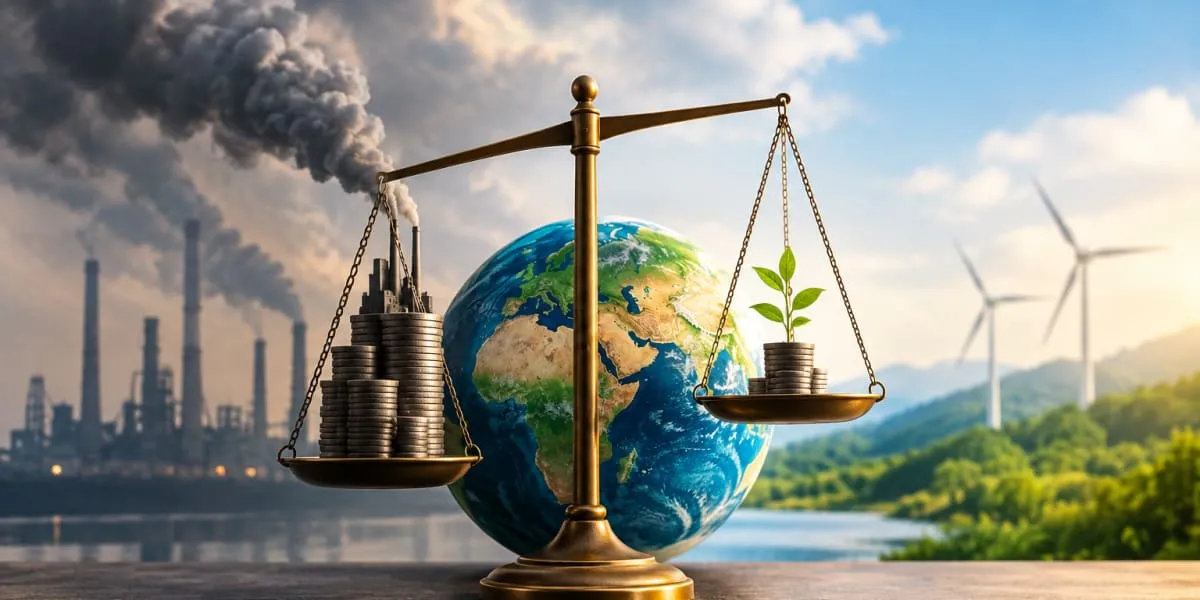
Prime Minister Narendra Modi said the responsibility for carbon emissions was often and unfairly placed on developing nations, despite per capita emissions in developed countries being six times higher than India’s. He was speaking at the National Green Tribunal’s international conference on the future of environment and climate dynamics, attended by Chief Justice of India Surya Kant, Environment Minister Bhupender Yadav, Attorney General R Venkataramani and NGT chairperson Justice Prakash Shrivastava.

Modi said India’s per capita carbon emissions remained less than half the global average. He also defended the government’s plans to expand nuclear energy, noting that groups that advocate environmental protection had opposed some clean energy projects through court proceedings. He urged Indians to present the country’s emissions record and development approach more firmly to the world.

The Prime Minister highlighted the International Solar Alliance, Global Biofuel Alliance and International Big Cat Alliance as examples of India’s global initiatives. He said India was the only G20 country to fulfil its COP21 Paris climate commitments ahead of schedule. Solar power capacity has increased from 2 GW in 2012 to 160 GW, while 3 mn farmers have received solar pumps under the Kusum scheme. The One Nation One Grid project, he said, had prevented 200 mn tonnes of carbon emissions.

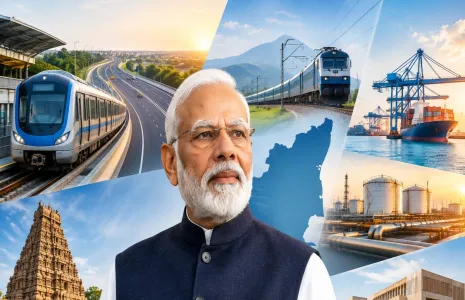
Modi also pointed to progress in clean mobility. Annual electric vehicle sales have risen to 2.5 mn from 3,000 in 2014, while metro networks have expanded from five cities and fewer than 250 km before 2014 to more than 1,000 km across 20 cities. He added that 100 per cent railway electrification, inland waterways and about 3,000 km of dedicated freight corridors were helping reduce fuel consumption.

Surya Kant said courts were increasingly focused on harmonising conservation and development, while recognising climate-related rights. Yadav said the choice was between sustainable development and growth that could not be sustained. He also cited gains in tiger, elephant and lion populations, along with conservation efforts for the Great Indian Bustard and vultures.

Prime Minister Narendra Modi said the responsibility for carbon emissions was often and unfairly placed on developing nations, despite per capita emissions in developed countries being six times higher than India’s. He was speaking at the National Green Tribunal’s international conference on the future of environment and climate dynamics, attended by Chief Justice of India Surya Kant, Environment Minister Bhupender Yadav, Attorney General R Venkataramani and NGT chairperson Justice Prakash Shrivastava. Modi said India’s per capita carbon emissions remained less than half the global average. He also defended the government’s plans to expand nuclear energy, noting that groups that advocate environmental protection had opposed some clean energy projects through court proceedings. He urged Indians to present the country’s emissions record and development approach more firmly to the world. The Prime Minister highlighted the International Solar Alliance, Global Biofuel Alliance and International Big Cat Alliance as examples of India’s global initiatives. He said India was the only G20 country to fulfil its COP21 Paris climate commitments ahead of schedule. Solar power capacity has increased from 2 GW in 2012 to 160 GW, while 3 mn farmers have received solar pumps under the Kusum scheme. The One Nation One Grid project, he said, had prevented 200 mn tonnes of carbon emissions. Modi also pointed to progress in clean mobility. Annual electric vehicle sales have risen to 2.5 mn from 3,000 in 2014, while metro networks have expanded from five cities and fewer than 250 km before 2014 to more than 1,000 km across 20 cities. He added that 100 per cent railway electrification, inland waterways and about 3,000 km of dedicated freight corridors were helping reduce fuel consumption. Surya Kant said courts were increasingly focused on harmonising conservation and development, while recognising climate-related rights. Yadav said the choice was between sustainable development and growth that could not be sustained. He also cited gains in tiger, elephant and lion populations, along with conservation efforts for the Great Indian Bustard and vultures.

Related Stories

Gold Stories

Next Story
Building Material

From Rough to Refined: How Modern Plastering Is Changing Wall Finishes

When Rohan first walked into his newly constructed home, he imagined what it would become—a warm living room, a bright bedroom, and walls smooth enough to complement his carefully chosen interiors.But there was one problem.The walls didn't look anything like the finished home he had imagined.They were uneven in places, rough to the touch, and covered with visible patches and minor surface imperfections. Rohan initially thought paint would fix everything.His contractor had a different answer.“Before the paint, we need to get the plastering right.”That conversation made Rohan realise somet..

Next Story
Infrastructure Urban

Embraer to Acquire 51 Per Cent Stake in Mahindra Aerospace Arm

Brazilian aerospace major Embraer will acquire a 51 per cent equity stake in Novavayu Aerospace, a step-down subsidiary of Mahindra and Mahindra, under an Investment Agreement notified by the automobile company in an exchange filing. The transaction will give Embraer control of the aerospace business. Following completion of the acquisition, Novavayu Aerospace will cease to be a wholly owned subsidiary and become an associate of Mahindra Defence Systems, which is a step-down wholly owned subsidiary of Mahindra and Mahindra. The agreement is expected to be completed on or before December 1. Mah..
Next Story
Infrastructure Urban

RBI Opens Special Dollar Window for Three State-Run OMCs

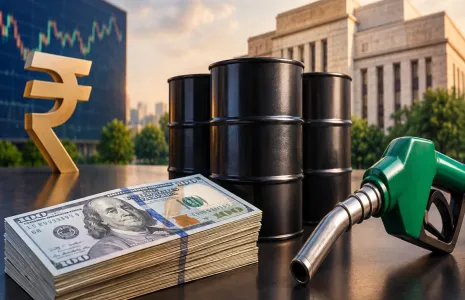
The Reserve Bank of India (RBI) has opened a special facility to meet the entire daily US dollar requirements of three public sector oil marketing companies (OMCs), in a move aimed at easing pressure on the Indian rupee. The facility will take effect on October 12, 2026, and remain available until further notice. Indian Oil Corporation, Hindustan Petroleum Corporation and Bharat Petroleum Corporation are eligible to use the arrangement. Under the facility, the RBI will sell US dollars to the three companies through designated banks, allowing them to meet their oil-import payments without sourc..

Advertisement

Subscribe to Our Newsletter

Get daily newsletters around different themes from Construction world.

STAY CONNECTED

Advertisement

SPECIAL OFFER
QR Code