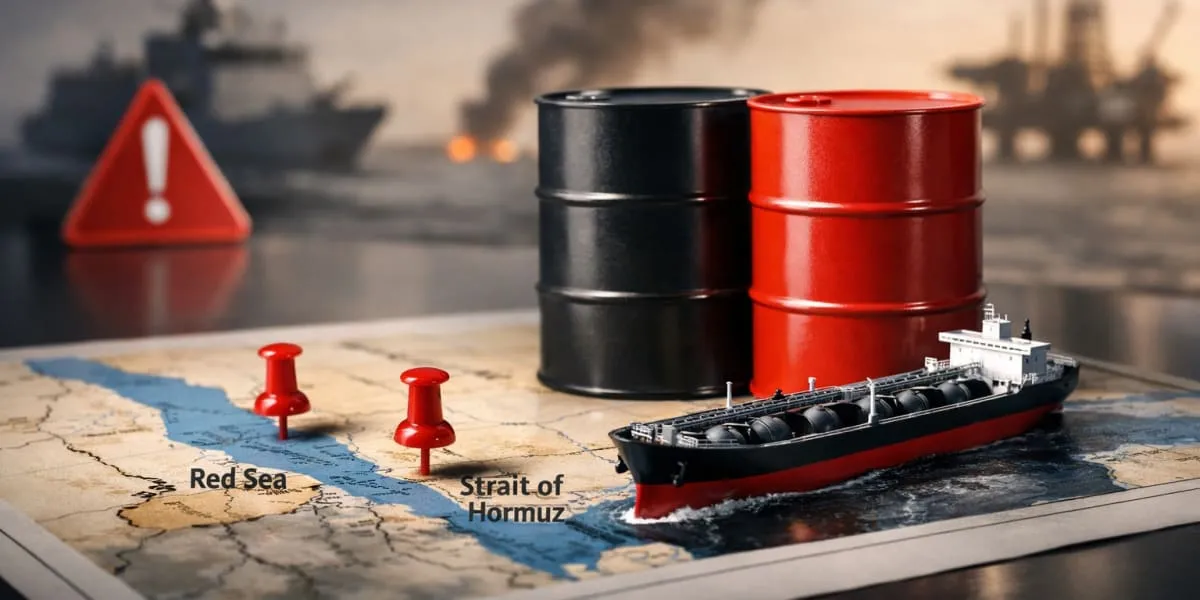
MRPL Asks Crude Suppliers To Avoid Red Sea And Strait Of Hormuz Routes
ECONOMY & POLICY

MRPL Asks Crude Suppliers To Avoid Red Sea And Strait Of Hormuz Routes

Mangalore Refinery and Petrochemicals Ltd has asked crude suppliers to avoid transit through the Red Sea and the Strait of Hormuz in a spot import tender, the tender document showed. The tender seeks up to one million (mn) barrels of crude oil on a delivered basis with loading dates between August 25 and September 6. The instruction follows disruptions to Red Sea traffic off Yemen by Tehran?aligned Houthi actions that have aimed to blockade Saudi exports and widened tensions linked to the US?Iran confrontation.

The company included a clause instructing that crude loading and transit via the Red Sea or the Strait of Hormuz should be avoided, a caveat not previously seen in Indian spot crude tenders. The refiner had not awarded its previous tender that sought oil and did not immediately respond to requests for comment. Market participants have monitored shipping routes closely since the disruptions began last week, citing elevated risk and potential delays.

A source familiar with the matter said the refiner had taken a precautionary view to minimise the chance of supply interruption along two of the world’s main maritime oil trade routes and added that the clause would remain in future tenders if the situation in West Asia did not improve. Mangalore Refinery and Petrochemicals is a subsidiary of state?run Oil and Natural Gas Corporation and operates a 300,000 barrels per day refinery in the southern Indian state of Karnataka. The tender stipulation underscores concern among energy buyers over the security of short sea transits and the need for contingency planning.

Avoiding the Red Sea and the Strait of Hormuz typically requires rerouting shipments around the Cape of Good Hope, which extends voyage times and increases freight costs and the time crude remains in transit. In past disruptions refiners and traders have sought alternative loadings, adjusted tanker schedules and passed higher shipping charges on to buyers, influencing import timing and refinery runs. Market participants managing near?term supply arrangements will watch the development closely.

Mangalore Refinery and Petrochemicals Ltd has asked crude suppliers to avoid transit through the Red Sea and the Strait of Hormuz in a spot import tender, the tender document showed. The tender seeks up to one million (mn) barrels of crude oil on a delivered basis with loading dates between August 25 and September 6. The instruction follows disruptions to Red Sea traffic off Yemen by Tehran?aligned Houthi actions that have aimed to blockade Saudi exports and widened tensions linked to the US?Iran confrontation. The company included a clause instructing that crude loading and transit via the Red Sea or the Strait of Hormuz should be avoided, a caveat not previously seen in Indian spot crude tenders. The refiner had not awarded its previous tender that sought oil and did not immediately respond to requests for comment. Market participants have monitored shipping routes closely since the disruptions began last week, citing elevated risk and potential delays. A source familiar with the matter said the refiner had taken a precautionary view to minimise the chance of supply interruption along two of the world’s main maritime oil trade routes and added that the clause would remain in future tenders if the situation in West Asia did not improve. Mangalore Refinery and Petrochemicals is a subsidiary of state?run Oil and Natural Gas Corporation and operates a 300,000 barrels per day refinery in the southern Indian state of Karnataka. The tender stipulation underscores concern among energy buyers over the security of short sea transits and the need for contingency planning. Avoiding the Red Sea and the Strait of Hormuz typically requires rerouting shipments around the Cape of Good Hope, which extends voyage times and increases freight costs and the time crude remains in transit. In past disruptions refiners and traders have sought alternative loadings, adjusted tanker schedules and passed higher shipping charges on to buyers, influencing import timing and refinery runs. Market participants managing near?term supply arrangements will watch the development closely.

Related Stories

Gold Stories

Next Story
Infrastructure Urban

KONE Opens India's First Digital Experience Centre in Pune

KONE, a global elevator and escalator manufacturer, has inaugurated its first Digital Experience Centre (DEC) in India, located in Pune. The facility aims to showcase how artificial intelligence (AI), connectivity and data-driven technologies can enhance customer experiences and improve building operations.The centre was inaugurated by Jussi Herlin, Executive Vice Chair, KONE Corporation; Philippe Delorme, President and CEO, KONE; and Nandan Nilekani, Co-founder and Chairman of the Board, Infosys.Designed as an interactive customer environment, the facility demonstrates digital solutions cover..

Next Story
Infrastructure Urban

CII GreenCo Launches Circularity Guidelines for Indian Industry

The Confederation of Indian Industry (CII) GreenCo Council has launched the CII GreenCo Circularity Guidelines – Pilot Version at the 17th CII GreenCo Waste & Resource Management Summit 2026 in Chennai. The initiative aims to strengthen resource efficiency, waste reduction and circular economy practices across Indian manufacturing and process industries.The guidelines introduce a structured framework with circularity indices covering raw materials, consumables, packaging and other resource inputs. These indicators will help industries assess existing practices, identify opportunities to ..

Next Story
Infrastructure Energy

Global Electronics Association Launches IPC-1783-CO2E Standard

The Global Electronics Association has introduced IPC-1783-CO2E, a new international standard aimed at improving consistency, transparency and comparability in product carbon footprint reporting across the electronics manufacturing industry.The standard, titled International Standard for Data Collection and Reporting of CO2 Equivalent (CO2e) Emissions for the Electronics Manufacturing Supply Chain, provides industry-specific guidance for collecting, estimating and reporting carbon emissions data.With increasing regulatory requirements and customer expectations, electronics manufacturers face c..

Advertisement

Subscribe to Our Newsletter

Get daily newsletters around different themes from Construction world.

STAY CONNECTED

Advertisement

SPECIAL OFFER
QR Code