Netanyahu lauds India-Middle East-Europe Economic Corridor
ECONOMY & POLICY

Netanyahu lauds India-Middle East-Europe Economic Corridor

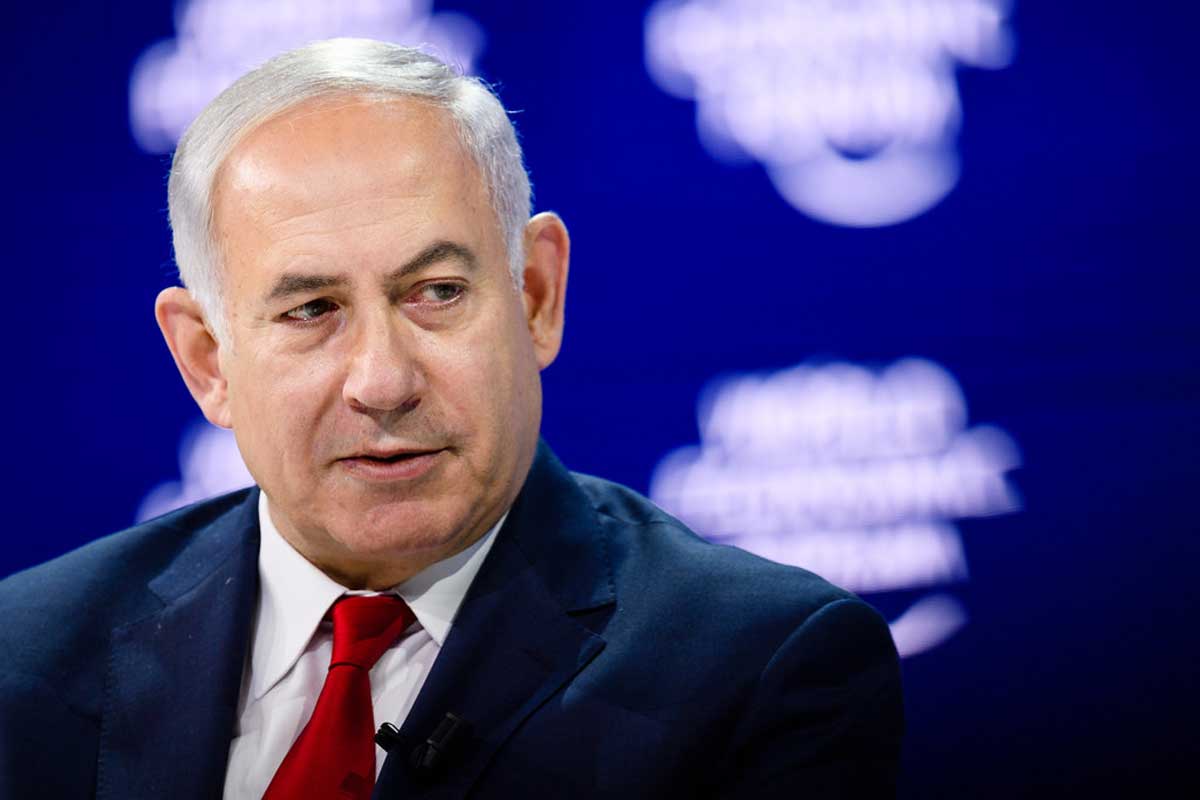
Israeli Prime Minister Benjamin Netanyahu has enthusiastically welcomed the announcement of the India-Middle East-Europe Economic Corridor (IMEC), describing it as the "largest cooperation project in our history" that will have a transformative impact on the Middle East, Israel, and the world. This ambitious economic corridor, seen by many as an alternative to China's Belt and Road Initiative, was jointly announced on September 9 during the G20 summit in New Delhi by leaders from the U.S., India, Saudi Arabia, the United Arab Emirates, France, Germany, Italy, and the European Union.

In a video message, Prime Minister Netanyahu emphasised that Israel is at the heart of this groundbreaking international project, which will connect infrastructure from Asia to Europe. He expressed gratitude to the United States, particularly President Joe Biden and his administration, for their efforts in making this historic initiative a reality. Netanyahu outlined that Israel will play a central role in the corridor, with its railways and ports serving as a key gateway connecting India, the Middle East, and Europe.

The project aims to develop railways, hydrogen pipelines, fibre optic communications cables, electricity cables, and other essential infrastructure components. Netanyahu underscored Israel's commitment to contributing its capabilities and experience to this monumental cooperation project, which will involve coordination between government ministries and cooperation with the U.S. and other nations. He stressed that the IMEC would usher in a new era of global and regional cooperation and involvement.

While the announcement of the IMEC is significant, it comes at a time when Israel is facing challenges, including widespread protests, potential mass emigration, resignations in critical positions, and economic concerns. Netanyahu has sought to highlight the positive impact of this project on Israel's future during his recent trip to Greece and Cyprus, aiming to boost morale and reassure the public.

Israeli Prime Minister Benjamin Netanyahu has enthusiastically welcomed the announcement of the India-Middle East-Europe Economic Corridor (IMEC), describing it as the largest cooperation project in our history that will have a transformative impact on the Middle East, Israel, and the world. This ambitious economic corridor, seen by many as an alternative to China's Belt and Road Initiative, was jointly announced on September 9 during the G20 summit in New Delhi by leaders from the U.S., India, Saudi Arabia, the United Arab Emirates, France, Germany, Italy, and the European Union.In a video message, Prime Minister Netanyahu emphasised that Israel is at the heart of this groundbreaking international project, which will connect infrastructure from Asia to Europe. He expressed gratitude to the United States, particularly President Joe Biden and his administration, for their efforts in making this historic initiative a reality. Netanyahu outlined that Israel will play a central role in the corridor, with its railways and ports serving as a key gateway connecting India, the Middle East, and Europe.The project aims to develop railways, hydrogen pipelines, fibre optic communications cables, electricity cables, and other essential infrastructure components. Netanyahu underscored Israel's commitment to contributing its capabilities and experience to this monumental cooperation project, which will involve coordination between government ministries and cooperation with the U.S. and other nations. He stressed that the IMEC would usher in a new era of global and regional cooperation and involvement.While the announcement of the IMEC is significant, it comes at a time when Israel is facing challenges, including widespread protests, potential mass emigration, resignations in critical positions, and economic concerns. Netanyahu has sought to highlight the positive impact of this project on Israel's future during his recent trip to Greece and Cyprus, aiming to boost morale and reassure the public.

Next Story
Infrastructure Transport

Kavach 4.0 Commissioned on Delhi–Mumbai and Delhi–Howrah

"Kavach version four has been commissioned on 1,452 route km, covering the high density Delhi–Mumbai and Delhi–Howrah corridors. The rollout included laying 8,570 km of optical fibre, installation of 1,100 telecom towers, deployment of trackside equipment over 6,776 RKm and establishment of 767 station data centres. Trackside implementation has been taken up on 24,427 RKm covering Golden Quadrilateral, Golden Diagonal and High Density Network sections. The programme aims to strengthen signalling and train protection on key routes.Kavach is an indigenously developed automatic train protecti..

Next Story
Infrastructure Transport

Railways Advance Kalyan–Murbad Line And Mumbai Capacity Expansion

"Indian Railways is advancing multiple rail infrastructure projects in Maharashtra, including the sanctioned Kalyan–Murbad new line and sizable investments under the Mumbai Urban Transport Project and the Mumbai–Ahmedabad High Speed Rail project. The Kalyan–Murbad 28 km new line has been sanctioned at Rs 8.36 billion (bn) on a 50:50 cost-sharing basis with the Government of Maharashtra and has been declared a Special Railway Project for land acquisition; proposals covering 214 hectares are at various stages of acquisition. Budgetary outlay for projects falling fully or partly in Maharash..

Next Story
Infrastructure Urban

Parliamentary Panel Flags Funding Gaps in Heavy Industries

"The Department-Related Parliamentary Standing Committee on Industry (Rajya Sabha) presented its 332nd report on the Demands for Grants 2026-27 of the Ministry of Heavy Industries (MHI). Figures converted from crore and lakh are expressed in million (mn). The Budget Estimates 2026-27 for the Ministry stand at Rs 79,399 mn against a projected requirement of Rs 94,843.2 mn, a shortfall of about 16 per cent, with revenue at Rs 79,370.8 mn and capital compressed to Rs 28.2 mn from Rs 5,020 mn.The committee flagged recurring BE-to-RE compression and declining revised estimate utilisation, and calle..

Advertisement

Subscribe to Our Newsletter

Get daily newsletters around different themes from Construction world.

STAY CONNECTED

Advertisement

Advertisement

Advertisement