+
US Decision on Solar Panel Tariffs for India Laos Indonesia
ECONOMY & POLICY

US Decision on Solar Panel Tariffs for India Laos Indonesia

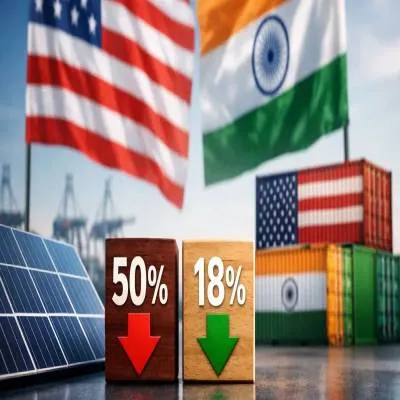
The United States is poised to announce measures affecting imports of solar panels and modules originating or routed through India, Laos and Indonesia after a comprehensive trade review. Any final determination by US authorities could include duties or trade remedies intended to address perceived unfair pricing or circumvention, with immediate implications for manufacturers and installers worldwide. Representatives from exporting countries and industry groups have urged a nuanced approach that recognises legitimate manufacturing activity and supply chain complexity to avoid disrupting renewable energy progress.

Market analysts expect elevated short term uncertainty as developers reassess procurement strategies and financing scenarios in response to potential cost increases and shipping adjustments. Manufacturers in the affected countries may seek clarifications on rules of origin and pursue exemptions or transitional arrangements while supply chains adapt to new compliance requirements. Trade lawyers indicate litigation or appeals could follow any adverse ruling, prolonging uncertainty even as policymakers weigh domestic manufacturing objectives against climate commitments.

Investors and project owners are likely to factor in higher component prices and longer lead times when modelling project returns, which could delay some planned installations. Governments in the region are reported to engage diplomatically to seek resolutions that protect jobs and export revenue while supporting clean energy targets. Supply chain diversification and increased local content may accelerate as firms respond to the ruling, potentially reshaping regional manufacturing footprints over the medium term.

Analysts caution that while short term costs may rise, the long term trajectory of renewable deployment will depend on policy certainty, investment incentives and technological progress. Stakeholders across industry, finance and government will continue to monitor the process closely and pursue dialogue to mitigate adverse effects without undermining fair trade principles. The impending decision therefore represents a pivotal moment for solar trade relations and will be watched for its ripple effects on global clean energy ambitions.

The United States is poised to announce measures affecting imports of solar panels and modules originating or routed through India, Laos and Indonesia after a comprehensive trade review. Any final determination by US authorities could include duties or trade remedies intended to address perceived unfair pricing or circumvention, with immediate implications for manufacturers and installers worldwide. Representatives from exporting countries and industry groups have urged a nuanced approach that recognises legitimate manufacturing activity and supply chain complexity to avoid disrupting renewable energy progress. Market analysts expect elevated short term uncertainty as developers reassess procurement strategies and financing scenarios in response to potential cost increases and shipping adjustments. Manufacturers in the affected countries may seek clarifications on rules of origin and pursue exemptions or transitional arrangements while supply chains adapt to new compliance requirements. Trade lawyers indicate litigation or appeals could follow any adverse ruling, prolonging uncertainty even as policymakers weigh domestic manufacturing objectives against climate commitments. Investors and project owners are likely to factor in higher component prices and longer lead times when modelling project returns, which could delay some planned installations. Governments in the region are reported to engage diplomatically to seek resolutions that protect jobs and export revenue while supporting clean energy targets. Supply chain diversification and increased local content may accelerate as firms respond to the ruling, potentially reshaping regional manufacturing footprints over the medium term. Analysts caution that while short term costs may rise, the long term trajectory of renewable deployment will depend on policy certainty, investment incentives and technological progress. Stakeholders across industry, finance and government will continue to monitor the process closely and pursue dialogue to mitigate adverse effects without undermining fair trade principles. The impending decision therefore represents a pivotal moment for solar trade relations and will be watched for its ripple effects on global clean energy ambitions.

Next Story
Building Material

Seppa Township Road Being Paved With Bituminous Concrete

Work is underway to pave the main township road in Seppa with bituminous concrete, marking a significant upgrade to the local transport network. The project is being overseen by the district administration and carried out by municipal contractors using mechanised laying equipment. The initiative aims to replace older surface material that had become potholed and dusty, and to improve all weather access for residents and public services. Local officials have coordinated traffic diversions and site safety measures to minimise disruption during construction. The work includes preparing the base, ..

Next Story
Infrastructure Transport

Tribal Hohos Urge CM To Approve Foothills Road Phase Two

13 Dimapur-based tribal Hohos have urged the Chief Minister to ensure the issuance of the second phase work order for the Foothills Road project on or before 31 March 2026, warning that failure to meet the deadline would compel them to resort to democratic means. The bodies expressed appreciation for government support towards the project, known as the Nagaland People's Road, while stressing that remaining formalities must not be delayed. They described the project as a people-driven initiative of high public value. The Foothills Road project covers a stretch of 395.9 kilometres from Tizit in ..

Next Story
Infrastructure Transport

India Approves First Underwater Road-Rail Tunnel Project

The Indian government has approved the country's first underwater road-rail tunnel project, marking a major step in urban and coastal infrastructure development. The decision signals a shift towards integrated transport corridors that combine road and rail modes to enhance connectivity and resilience. Authorities characterised the approval as a milestone for engineering ambition and national connectivity planning. The move reflects rising investment in large scale infrastructure to support urbanisation and coastal commerce. France has positioned India as a top priority market and is targeting ..

Advertisement

Subscribe to Our Newsletter

Get daily newsletters around different themes from Construction world.

STAY CONNECTED

Advertisement

Advertisement

Advertisement

Open In App