US Envoy Meets DAE Secretary After SHANTI Act Enactment
ECONOMY & POLICY

US Envoy Meets DAE Secretary After SHANTI Act Enactment

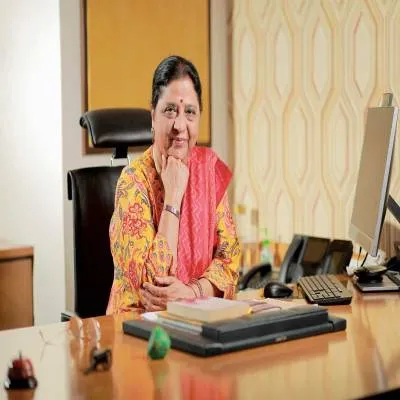
United States Ambassador to India Sergio Gor met Department of Atomic Energy Secretary Dr Ajit Kumar Mohanty on Wednesday and congratulated him on the enactment of the SHANTI Act. The meeting followed public statements by the ambassador that positioned India as a consequential partner for the United States in energy sector cooperation. The ambassador reiterated a US focus on strengthening ties in civil nuclear energy through collaboration that includes the private sector and financial partners.

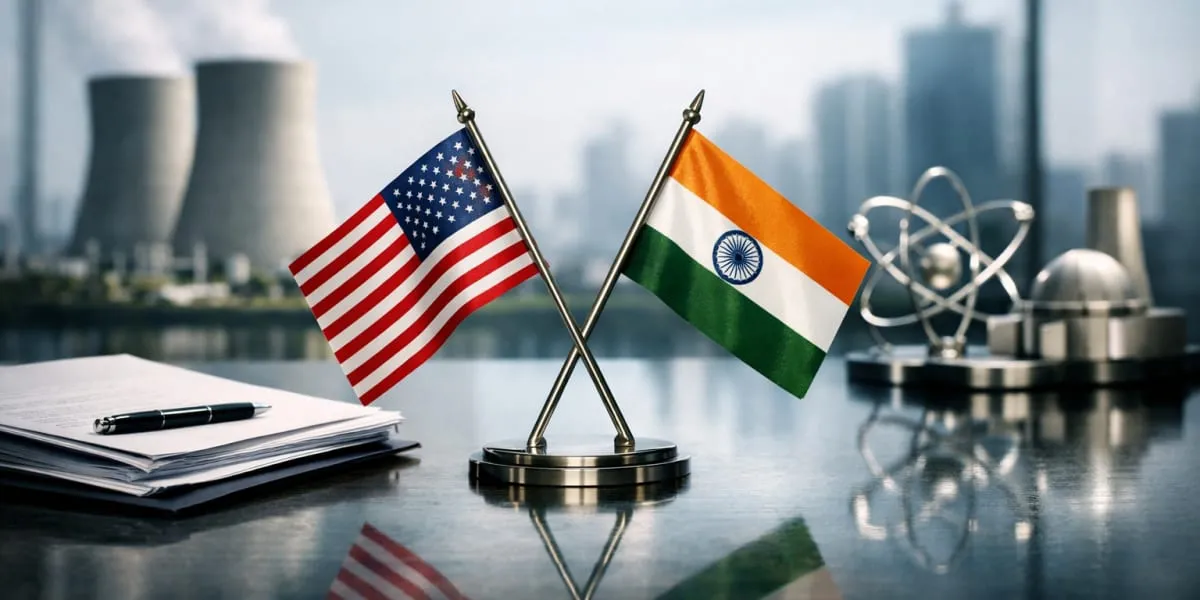
The SHANTI Act received the assent of President Droupadi Murmu in December last year and enables private sector participation in setting up nuclear facilities and undertaking activities related to production, use and disposal of nuclear energy under Central Government licences and regulatory safety authorisations. The act is intended to promote and develop nuclear energy and ionising radiation both for power generation and for non-power applications while ensuring safe and secure utilisation. Officials view the law as a foundation for expanding capacity with oversight by the regulatory board.

Mr Gor spoke earlier at the Vision India 2047 CITI 2026 event in Mumbai and underscored US interest in deepening civil nuclear cooperation and in bringing private sector led solutions to meet India’s growing power demand. He noted that his mission recently engaged member companies of the US Nuclear Energy Institute to discuss how a vibrant private sector led industry could contribute to safe and secure civil nuclear power that supports projected economic growth. The ambassador indicated that the collaboration aims to leverage private capabilities and investment to expand India’s nuclear capacity over coming decades.

He also pointed to recent steps in allied technology and supply chain work, including the signing of a Critical Minerals Framework last week and the expansion of the TRUST Initiative launched in February 2025, which targets strategic technologies and critical minerals. High level visits and engagement by US cabinet officials were presented as signals of Washington’s commitment to long term cooperation, and the ambassador said such efforts seek to align investments, financial services and entrepreneurial collaboration for mutual benefit.

United States Ambassador to India Sergio Gor met Department of Atomic Energy Secretary Dr Ajit Kumar Mohanty on Wednesday and congratulated him on the enactment of the SHANTI Act. The meeting followed public statements by the ambassador that positioned India as a consequential partner for the United States in energy sector cooperation. The ambassador reiterated a US focus on strengthening ties in civil nuclear energy through collaboration that includes the private sector and financial partners. The SHANTI Act received the assent of President Droupadi Murmu in December last year and enables private sector participation in setting up nuclear facilities and undertaking activities related to production, use and disposal of nuclear energy under Central Government licences and regulatory safety authorisations. The act is intended to promote and develop nuclear energy and ionising radiation both for power generation and for non-power applications while ensuring safe and secure utilisation. Officials view the law as a foundation for expanding capacity with oversight by the regulatory board. Mr Gor spoke earlier at the Vision India 2047 CITI 2026 event in Mumbai and underscored US interest in deepening civil nuclear cooperation and in bringing private sector led solutions to meet India’s growing power demand. He noted that his mission recently engaged member companies of the US Nuclear Energy Institute to discuss how a vibrant private sector led industry could contribute to safe and secure civil nuclear power that supports projected economic growth. The ambassador indicated that the collaboration aims to leverage private capabilities and investment to expand India’s nuclear capacity over coming decades. He also pointed to recent steps in allied technology and supply chain work, including the signing of a Critical Minerals Framework last week and the expansion of the TRUST Initiative launched in February 2025, which targets strategic technologies and critical minerals. High level visits and engagement by US cabinet officials were presented as signals of Washington’s commitment to long term cooperation, and the ambassador said such efforts seek to align investments, financial services and entrepreneurial collaboration for mutual benefit.

Next Story
Real Estate

AI: The New Recruit

From getting ideas to evaluating designs, presenting concepts to clients and tracking projects, artificial intelligence (AI) is helping architects work better and faster.“AI allows architects to spend more time doing what only they can do: think critically, synthesise complexity and design with intent,” says Dikshu C Kukreja, Managing Principal, CP Kukreja Architects. “Every minute reclaimed from repetitive processes can be invested in creativity, contextual understanding, interdisciplinary collaboration and innovation – the qualities that define meaningful architecture.”To read the ..

Next Story
Real Estate

Redevelopment 2.0

In 2017, Mumbai identified 160,000 ageing buildings due for structural audit. Close to half of these were in the Western Suburbs. Redeveloping the oldest and structurally weakest of these would help unlock new housing, much needed given the city’s growing population density and constant developed area of 437.7 sq km. At 30,600 people per sq km in 2024, Mumbai’s density was almost thrice that of Gurugram, and 60 per cent higher than Bengaluru’s.Essentially, Mumbai’s realty market has demand. It has capital. It has realty development potential.Fast forward to 2026. Mumbai has 1,094 regis..

Next Story
Technology

Cost intelligence will become a strategic contributor to project success

As India's construction industry accelerates its digital transformation, integrated platforms, AI and connected data are becoming essential to improving cost certainty, project efficiency and sustainability. Ravi Kumar, Sales Director – India, RIB Software India, shares how digital workflows are reshaping project planning, commercial management and decision-making across the construction value chain.India's construction sector is embracing digital technologies at an unprecedented pace. From your perspective, what are the biggest shifts driving this transformation and how is RIB Software enab..

Advertisement

Subscribe to Our Newsletter

Get daily newsletters around different themes from Construction world.

STAY CONNECTED

Advertisement

Advertisement

Advertisement