Uttarakhand Rolls Out Clean Mobility Benefits As CM Flags Off 11 Vehicles
ECONOMY & POLICY

Uttarakhand Rolls Out Clean Mobility Benefits As CM Flags Off 11 Vehicles

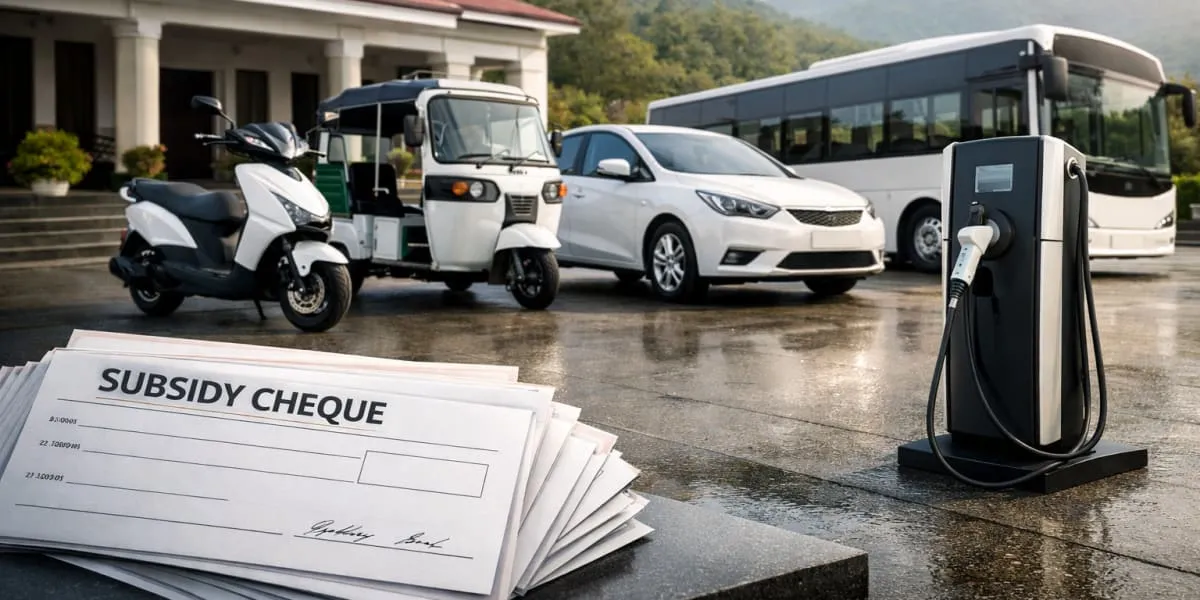
Uttarakhand Chief Minister Pushkar Singh Dhami distributed subsidy cheques to six beneficiaries under the Uttarakhand Clean Mobility Transition Policy, 2024, and flagged off 11 clean-fuel vehicles at the Mukhya Sevak Sadan, the chief minister's camp office. The transport department completed the subsidy approval process for five other beneficiaries under the policy. The event was presented as part of a broader push to build a clean, modern and environment-friendly transport system.

The policy is designed to modernise urban public transport, reduce pollution from ageing diesel vehicles and promote compressed natural gas and other clean-fuel alternatives rather than serve solely as an economic incentive. Dhami framed the financial assistance as evidence of the government’s commitment to cleaner public transport in urban areas and stressed that development must proceed alongside environmental protection. The administration positioned the initiative as a measure to secure a safe and clean future for coming generations.

The state government said it is expanding electric bus services in Dehradun, Haridwar and Haldwani while establishing electric vehicle charging stations across Uttarakhand, and that it is developing ropeways and modern urban transport systems to ease congestion and reduce vehicular pressure in hilly areas. Officials linked the scheme to national efforts, citing the 2070 net-zero emissions target, the Lifestyle for Environment initiative and the Prime Minister e-Bus Sewa programme (PM e-Bus Sewa) alongside measures to expand renewable energy. The administration indicated these steps form part of a coordinated strategy to foster sustainable mobility.

The government reported that Uttarakhand has achieved its initial target of installing 40,000 rooftop solar systems under the PM Surya Ghar Yojana ahead of schedule and has completed nearly 95 per cent of its overall target. Dhami urged greater public participation and presented the beneficiaries as pioneers of the state's green transport transition, suggesting their example could encourage more vehicle owners to adopt cleaner mobility options. The press release stated the measures are aimed at reducing pollution and strengthening environmental conservation across the state.

Uttarakhand Chief Minister Pushkar Singh Dhami distributed subsidy cheques to six beneficiaries under the Uttarakhand Clean Mobility Transition Policy, 2024, and flagged off 11 clean-fuel vehicles at the Mukhya Sevak Sadan, the chief minister's camp office. The transport department completed the subsidy approval process for five other beneficiaries under the policy. The event was presented as part of a broader push to build a clean, modern and environment-friendly transport system. The policy is designed to modernise urban public transport, reduce pollution from ageing diesel vehicles and promote compressed natural gas and other clean-fuel alternatives rather than serve solely as an economic incentive. Dhami framed the financial assistance as evidence of the government’s commitment to cleaner public transport in urban areas and stressed that development must proceed alongside environmental protection. The administration positioned the initiative as a measure to secure a safe and clean future for coming generations. The state government said it is expanding electric bus services in Dehradun, Haridwar and Haldwani while establishing electric vehicle charging stations across Uttarakhand, and that it is developing ropeways and modern urban transport systems to ease congestion and reduce vehicular pressure in hilly areas. Officials linked the scheme to national efforts, citing the 2070 net-zero emissions target, the Lifestyle for Environment initiative and the Prime Minister e-Bus Sewa programme (PM e-Bus Sewa) alongside measures to expand renewable energy. The administration indicated these steps form part of a coordinated strategy to foster sustainable mobility. The government reported that Uttarakhand has achieved its initial target of installing 40,000 rooftop solar systems under the PM Surya Ghar Yojana ahead of schedule and has completed nearly 95 per cent of its overall target. Dhami urged greater public participation and presented the beneficiaries as pioneers of the state's green transport transition, suggesting their example could encourage more vehicle owners to adopt cleaner mobility options. The press release stated the measures are aimed at reducing pollution and strengthening environmental conservation across the state.

Related Stories

Gold Stories

Next Story
Infrastructure Urban

KONE Opens India's First Digital Experience Centre in Pune

KONE, a global elevator and escalator manufacturer, has inaugurated its first Digital Experience Centre (DEC) in India, located in Pune. The facility aims to showcase how artificial intelligence (AI), connectivity and data-driven technologies can enhance customer experiences and improve building operations.The centre was inaugurated by Jussi Herlin, Executive Vice Chair, KONE Corporation; Philippe Delorme, President and CEO, KONE; and Nandan Nilekani, Co-founder and Chairman of the Board, Infosys.Designed as an interactive customer environment, the facility demonstrates digital solutions cover..

Next Story
Infrastructure Urban

CII GreenCo Launches Circularity Guidelines for Indian Industry

The Confederation of Indian Industry (CII) GreenCo Council has launched the CII GreenCo Circularity Guidelines – Pilot Version at the 17th CII GreenCo Waste & Resource Management Summit 2026 in Chennai. The initiative aims to strengthen resource efficiency, waste reduction and circular economy practices across Indian manufacturing and process industries.The guidelines introduce a structured framework with circularity indices covering raw materials, consumables, packaging and other resource inputs. These indicators will help industries assess existing practices, identify opportunities to ..

Next Story
Infrastructure Energy

Global Electronics Association Launches IPC-1783-CO2E Standard

The Global Electronics Association has introduced IPC-1783-CO2E, a new international standard aimed at improving consistency, transparency and comparability in product carbon footprint reporting across the electronics manufacturing industry.The standard, titled International Standard for Data Collection and Reporting of CO2 Equivalent (CO2e) Emissions for the Electronics Manufacturing Supply Chain, provides industry-specific guidance for collecting, estimating and reporting carbon emissions data.With increasing regulatory requirements and customer expectations, electronics manufacturers face c..

Advertisement

Subscribe to Our Newsletter

Get daily newsletters around different themes from Construction world.

STAY CONNECTED

Advertisement

SPECIAL OFFER
QR Code