+
DGCA Gets Aerodrome License Request from Navi Mumbai Airport
AVIATION & AIRPORTS

DGCA Gets Aerodrome License Request from Navi Mumbai Airport

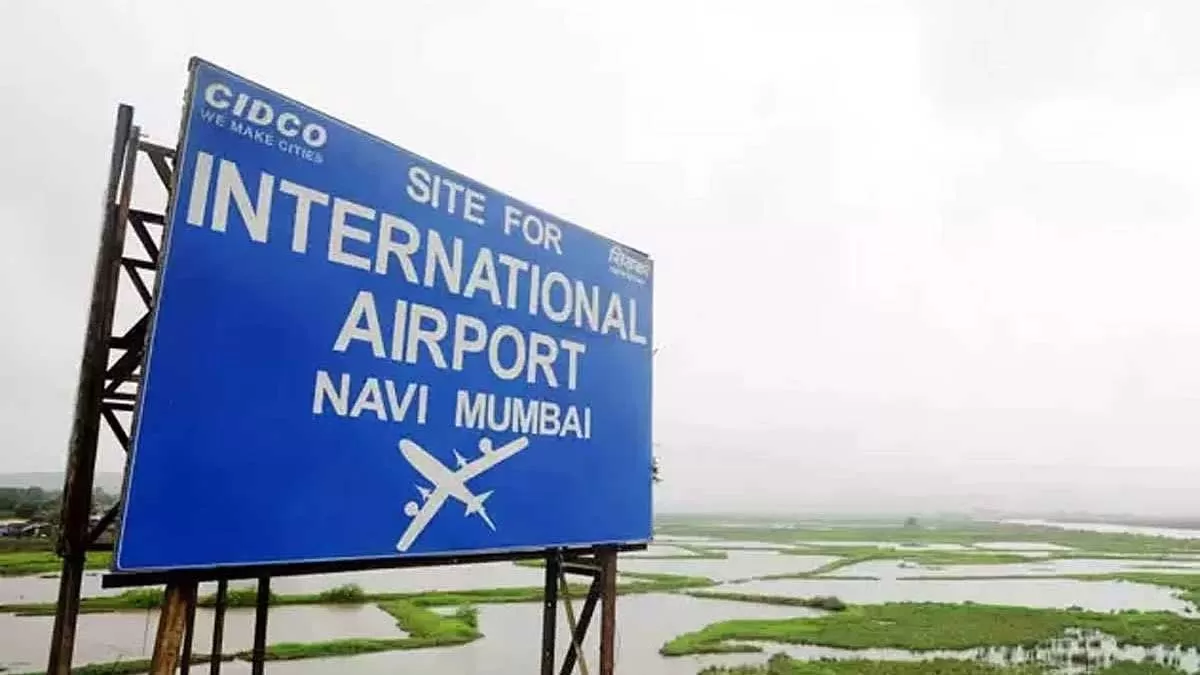
The Directorate General of Civil Aviation (DGCA) has received an application for an aerodrome license from Navi Mumbai International Airport (NMIAL), marking a key step in the airport’s progress toward operational readiness. The airport, designed to accommodate increasing air travel demand in the Mumbai metropolitan region, is scheduled to begin operations by May 15, 2025, and aims to secure the necessary approvals before that date.

Navi Mumbai International Airport is a joint venture between Adani Airport Holding (AAHL) and the City and Industrial Development Corporation of Maharashtra (CIDCO), with a 74:26 shareholding structure. Officials from the Ministry of Civil Aviation, DGCA, and the Airports Authority of India (AAI) recently conducted a site visit to assess the airport’s development status. Progress has been observed in key infrastructure components, including the Air Traffic Control (ATC) tower, baggage screening systems, passenger processing facilities, and other essential operational areas.

While substantial advancements have been made, certain aspects of the project, particularly passenger accessibility to the terminal building, require expedited efforts. Ensuring seamless access to the terminal is a critical factor for obtaining the aerodrome license and achieving full operational functionality.

Once operational, the airport is expected to ease congestion at Chhatrapati Shivaji Maharaj International Airport, handling an initial capacity of up to 12 million passengers annually. The long-term plan envisions two runways and four terminals, ultimately accommodating up to 90 million passengers per year across five phases.

The completion of Phase 1 is anticipated to provide significant relief to the region’s air traffic, particularly with Mumbai International Airport’s Terminal 1 scheduled for closure in October 2025 for redevelopment. Airlines will coordinate with authorities to determine flight transitions to the new facility.

News source: CNBC TV18

The Directorate General of Civil Aviation (DGCA) has received an application for an aerodrome license from Navi Mumbai International Airport (NMIAL), marking a key step in the airport’s progress toward operational readiness. The airport, designed to accommodate increasing air travel demand in the Mumbai metropolitan region, is scheduled to begin operations by May 15, 2025, and aims to secure the necessary approvals before that date. Navi Mumbai International Airport is a joint venture between Adani Airport Holding (AAHL) and the City and Industrial Development Corporation of Maharashtra (CIDCO), with a 74:26 shareholding structure. Officials from the Ministry of Civil Aviation, DGCA, and the Airports Authority of India (AAI) recently conducted a site visit to assess the airport’s development status. Progress has been observed in key infrastructure components, including the Air Traffic Control (ATC) tower, baggage screening systems, passenger processing facilities, and other essential operational areas. While substantial advancements have been made, certain aspects of the project, particularly passenger accessibility to the terminal building, require expedited efforts. Ensuring seamless access to the terminal is a critical factor for obtaining the aerodrome license and achieving full operational functionality. Once operational, the airport is expected to ease congestion at Chhatrapati Shivaji Maharaj International Airport, handling an initial capacity of up to 12 million passengers annually. The long-term plan envisions two runways and four terminals, ultimately accommodating up to 90 million passengers per year across five phases. The completion of Phase 1 is anticipated to provide significant relief to the region’s air traffic, particularly with Mumbai International Airport’s Terminal 1 scheduled for closure in October 2025 for redevelopment. Airlines will coordinate with authorities to determine flight transitions to the new facility. News source: CNBC TV18

Next Story
Infrastructure Transport

MMRDA Installs 325-Tonne Steel Spans on Mumbai Metro Line 4

The Mumbai Metropolitan Region Development Authority (MMRDA) has achieved a key construction milestone on Metro Line 4 with the successful installation of three large steel spans at Bhandup West during overnight operations.The spans, together weighing 325 metric tonnes, were launched using eight heavy-duty cranes and 12 multi-axle vehicles. The operation required precise engineering and meticulous planning to minimise disruption in the densely populated suburban area.Due to effective inter-agency coordination, the work—originally scheduled across four nights—was completed within just two n..

Next Story
Infrastructure Transport

CMRL Targets March 2027 Opening for Vadapalani–Panagal Park

Chennai Metro Rail Limited (CMRL) is progressing as scheduled to open the Vadapalani–Panagal Park section of Phase II’s Corridor 4 by March 2027. The 3.5 km underground stretch is part of the 26.1 km Corridor 4 connecting Lighthouse with Poonamallee Bypass.Construction activities are advancing steadily, with tunnelling works between Vadapalani and Panagal Park already completed. Track-laying operations are expected to commence shortly. At Panagal Park station, structural works have reached the concourse and platform levels, while excavation continues at the lowest level.CMRL is also consid..

Next Story
Infrastructure Transport

Maha-Metro Invites Pune Metro Civil Maintenance Bids

Maharashtra Metro Rail Corporation Limited (Maha-Metro) has invited bids for the annual civil maintenance contract of the Pune Metro Rail Project. The tender, bearing ID and number P1-O&M-20/2025, is scheduled to close on 23 February 2026, with a pre-bid meeting slated for 10 February 2026. The earnest money deposit (EMD) for the contract is Rs 3,50,500, and the duration of the contract is one year.The scope of work includes annual civil maintenance of 28 elevated and underground stations, 28.079 km of elevated viaduct including steel bridges, 12.15 km of tunnels, and two depots under the ..

Advertisement

Subscribe to Our Newsletter

Get daily newsletters around different themes from Construction world.

STAY CONNECTED

Advertisement

Advertisement

Advertisement

Open In App