
Bengal govt bans three-wheelers on highways
ROADS & HIGHWAYS

Bengal govt bans three-wheelers on highways

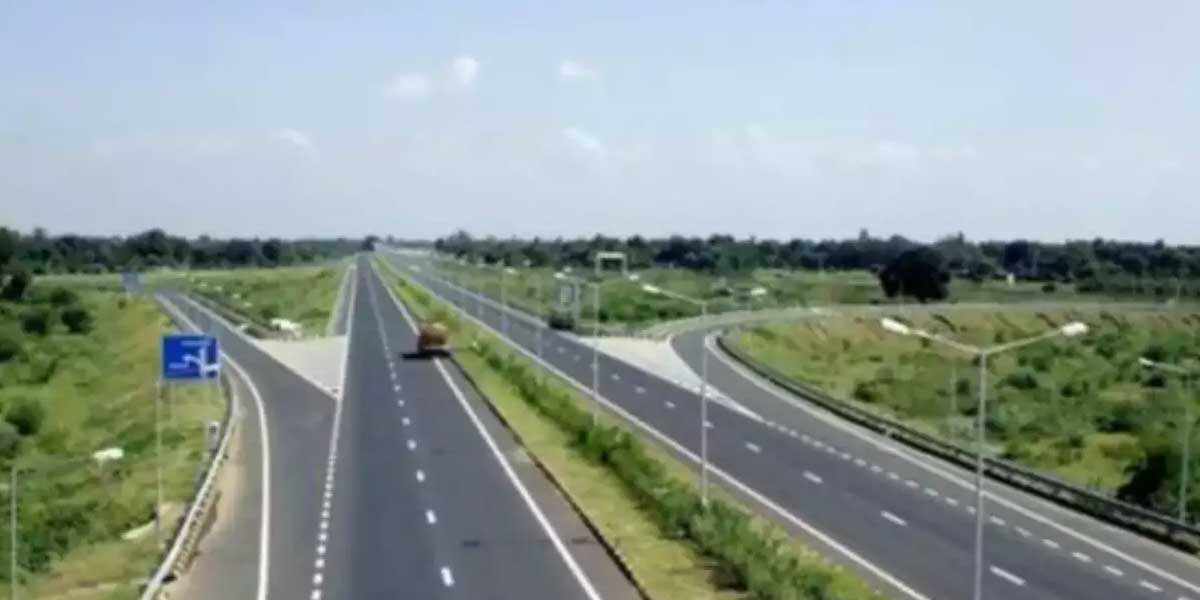
To ease traffic and prevent deadly accidents, the Bengal government has ordered a complete ban on three-wheelers on state and federal roadways. In order to control three-wheelers, the Bengal transport secretary Saumitra Mohan sent letters to all district magistrates directing them to certain routes in urban or peri-urban regions.

In his notification, Mohan stated that the massive increase in cars and totos has not only prolonged traffic jams on the highways but also has the potential to result in serious accidents. To accommodate autos and tote vehicles on some fixed routes so they can provide last-mile connectivity, it is crucial to establish a committee for route realignment and route-rationalization. DMs were instructed to include representatives of the local panchayat or municipal government as well as the civil society.

To ease traffic and prevent deadly accidents, the Bengal government has ordered a complete ban on three-wheelers on state and federal roadways. In order to control three-wheelers, the Bengal transport secretary Saumitra Mohan sent letters to all district magistrates directing them to certain routes in urban or peri-urban regions. In his notification, Mohan stated that the massive increase in cars and totos has not only prolonged traffic jams on the highways but also has the potential to result in serious accidents. To accommodate autos and tote vehicles on some fixed routes so they can provide last-mile connectivity, it is crucial to establish a committee for route realignment and route-rationalization. DMs were instructed to include representatives of the local panchayat or municipal government as well as the civil society.

Next Story
Real Estate

Redevelopment 2.0

In 2017, Mumbai identified 160,000 ageing buildings due for structural audit. Close to half of these were in the Western Suburbs. Redeveloping the oldest and structurally weakest of these would help unlock new housing, much needed given the city’s growing population density and constant developed area of 437.7 sq km. At 30,600 people per sq km in 2024, Mumbai’s density was almost thrice that of Gurugram, and 60 per cent higher than Bengaluru’s.Essentially, Mumbai’s realty market has demand. It has capital. It has realty development potential.Fast forward to 2026. Mumbai has 1,094 regis..

Next Story
Technology

Cost intelligence will become a strategic contributor to project success

As India's construction industry accelerates its digital transformation, integrated platforms, AI and connected data are becoming essential to improving cost certainty, project efficiency and sustainability. Ravi Kumar, Sales Director – India, RIB Software India, shares how digital workflows are reshaping project planning, commercial management and decision-making across the construction value chain.India's construction sector is embracing digital technologies at an unprecedented pace. From your perspective, what are the biggest shifts driving this transformation and how is RIB Software enab..

Next Story
Technology

Twin Tracks

Digital-twin adoption in India’s rail sector is gradually making its presence felt across asset management, infrastructure planning, predictive maintenance, construction monitoring and operator training.While large-scale deployments of digital twins are still evolving, Nipun Dumpala, a Senior Technical Lead specialising in digital twins, synthetic data, simulation and mixed reality technologies, points out that several organisations are exploring BIM-integrated digital twins, IoT-enabled monitoring, AI-based analytics and simulation platforms to improve operational efficiency and reduce life..

Advertisement

Subscribe to Our Newsletter

Get daily newsletters around different themes from Construction world.

STAY CONNECTED

Advertisement

Advertisement

Advertisement