+
Bihar Seeks Union Approval For Rs 32 Billion Highway Upgrades
ROADS & HIGHWAYS

Bihar Seeks Union Approval For Rs 32 Billion Highway Upgrades

The Government of Bihar has formally requested approval from the Ministry of Road Transport and Highways for two national highway projects intended to strengthen inter-state connectivity between North Bihar, South Bihar and Jharkhand. State Road Construction Minister E. Kumar Shailendra submitted the proposals to the Union minister, and the plan comprises both a four-laning scheme for NH-122 and widening of NH-139. The four-laning proposal covers the 102 km Muzaffarpur–Barauni stretch and includes construction of the Muzaffarpur Eastern Bypass to reduce urban congestion. The estimated expenditure for the NH-122 work is Rs 32 billion (bn), converted from the requested Rs 3,200 crore.

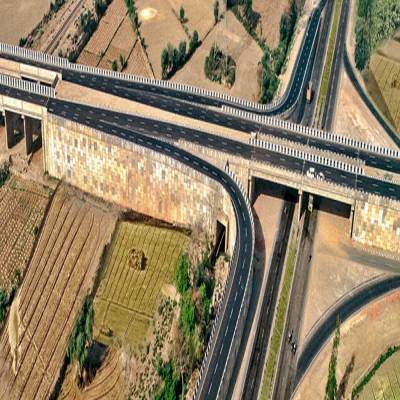
A detailed project report has been submitted to the National Highways Authority of India for the NH-122 upgrade, proposing carriageway expansion and the bypass to integrate with the East-West Corridor, NH-27. The measures are intended to streamline traffic flow through Muzaffarpur, improve connectivity for commuter movements and reduce delays caused by urban bottlenecks. The bypass is expected to provide a direct route for through traffic and to separate local and long-distance vehicles for operational efficiency.

The second proposal envisages four-laning of the NH-139 corridor from Naubatpur to the Jharkhand border to enhance safety and facilitate freight movement linking Patna with the Varanasi–Ranchi–Kolkata corridor via Aurangabad. Officials described the widening as part of a regional strategy to bolster freight logistics and reduce transit times for heavy vehicles moving between northern and eastern industrial zones. The scheme is expected to improve axle load management and contribute to lower accident rates on the route.

Officials indicated that the projects are designed to support economic growth by improving access to markets and industrial centres and by shortening travel time for passengers and goods. The proposals now await Union sanction and subsequent clearances and funding decisions from national agencies before procurement and construction can commence. Implementation timelines will depend on approvals from the ministry and the National Highways Authority of India and on mobilisation of resources for execution.

The Government of Bihar has formally requested approval from the Ministry of Road Transport and Highways for two national highway projects intended to strengthen inter-state connectivity between North Bihar, South Bihar and Jharkhand. State Road Construction Minister E. Kumar Shailendra submitted the proposals to the Union minister, and the plan comprises both a four-laning scheme for NH-122 and widening of NH-139. The four-laning proposal covers the 102 km Muzaffarpur–Barauni stretch and includes construction of the Muzaffarpur Eastern Bypass to reduce urban congestion. The estimated expenditure for the NH-122 work is Rs 32 billion (bn), converted from the requested Rs 3,200 crore. A detailed project report has been submitted to the National Highways Authority of India for the NH-122 upgrade, proposing carriageway expansion and the bypass to integrate with the East-West Corridor, NH-27. The measures are intended to streamline traffic flow through Muzaffarpur, improve connectivity for commuter movements and reduce delays caused by urban bottlenecks. The bypass is expected to provide a direct route for through traffic and to separate local and long-distance vehicles for operational efficiency. The second proposal envisages four-laning of the NH-139 corridor from Naubatpur to the Jharkhand border to enhance safety and facilitate freight movement linking Patna with the Varanasi–Ranchi–Kolkata corridor via Aurangabad. Officials described the widening as part of a regional strategy to bolster freight logistics and reduce transit times for heavy vehicles moving between northern and eastern industrial zones. The scheme is expected to improve axle load management and contribute to lower accident rates on the route. Officials indicated that the projects are designed to support economic growth by improving access to markets and industrial centres and by shortening travel time for passengers and goods. The proposals now await Union sanction and subsequent clearances and funding decisions from national agencies before procurement and construction can commence. Implementation timelines will depend on approvals from the ministry and the National Highways Authority of India and on mobilisation of resources for execution.

Related Stories

Gold Stories
Next Story
Infrastructure Transport

MMRDA Targets Completion of Projects by December 2028

The Mumbai Metropolitan Region Development Authority (MMRDA) is targeting the completion of all its ongoing infrastructure projects by December 2028, a year ahead of its December 2029 deadline, Metropolitan Commissioner Dr Sanjay Mukherjee has said.Speaking at the sixth edition of the Real Estate & Infrastructure Investors' Summit (REIIS) 2026 in Mumbai, Mukherjee said the authority was developing an integrated network of roads, tunnels, sea links and Metro corridors under its broader vision of “Mumbai in 59 Minutes”.The objective is to improve east-west and north-south connectivity an..

Next Story
Building Material

High-Performance Façades Gain Ground in Indian Buildings

High-performance façades are gaining greater importance in Indian architecture as developers and architects increasingly focus on energy efficiency, thermal comfort and building performance, according to Shankar Fenestrations & Glasses.The company said modern façade systems are increasingly being considered as part of a building's overall performance strategy rather than being used primarily as aesthetic elements.High-performance glass, curtain wall systems and structural glazing can contribute to thermal regulation, solar control, daylight management and indoor comfort. Their growing ad..

Next Story
Technology

SPML Infra's 104.4 kWh BESS Battery Pack Clears Global Tests

SPML Infra has announced that its proprietary 104.4 kWh Battery Energy Storage System (BESS) battery pack has completed key international safety, performance and transportation testing and certification requirements, marking a step towards its commercial deployment.Developed under the company's own intellectual property, the battery pack has completed requirements under UL9540A, IEC 62619, IEC 63056, IEC 60730, IEC 61000-6-2, IEC 61000-6-4 and UN38.3 standards.The testing covers areas including thermal runaway safety, battery performance, system functional safety, electromagnetic compatibility..

Advertisement

Subscribe to Our Newsletter

Get daily newsletters around different themes from Construction world.

STAY CONNECTED

Advertisement

SPECIAL OFFER
QR Code