BRO proposes environment-friendly tech to construct roads in Arunachal
ROADS & HIGHWAYS

BRO proposes environment-friendly tech to construct roads in Arunachal

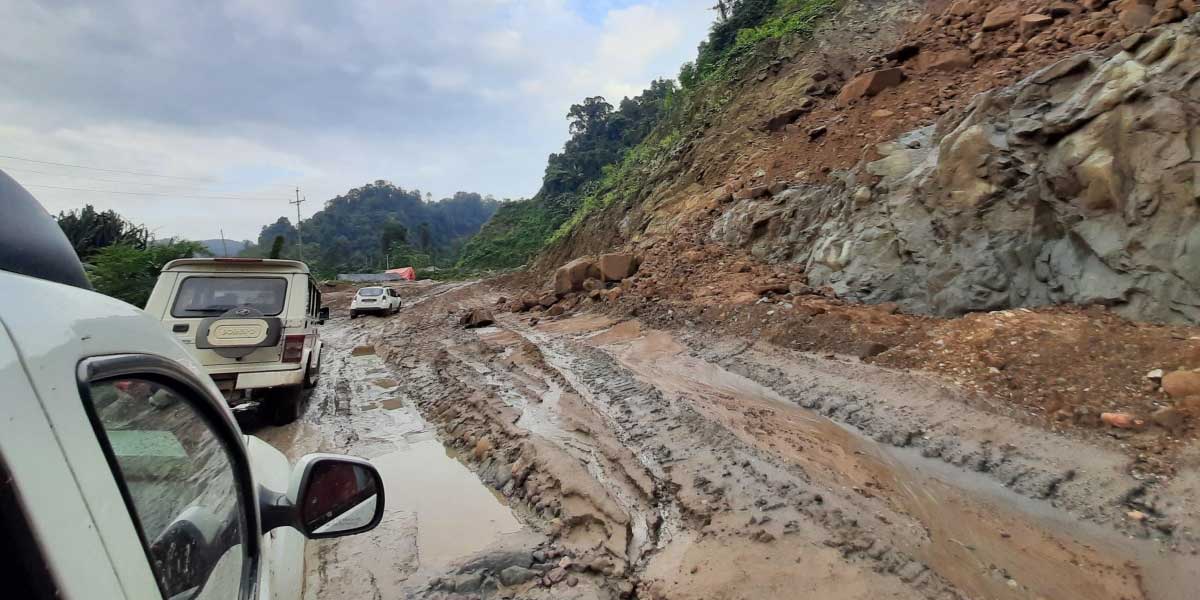
Keeping in view the challenges faced by the construction agency in the state due to fragile soil status and landslides, the Border Roads Organisation (BRO) will soon launch an environment-friendly technology to construct roads in Arunachal Pradesh.

The Central Road Research Institute (CRRI) established in 1952, as a constituent laboratory of India’s Council of Scientific and Industrial Research (CSIR), conducted in-depth research and evolved environment friendly techniques for road construction in Arunachal Pradesh, BRO’s Project Arunank chief engineer Brig Anirudh S Kanwar said.

The CRRI evolved the technology at the desire of BRO Director General Lt Gen Rajeev Chaudhry, Brig Kanwar said. The technique would be taken up soon by BRO’s Project Arunank as a pilot project in the state, he said.

The cost effective technique, using steel slag, a byproduct of steel, would be used in constructing roads in the state which would be more durable for roads in the land-locked state, Brig Kanwar said. CSIR-CRRI principal scientist Dr Satish Pandey, who has been part of India’s first steel slag road of Surat-Hazira, would assist BRO for its trials.

Also read:
Gadkari stresses need for R&D in construction equipment


Keeping in view the challenges faced by the construction agency in the state due to fragile soil status and landslides, the Border Roads Organisation (BRO) will soon launch an environment-friendly technology to construct roads in Arunachal Pradesh. The Central Road Research Institute (CRRI) established in 1952, as a constituent laboratory of India’s Council of Scientific and Industrial Research (CSIR), conducted in-depth research and evolved environment friendly techniques for road construction in Arunachal Pradesh, BRO’s Project Arunank chief engineer Brig Anirudh S Kanwar said. The CRRI evolved the technology at the desire of BRO Director General Lt Gen Rajeev Chaudhry, Brig Kanwar said. The technique would be taken up soon by BRO’s Project Arunank as a pilot project in the state, he said. The cost effective technique, using steel slag, a byproduct of steel, would be used in constructing roads in the state which would be more durable for roads in the land-locked state, Brig Kanwar said. CSIR-CRRI principal scientist Dr Satish Pandey, who has been part of India’s first steel slag road of Surat-Hazira, would assist BRO for its trials. Also read: Gadkari stresses need for R&D in construction equipment

Next Story
Infrastructure Urban

Implementation Status of Jal Jeevan Mission

Since August 2019 the Government has implemented Jal Jeevan Mission to provide assured potable water through household tap connections in rural India. At the start of the mission only 32.3 million (mn) rural households, representing 16.7 per cent, were reported to have tap water connections. States and union territories have reported that 125.8 mn additional rural households have since been provided with tap connections. As a result, of about 193.6 mn rural households roughly 158.2 mn, or 81.71 per cent, are reported to have tap water supply at home.\n\nThe State, district and village level st..

Next Story
Infrastructure Urban

Jal Jeevan Mission Reaches Eighty One Per Cent Rural Coverage

The Government reported substantial progress under the Jal Jeevan Mission, launched in August 2019 to provide tap water to every rural household. At launch only 32.3 million (mn) rural households had tap connections and states and Union territories reported provision of 125.8 mn additional households by March 2026. Consequently, out of about 193.6 mn rural households around 158.2 mn, or 81.71 per cent, are reported to have tap water at home. The Finance Minister announced extension of the mission until 2028 in the 2025-26 budget speech. The Swachh Bharat Mission Grameen, launched in October 20..

Next Story
Infrastructure Urban

Empowering Local Governance for Sustainable Rural Water Supply

The Ministry of Jal Shakti has aligned the Jal Jeevan Mission (JJM) with the 73rd Amendment to strengthen village level planning and community ownership of water supply. Gram Panchayats, village water and sanitation committees and Pani Samitis are to plan, implement, manage and maintain piped water systems, with gram sabha processes formalising handover and oversight. Implementation support agencies including non government organisations, community based organisations and self help groups have been empanelled to train local committees and promote women participation. Under JJM, the department ..

Advertisement

Subscribe to Our Newsletter

Get daily newsletters around different themes from Construction world.

STAY CONNECTED

Advertisement

Advertisement

Advertisement