+
Controversy over Mohali's proposed airport access route widening
ROADS & HIGHWAYS

Controversy over Mohali's proposed airport access route widening

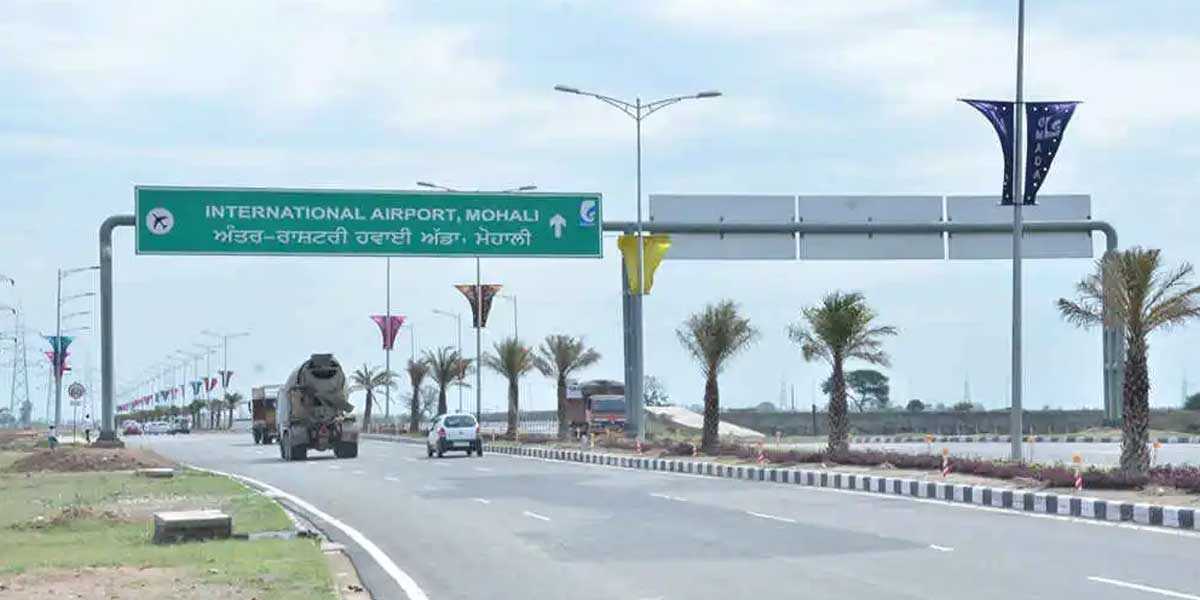
The Mohali administration has introduced a new complication in the plan to create a shorter route to Shaheed Bhagat Singh International Airport. Instead of the initially proposed shorter route starting from the Sector 47/48 intersection on the Chandigarh-Mohali border, they suggest widening the existing Jagatpura road.

This suggestion comes despite Punjab governor-cum-UT administrator Banwarilal Purohit having granted preliminary approval for the shorter route. Currently, commuters must travel to the T-junction near the Indian School of Business, passing Bawa White House, and then turn left towards Airport Chowk before another left towards the airport.

In response to Mohali's proposal, the UT administration vehemently opposes it. They argue that the Jagatpura road is too narrow, making widening difficult. Additionally, ensuring the safety of people traveling to the airport is paramount and cannot be compromised. Therefore, they refuse to endorse this proposal. A senior UT officer emphasised that they have been working for over two years to find a shorter route and cannot accept a plan that endangers airport travellers.

Mohali's deputy commissioner, Aashika Jain, countered these concerns by stating that the estimated cost for widening the Jagatpura road is approximately Rs 11 million. Furthermore, she clarified that the Indian Airforce has no objections to this road as it is at a considerable distance from the airport boundary. Jain also confirmed that the necessary paperwork, including an affidavit for the road, would be submitted to the Punjab and Haryana high court. If implemented, this new route would reduce the distance to the airport from the main road (Sector 48) to just 3 km.

The Mohali administration has introduced a new complication in the plan to create a shorter route to Shaheed Bhagat Singh International Airport. Instead of the initially proposed shorter route starting from the Sector 47/48 intersection on the Chandigarh-Mohali border, they suggest widening the existing Jagatpura road. This suggestion comes despite Punjab governor-cum-UT administrator Banwarilal Purohit having granted preliminary approval for the shorter route. Currently, commuters must travel to the T-junction near the Indian School of Business, passing Bawa White House, and then turn left towards Airport Chowk before another left towards the airport. In response to Mohali's proposal, the UT administration vehemently opposes it. They argue that the Jagatpura road is too narrow, making widening difficult. Additionally, ensuring the safety of people traveling to the airport is paramount and cannot be compromised. Therefore, they refuse to endorse this proposal. A senior UT officer emphasised that they have been working for over two years to find a shorter route and cannot accept a plan that endangers airport travellers. Mohali's deputy commissioner, Aashika Jain, countered these concerns by stating that the estimated cost for widening the Jagatpura road is approximately Rs 11 million. Furthermore, she clarified that the Indian Airforce has no objections to this road as it is at a considerable distance from the airport boundary. Jain also confirmed that the necessary paperwork, including an affidavit for the road, would be submitted to the Punjab and Haryana high court. If implemented, this new route would reduce the distance to the airport from the main road (Sector 48) to just 3 km.

Next Story
Infrastructure Urban

Implementation Status of Jal Jeevan Mission

Since August 2019 the Government has implemented Jal Jeevan Mission to provide assured potable water through household tap connections in rural India. At the start of the mission only 32.3 million (mn) rural households, representing 16.7 per cent, were reported to have tap water connections. States and union territories have reported that 125.8 mn additional rural households have since been provided with tap connections. As a result, of about 193.6 mn rural households roughly 158.2 mn, or 81.71 per cent, are reported to have tap water supply at home.\n\nThe State, district and village level st..

Next Story
Infrastructure Urban

Jal Jeevan Mission Reaches Eighty One Per Cent Rural Coverage

The Government reported substantial progress under the Jal Jeevan Mission, launched in August 2019 to provide tap water to every rural household. At launch only 32.3 million (mn) rural households had tap connections and states and Union territories reported provision of 125.8 mn additional households by March 2026. Consequently, out of about 193.6 mn rural households around 158.2 mn, or 81.71 per cent, are reported to have tap water at home. The Finance Minister announced extension of the mission until 2028 in the 2025-26 budget speech. The Swachh Bharat Mission Grameen, launched in October 20..

Next Story
Infrastructure Urban

Empowering Local Governance for Sustainable Rural Water Supply

The Ministry of Jal Shakti has aligned the Jal Jeevan Mission (JJM) with the 73rd Amendment to strengthen village level planning and community ownership of water supply. Gram Panchayats, village water and sanitation committees and Pani Samitis are to plan, implement, manage and maintain piped water systems, with gram sabha processes formalising handover and oversight. Implementation support agencies including non government organisations, community based organisations and self help groups have been empanelled to train local committees and promote women participation. Under JJM, the department ..

Advertisement

Subscribe to Our Newsletter

Get daily newsletters around different themes from Construction world.

STAY CONNECTED

Advertisement

Advertisement

Advertisement