+
Delhi Airport Urges Metro Use Amid India AI Summit Traffic
ROADS & HIGHWAYS

Delhi Airport Urges Metro Use Amid India AI Summit Traffic

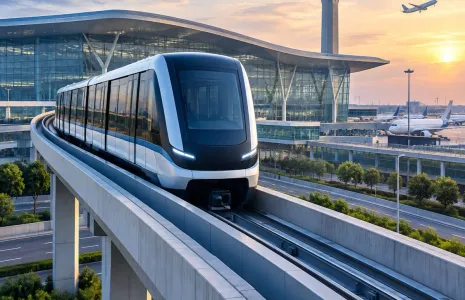
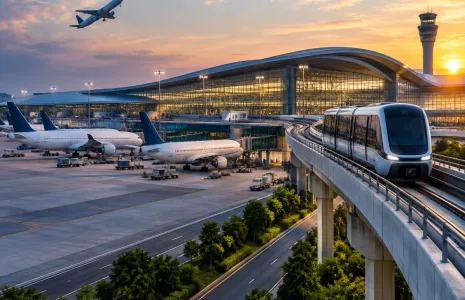
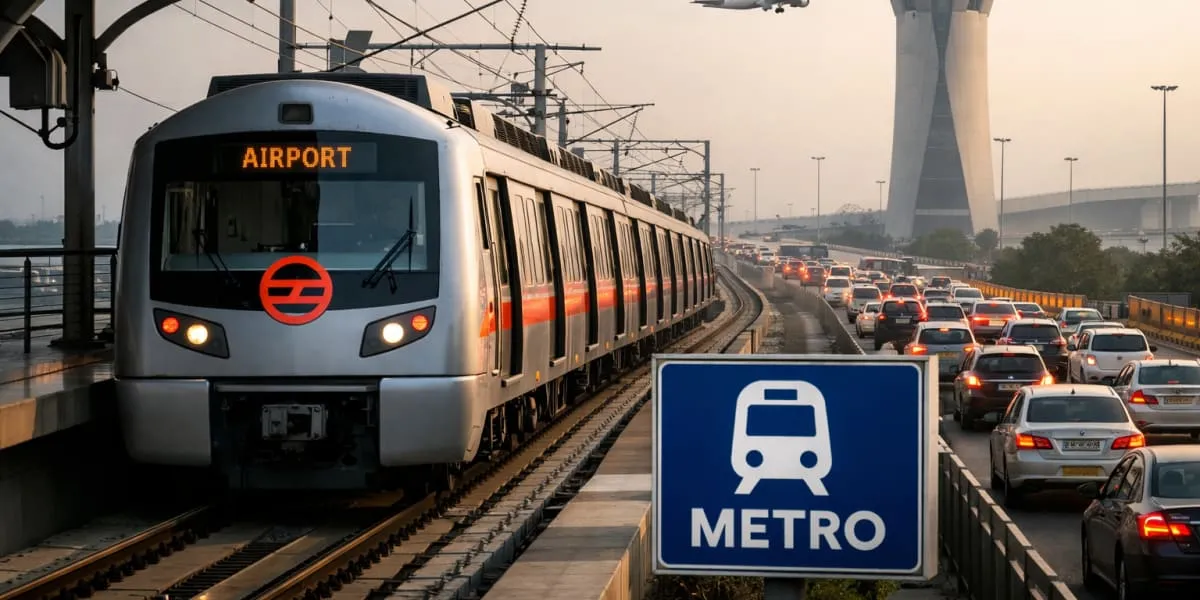
Delhi Airport has advised passengers and visitors to use the metro as the preferred mode of travel during the India AI Summit, citing elevated risks of road congestion and delays. The advisory said road movement around the airport precincts is expected to be heavily affected by summit-related traffic and associated security measures. Passengers were urged to plan journeys with additional time to spare and to prefer rail connectivity where possible.

The airport authority indicated that parking availability may be constrained and that ground transport corridors could experience intermittent restrictions to facilitate summit logistics. Coordination between airport operations, traffic police and civic agencies has been intensified to manage vehicle inflows and ensure that emergency access is maintained. Travellers were asked to follow signage and the guidance of on?site personnel to avoid bottlenecks.

The Delhi Metro Rail Corporation (DMRC) was identified as the primary alternative for surface access, offering direct links to terminal areas and reducing reliance on road transport. Users of the metro were asked to allow time for transfers and last mile travel from stations to terminal entrances, and to factor in possible queuing at security checks. Airlines and ground handlers were said to be working with the airport to align check?in and baggage handling to accommodate passenger flow.

The advisory also recommended that passengers monitor official airport and airline channels for updates on schedules and ground operations and arrive well ahead of departure times. Those relying on taxis or ride sharing were advised to expect detours and pick up or drop off limits in certain zones. The airport authority said the measures aim to safeguard operations and passenger movement while supporting the smooth conduct of the summit.

Delhi Airport has advised passengers and visitors to use the metro as the preferred mode of travel during the India AI Summit, citing elevated risks of road congestion and delays. The advisory said road movement around the airport precincts is expected to be heavily affected by summit-related traffic and associated security measures. Passengers were urged to plan journeys with additional time to spare and to prefer rail connectivity where possible. The airport authority indicated that parking availability may be constrained and that ground transport corridors could experience intermittent restrictions to facilitate summit logistics. Coordination between airport operations, traffic police and civic agencies has been intensified to manage vehicle inflows and ensure that emergency access is maintained. Travellers were asked to follow signage and the guidance of on?site personnel to avoid bottlenecks. The Delhi Metro Rail Corporation (DMRC) was identified as the primary alternative for surface access, offering direct links to terminal areas and reducing reliance on road transport. Users of the metro were asked to allow time for transfers and last mile travel from stations to terminal entrances, and to factor in possible queuing at security checks. Airlines and ground handlers were said to be working with the airport to align check?in and baggage handling to accommodate passenger flow. The advisory also recommended that passengers monitor official airport and airline channels for updates on schedules and ground operations and arrive well ahead of departure times. Those relying on taxis or ride sharing were advised to expect detours and pick up or drop off limits in certain zones. The airport authority said the measures aim to safeguard operations and passenger movement while supporting the smooth conduct of the summit.

Next Story
Building Material

NITI Aayog Unveils Cement Decarbonisation Roadmap

NITI Aayog has released a sector-specific decarbonisation roadmap for cement as part of three green transition reports covering cement, aluminium and MSMEs. The report projects cement production rising to around 2,100 million tonnes by 2070 from 391 million tonnes in 2023, while targeting a reduction in carbon intensity to 0.09–0.13 tCO₂e per tonne. It recommends clinker substitution, refuse-derived fuels, CCUS adoption and carbon trading mechanisms to enable deep decarbonisation. ..

Next Story
Technology

Genesys Launches Advanced GeoRadar System

Genesys International Corporation has launched an advanced Ground Penetrating Radar (GPR) solution from IDS GeoRadar for underground utility mapping in India. The system uses patented Equalised Scrambling Technology (EST) and Wide/Multi-Array Antenna Technology to deliver high-resolution three-dimensional imaging of subsurface infrastructure. The technology enables the detection and mapping of buried assets such as water pipelines, sewer networks, telecom cables and power lines. By providing detailed subsurface insights, the system aims to help urban authorities and infrastructure developers ..

Next Story
Infrastructure Urban

Hindustan Zinc Partners Virginia Tech to Boost Silver Recovery

Hindustan Zinc Limited recently signed a Memorandum of Understanding (MoU) with Virginia Tech to advance research aimed at improving silver recovery across its lead–zinc (Pb–Zn) concentrators. The collaboration will focus on refining flotation techniques and optimising reagent usage to improve concentrate quality and operational efficiency at processing plants.Virginia Tech, based in Blacksburg, Virginia, is globally recognised for its expertise in mining engineering, mineral processing and applied metallurgical research. Through this partnership, Hindustan Zinc will leverage global resear..

Advertisement

Subscribe to Our Newsletter

Get daily newsletters around different themes from Construction world.

STAY CONNECTED

Advertisement

Advertisement

Advertisement

Open In App