+
Government Approves Two Major Highway Projects Worth Rs 140 bn
ROADS & HIGHWAYS

Government Approves Two Major Highway Projects Worth Rs 140 bn

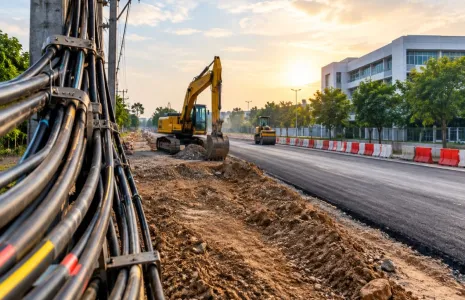
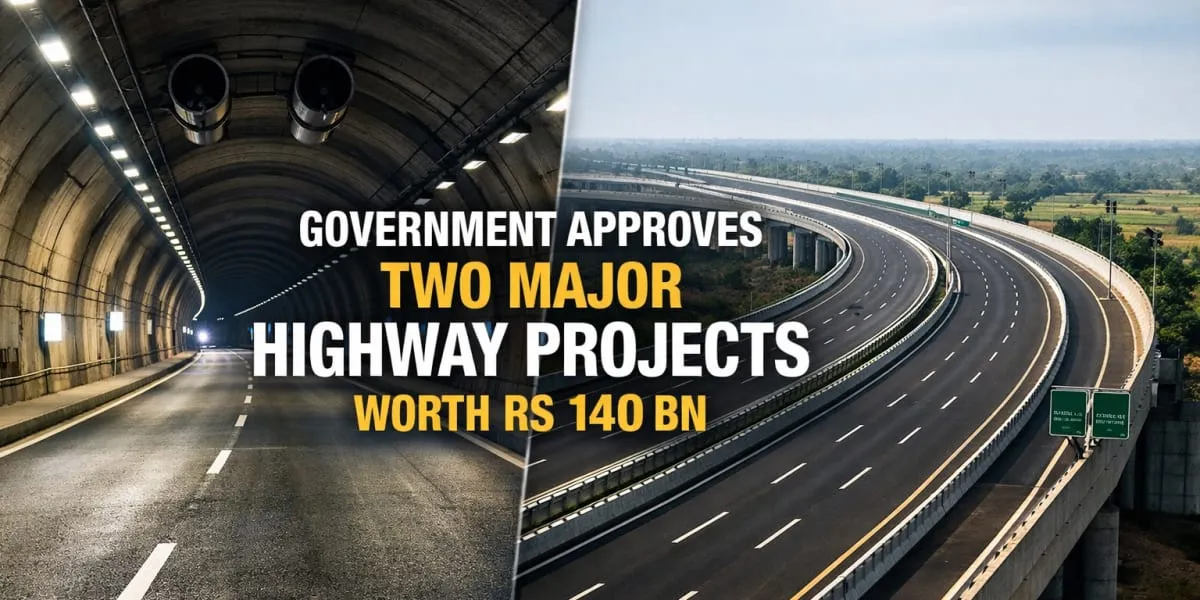
The government approved two major highway infrastructure projects in the Delhi region and in Uttar Pradesh with a combined capital outlay of Rs 140 billion (bn). The approvals were announced by the information and broadcasting minister in New Delhi and cover a long road tunnel in Delhi and an access controlled highway section in Uttar Pradesh.

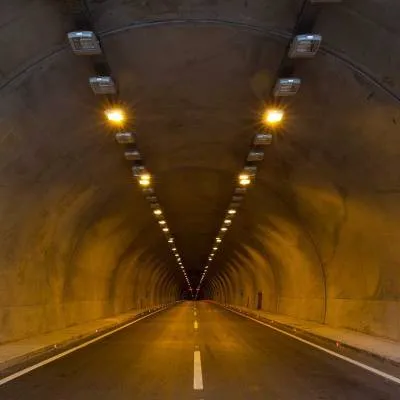
The Delhi scheme provides for a six-lane road tunnel for NH-148AE linking the Dwarka Expressway with Nelson Mandela Marg at Vasant Kunj. The tunnel will run for eight point one kilometre and is to be developed at a total capital cost of Rs 69.69 billion (bn). An elevated road of one point eight kilometre along Nelson Mandela Marg has been proposed to mitigate congestion at the intersection.

The minister also indicated that the National Highways Authority of India is proposing an elevated corridor between AIIMS and Mahipalpur as part of broader measures to improve flows. The Delhi project is expected to provide faster connectivity between west and south Delhi and to relieve pressure on existing urban routes. It will generate close to 0.754 million (mn) person-days of direct employment and 0.98 million (mn) person-days of indirect employment.

The second approval covers the 117.7 kilometre four/six-lane access controlled Kanpur–Kabrai section of NH-34 in Uttar Pradesh at an estimated capital cost of Rs 71.45 billion (bn). The corridor is designed for operating speeds of 80 to 100 kilometres per hour and will reduce travel time between Kanpur and Kabrai from three and a half hours to one and a half hours. It will strengthen onward links to Sagar, Bhopal and other parts of Madhya Pradesh.

The project will also provide strategic integration with NH-34, NH-35, the Bundelkhand Expressway, the Kanpur Ring Road and several state highways, thereby improving regional highway connectivity. The minister noted that the scheme will generate close to 12 million (mn) person-days of combined direct and indirect employment and is expected to support economic activity along the corridor.

The government approved two major highway infrastructure projects in the Delhi region and in Uttar Pradesh with a combined capital outlay of Rs 140 billion (bn). The approvals were announced by the information and broadcasting minister in New Delhi and cover a long road tunnel in Delhi and an access controlled highway section in Uttar Pradesh. The Delhi scheme provides for a six-lane road tunnel for NH-148AE linking the Dwarka Expressway with Nelson Mandela Marg at Vasant Kunj. The tunnel will run for eight point one kilometre and is to be developed at a total capital cost of Rs 69.69 billion (bn). An elevated road of one point eight kilometre along Nelson Mandela Marg has been proposed to mitigate congestion at the intersection. The minister also indicated that the National Highways Authority of India is proposing an elevated corridor between AIIMS and Mahipalpur as part of broader measures to improve flows. The Delhi project is expected to provide faster connectivity between west and south Delhi and to relieve pressure on existing urban routes. It will generate close to 0.754 million (mn) person-days of direct employment and 0.98 million (mn) person-days of indirect employment. The second approval covers the 117.7 kilometre four/six-lane access controlled Kanpur–Kabrai section of NH-34 in Uttar Pradesh at an estimated capital cost of Rs 71.45 billion (bn). The corridor is designed for operating speeds of 80 to 100 kilometres per hour and will reduce travel time between Kanpur and Kabrai from three and a half hours to one and a half hours. It will strengthen onward links to Sagar, Bhopal and other parts of Madhya Pradesh. The project will also provide strategic integration with NH-34, NH-35, the Bundelkhand Expressway, the Kanpur Ring Road and several state highways, thereby improving regional highway connectivity. The minister noted that the scheme will generate close to 12 million (mn) person-days of combined direct and indirect employment and is expected to support economic activity along the corridor.

Related Stories

Gold Stories

Next Story
Infrastructure Transport

MMRDA Targets Completion of Projects by December 2028

The Mumbai Metropolitan Region Development Authority (MMRDA) is targeting the completion of all its ongoing infrastructure projects by December 2028, a year ahead of its December 2029 deadline, Metropolitan Commissioner Dr Sanjay Mukherjee has said.Speaking at the sixth edition of the Real Estate & Infrastructure Investors' Summit (REIIS) 2026 in Mumbai, Mukherjee said the authority was developing an integrated network of roads, tunnels, sea links and Metro corridors under its broader vision of “Mumbai in 59 Minutes”.The objective is to improve east-west and north-south connectivity an..

Next Story
Building Material

High-Performance Façades Gain Ground in Indian Buildings

High-performance façades are gaining greater importance in Indian architecture as developers and architects increasingly focus on energy efficiency, thermal comfort and building performance, according to Shankar Fenestrations & Glasses.The company said modern façade systems are increasingly being considered as part of a building's overall performance strategy rather than being used primarily as aesthetic elements.High-performance glass, curtain wall systems and structural glazing can contribute to thermal regulation, solar control, daylight management and indoor comfort. Their growing ad..

Next Story
Technology

SPML Infra's 104.4 kWh BESS Battery Pack Clears Global Tests

SPML Infra has announced that its proprietary 104.4 kWh Battery Energy Storage System (BESS) battery pack has completed key international safety, performance and transportation testing and certification requirements, marking a step towards its commercial deployment.Developed under the company's own intellectual property, the battery pack has completed requirements under UL9540A, IEC 62619, IEC 63056, IEC 60730, IEC 61000-6-2, IEC 61000-6-4 and UN38.3 standards.The testing covers areas including thermal runaway safety, battery performance, system functional safety, electromagnetic compatibility..

Advertisement

Subscribe to Our Newsletter

Get daily newsletters around different themes from Construction world.

STAY CONNECTED

Advertisement

SPECIAL OFFER
QR Code