+
Himachal Approves Road Safety Audit Policy For PWD Roads
ROADS & HIGHWAYS

Himachal Approves Road Safety Audit Policy For PWD Roads

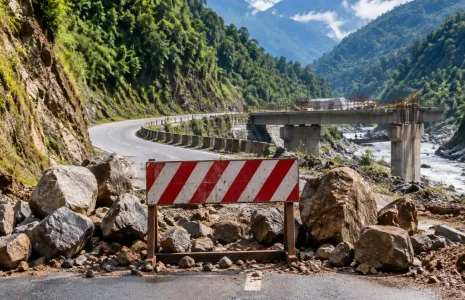
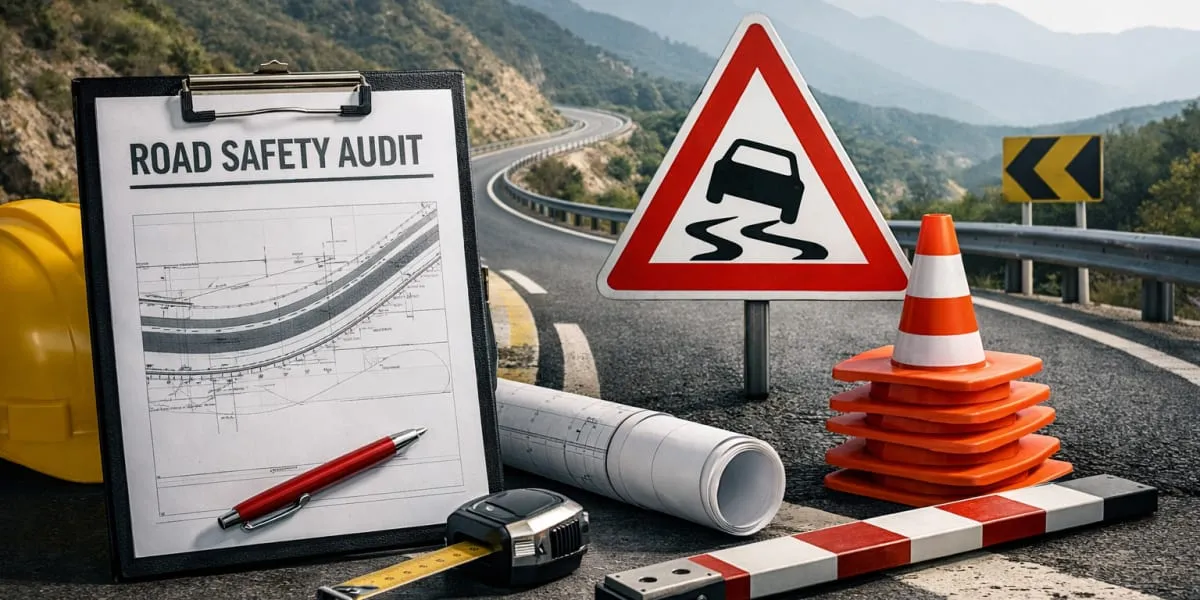
The Himachal Pradesh government has approved a Road Safety Audit Policy for roads under the Public Works Department to integrate safety into planning, design, construction, operation and maintenance. The framework aligns with Indian Road Congress guidelines to improve infrastructure, reduce accident risks and strengthen the state road network. It mandates audits at five stages: feasibility or preliminary design, detailed project report, construction, pre-opening and for existing roads.

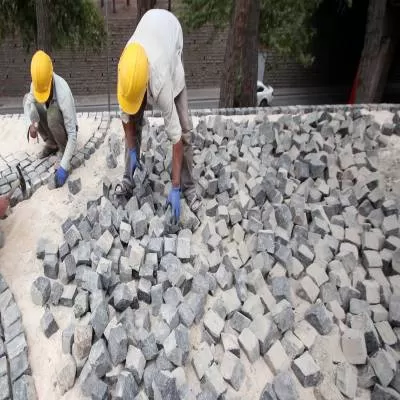
At feasibility stage auditors will examine route selection, alignment, intersections, cross-sections and connectivity with the existing network. The detailed design review will assess geometric design, signs, pavement markings, lighting and provisions for vulnerable road users and roadside safety features. Construction audits will focus on work-zone safety, traffic management, worker protection and compliance with prior recommendations, while pre-opening checks will include day and night inspections.

Audits must be carried out by Indian Road Congress-certified road safety auditors or departmental officers who have completed a 15-day audit certification programme and have at least 10 years of hill road construction experience, and auditors must be independent of project execution. A dedicated road safety cell will be set up at HPPWD headquarters to empanel auditors, review compliance reports and organise training and awareness programmes. The Engineer-in-Chief, HPPWD, will monitor the programme quarterly.

The government has made it mandatory for all road projects costing more than Rs 10 million (mn) to earmark one per cent of the project cost for safety audits and requires adherence to Indian Road Congress standards on signage, markings and safety features. The state reported a 6.48 per cent decline in road accidents in 2024 compared with 2023, with accidents falling to 2,107 from 2,253, fatalities declining to 806 from 892 and injuries to 3,290 from 3,449. The Chief Minister, Sukhvinder Singh Sukhu, said the government was adopting a proactive, scientific approach to institutionalise independent audits and to prioritise human life in road development.

The Himachal Pradesh government has approved a Road Safety Audit Policy for roads under the Public Works Department to integrate safety into planning, design, construction, operation and maintenance. The framework aligns with Indian Road Congress guidelines to improve infrastructure, reduce accident risks and strengthen the state road network. It mandates audits at five stages: feasibility or preliminary design, detailed project report, construction, pre-opening and for existing roads. At feasibility stage auditors will examine route selection, alignment, intersections, cross-sections and connectivity with the existing network. The detailed design review will assess geometric design, signs, pavement markings, lighting and provisions for vulnerable road users and roadside safety features. Construction audits will focus on work-zone safety, traffic management, worker protection and compliance with prior recommendations, while pre-opening checks will include day and night inspections. Audits must be carried out by Indian Road Congress-certified road safety auditors or departmental officers who have completed a 15-day audit certification programme and have at least 10 years of hill road construction experience, and auditors must be independent of project execution. A dedicated road safety cell will be set up at HPPWD headquarters to empanel auditors, review compliance reports and organise training and awareness programmes. The Engineer-in-Chief, HPPWD, will monitor the programme quarterly. The government has made it mandatory for all road projects costing more than Rs 10 million (mn) to earmark one per cent of the project cost for safety audits and requires adherence to Indian Road Congress standards on signage, markings and safety features. The state reported a 6.48 per cent decline in road accidents in 2024 compared with 2023, with accidents falling to 2,107 from 2,253, fatalities declining to 806 from 892 and injuries to 3,290 from 3,449. The Chief Minister, Sukhvinder Singh Sukhu, said the government was adopting a proactive, scientific approach to institutionalise independent audits and to prioritise human life in road development.

Related Stories

Gold Stories
Next Story
Real Estate

BMC OC Amnesty Scheme Requires Key Approvals from Mumbai Societies

The Brihanmumbai Municipal Corporation (BMC) has clarified that housing societies applying under its Occupation Certificate (OC) amnesty scheme must possess key approvals linked to the original construction. The requirements include a valid Intimation of Disapproval (IOD), an approved building plan and a Commencement Certificate (CC), along with a No Objection Certificate (NOC) from the developer or original construction applicant. The Standard Operating Procedure (SOP) makes clear that the absence of an OC alone will not qualify a building for relief. Societies must establish that their build..

Next Story
Real Estate

Gurugram Emerges as Luxury Senior Living Hub

Gurugram is emerging as a potential hub for luxury senior living, supported by available land, healthcare infrastructure, connectivity and a concentration of affluent professionals, high-net-worth individuals and non-resident Indians. These factors could give the city an advantage over land-constrained metros such as Mumbai. A report by the Association of Senior Living India (ASLI) and JLL estimates that India’s organised senior living market could represent a $10.1 bn opportunity by 2030. The sector had about 25,050 organised units as of June 2026, while penetration stood at only 1.5 per ce..

Next Story
Real Estate

Corrosion Costs India’s Infrastructure Rs. 142 bn Annually

Corrosion costs India an estimated Rs. 1.42 tn annually, equivalent to 4.3 per cent of gross domestic product, according to a report by the Confederation of Indian Industry and the National Research Institute. Infrastructure accounts for Rs. 142 bn of the annual burden, making it the sector with the largest absolute cost among those examined. The report, presented at the CII Annual Infrastructure Summit 2026, said the infrastructure-sector cost equals about 2.9 per cent of the sector’s gross domestic product. It estimated that effective measures could generate maximum savings of Rs. 495.8 bn..

Advertisement

Subscribe to Our Newsletter

Get daily newsletters around different themes from Construction world.

STAY CONNECTED

Advertisement

SPECIAL OFFER
QR Code