+
Karnataka CM Lays Foundation For Bengaluru First Tunnel Road
ROADS & HIGHWAYS

Karnataka CM Lays Foundation For Bengaluru First Tunnel Road

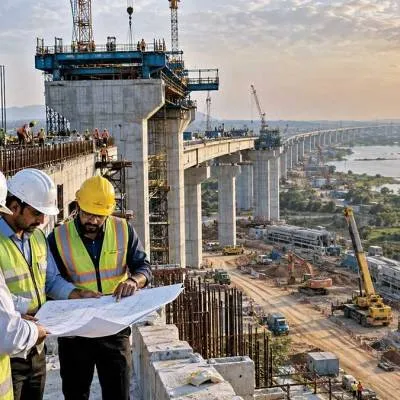
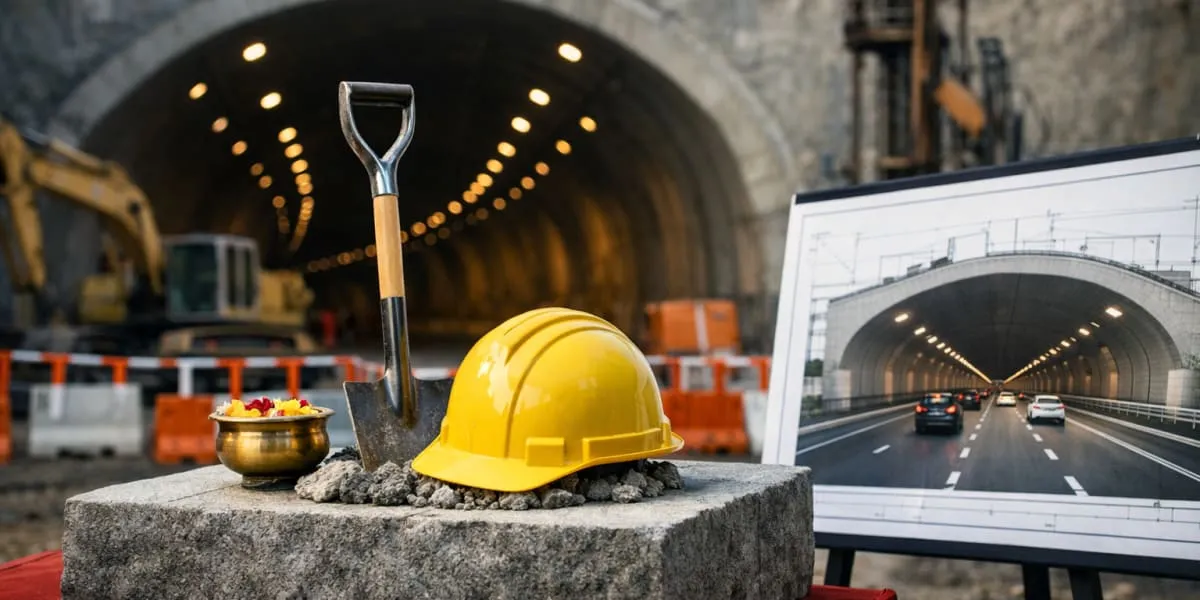
Chief Minister DK Shivakumar laid the foundation stone for Bengaluru's first tunnel road project on Sunday, intended to ease traffic between Hebbal Junction and Mekhri Circle. The six-lane, bidirectional two point two km tunnel will be built at a cost of Rs 11,390 million (Rs 11,390 mn) and is expected to be completed in 18 months with a maximum speed of 60 km per hour and no tolls. The event was attended by senior ministers and Bengaluru Development Authority (BDA) officials.

The tunnel will start at Bellary Road–Hebbal Junction, pass under a railway bridge and Outer Ring Road and run beneath the veterinary college campus before emerging near the University of Agricultural Sciences staff quarters. It is intended to provide a largely signal free corridor for traffic heading to Kempegowda International Airport and to ease congestion at key junctions. Construction is planned using cut and cover methodology with funding from the BDA.

Officials said proposals have been submitted for a north-south corridor to extend the tunnel road from Hebbal to Silk Board, which they expect to complete in three to four years subject to approvals and land acquisition. The chief minister rejected criticism from opposition parties, arguing that previous administrations had not tackled the city's traffic and that the government would proceed despite dissent. He indicated that feedback would be considered but that decisions on development would not be compromised.

Key technical features include a six-lane three plus three bidirectional profile with a carriage width of 10.5 metres for three lanes and a longitudinal ventilation system to manage air quality. Safety provisions will cover smoke detection, fire suppression, emergency evacuation and dedicated response mechanisms, together with CCTV coverage, a public address system, an emergency call network, tunnel radio and a voice message system. Construction will include open cut ramps and cast in situ box structures alongside the primary cut and cover approach.

Chief Minister DK Shivakumar laid the foundation stone for Bengaluru's first tunnel road project on Sunday, intended to ease traffic between Hebbal Junction and Mekhri Circle. The six-lane, bidirectional two point two km tunnel will be built at a cost of Rs 11,390 million (Rs 11,390 mn) and is expected to be completed in 18 months with a maximum speed of 60 km per hour and no tolls. The event was attended by senior ministers and Bengaluru Development Authority (BDA) officials. The tunnel will start at Bellary Road–Hebbal Junction, pass under a railway bridge and Outer Ring Road and run beneath the veterinary college campus before emerging near the University of Agricultural Sciences staff quarters. It is intended to provide a largely signal free corridor for traffic heading to Kempegowda International Airport and to ease congestion at key junctions. Construction is planned using cut and cover methodology with funding from the BDA. Officials said proposals have been submitted for a north-south corridor to extend the tunnel road from Hebbal to Silk Board, which they expect to complete in three to four years subject to approvals and land acquisition. The chief minister rejected criticism from opposition parties, arguing that previous administrations had not tackled the city's traffic and that the government would proceed despite dissent. He indicated that feedback would be considered but that decisions on development would not be compromised. Key technical features include a six-lane three plus three bidirectional profile with a carriage width of 10.5 metres for three lanes and a longitudinal ventilation system to manage air quality. Safety provisions will cover smoke detection, fire suppression, emergency evacuation and dedicated response mechanisms, together with CCTV coverage, a public address system, an emergency call network, tunnel radio and a voice message system. Construction will include open cut ramps and cast in situ box structures alongside the primary cut and cover approach.

Related Stories

Gold Stories
Next Story
Infrastructure Transport

MMRDA Targets Completion of Projects by December 2028

The Mumbai Metropolitan Region Development Authority (MMRDA) is targeting the completion of all its ongoing infrastructure projects by December 2028, a year ahead of its December 2029 deadline, Metropolitan Commissioner Dr Sanjay Mukherjee has said.Speaking at the sixth edition of the Real Estate & Infrastructure Investors' Summit (REIIS) 2026 in Mumbai, Mukherjee said the authority was developing an integrated network of roads, tunnels, sea links and Metro corridors under its broader vision of “Mumbai in 59 Minutes”.The objective is to improve east-west and north-south connectivity an..

Next Story
Building Material

High-Performance Façades Gain Ground in Indian Buildings

High-performance façades are gaining greater importance in Indian architecture as developers and architects increasingly focus on energy efficiency, thermal comfort and building performance, according to Shankar Fenestrations & Glasses.The company said modern façade systems are increasingly being considered as part of a building's overall performance strategy rather than being used primarily as aesthetic elements.High-performance glass, curtain wall systems and structural glazing can contribute to thermal regulation, solar control, daylight management and indoor comfort. Their growing ad..

Next Story
Technology

SPML Infra's 104.4 kWh BESS Battery Pack Clears Global Tests

SPML Infra has announced that its proprietary 104.4 kWh Battery Energy Storage System (BESS) battery pack has completed key international safety, performance and transportation testing and certification requirements, marking a step towards its commercial deployment.Developed under the company's own intellectual property, the battery pack has completed requirements under UL9540A, IEC 62619, IEC 63056, IEC 60730, IEC 61000-6-2, IEC 61000-6-4 and UN38.3 standards.The testing covers areas including thermal runaway safety, battery performance, system functional safety, electromagnetic compatibility..

Advertisement

Subscribe to Our Newsletter

Get daily newsletters around different themes from Construction world.

STAY CONNECTED

Advertisement

SPECIAL OFFER
QR Code