Kerala Launches Round-the-Clock Highway Enforcement In Six Zones
ROADS & HIGHWAYS

Kerala Launches Round-the-Clock Highway Enforcement In Six Zones

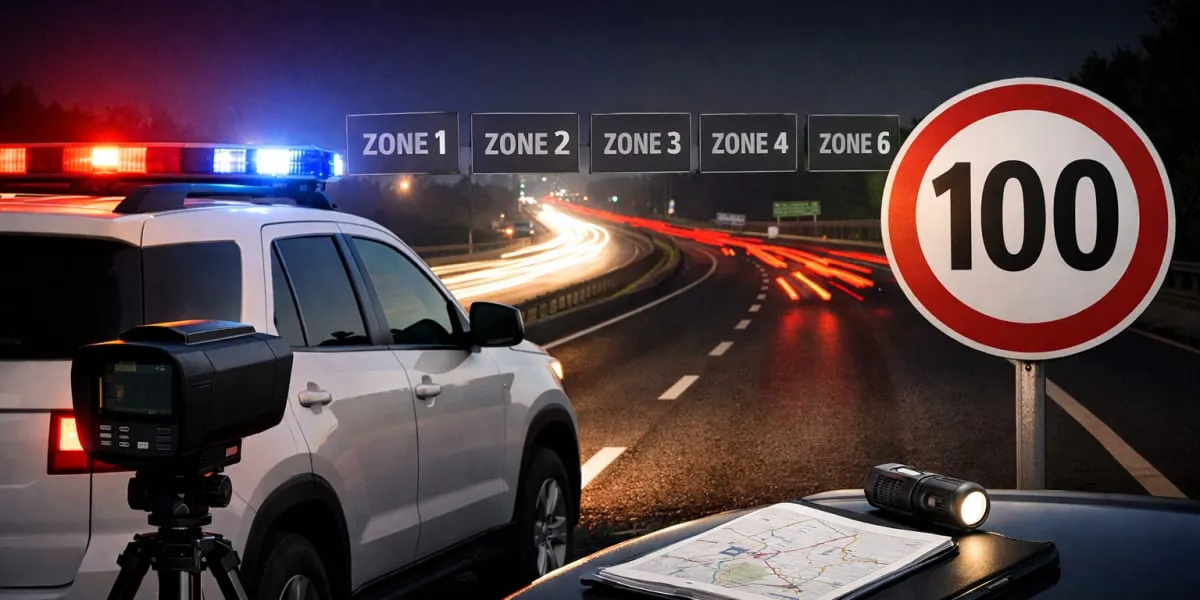
Kerala has launched a round-the-clock enforcement mechanism on national highways by dividing the network into six enforcement zones with dedicated patrol teams after a fatal bus accident. The initiative seeks to curb overspeeding, reduce road fatalities and strengthen traffic law enforcement across the state.

The highway network will be apportioned into six stretches of around 100 kilometres each, with teams deployed around the clock throughout the week, the transport minister said. Two southern zones will be under the Deputy Transport Commissioner, Thiruvananthapuram; Ernakulam and Thrissur will host one central zone each; and two northern zones will fall under Kozhikode. Exact kilometre limits will be set by the respective Deputy Transport Commissioners.

Special enforcement squads will be formed from personnel of Enforcement RTOs, RTOs and Sub-RTOs, and each squad will include Motor Vehicle Inspectors, Assistant Motor Vehicle Inspectors, drivers and departmental vehicles fitted with enforcement equipment. Officials will be rotated across day, evening and night shifts to maintain continuous coverage without disrupting regular office work.

Squads will concentrate on overspeeding, dangerous and drunken driving, use of mobile phones while driving, non-use of helmets and seat belts, overloaded goods vehicles, illegal modifications and breaches of fitness certificates, permits, insurance and taxes, as well as unauthorised passenger transport. They will also respond to major accidents, coordinate with the police and the National Highways Authority of India to clear obstructing vehicles and identify accident-prone stretches for remedial action.

Rather than remaining stationary, teams will follow a mobile patrolling model with surprise inspections, joint drives with police and technology-based surveillance, including use of NHAI camera footage during holidays and festival seasons. Deputy Transport Commissioners have been directed to supervise operations, monitor deployment through GPS, hold weekly reviews and ensure uniforms, reflective jackets, body cameras and speed detection devices are used where available; lapses will be treated seriously.

Kerala has launched a round-the-clock enforcement mechanism on national highways by dividing the network into six enforcement zones with dedicated patrol teams after a fatal bus accident. The initiative seeks to curb overspeeding, reduce road fatalities and strengthen traffic law enforcement across the state. The highway network will be apportioned into six stretches of around 100 kilometres each, with teams deployed around the clock throughout the week, the transport minister said. Two southern zones will be under the Deputy Transport Commissioner, Thiruvananthapuram; Ernakulam and Thrissur will host one central zone each; and two northern zones will fall under Kozhikode. Exact kilometre limits will be set by the respective Deputy Transport Commissioners. Special enforcement squads will be formed from personnel of Enforcement RTOs, RTOs and Sub-RTOs, and each squad will include Motor Vehicle Inspectors, Assistant Motor Vehicle Inspectors, drivers and departmental vehicles fitted with enforcement equipment. Officials will be rotated across day, evening and night shifts to maintain continuous coverage without disrupting regular office work. Squads will concentrate on overspeeding, dangerous and drunken driving, use of mobile phones while driving, non-use of helmets and seat belts, overloaded goods vehicles, illegal modifications and breaches of fitness certificates, permits, insurance and taxes, as well as unauthorised passenger transport. They will also respond to major accidents, coordinate with the police and the National Highways Authority of India to clear obstructing vehicles and identify accident-prone stretches for remedial action. Rather than remaining stationary, teams will follow a mobile patrolling model with surprise inspections, joint drives with police and technology-based surveillance, including use of NHAI camera footage during holidays and festival seasons. Deputy Transport Commissioners have been directed to supervise operations, monitor deployment through GPS, hold weekly reviews and ensure uniforms, reflective jackets, body cameras and speed detection devices are used where available; lapses will be treated seriously.

Next Story
Infrastructure Urban

SCLR Extension Nears Completion Linking BKC With Signal-Free Route

The Santacruz-Chembur Link Road (SCLR) extension towards Bandra-Kurla Complex (BKC) via the Mumbai University campus has entered its final stage, bringing motorists closer to a direct, signal-free connection between the Western Express Highway and the city’s commercial district. The elevated connector is being built as an arm from the SCLR alignment and will link the western suburbs with BKC without surface signals. The link is designed to reduce journey times for commuters travelling from the western suburbs to BKC and to improve access to eastern Mumbai. By carrying through traffic above s..

Next Story
Infrastructure Transport

Raiganj MP Seeks Bengal Only Highway Link To Siliguri

Raiganj Member of Parliament Kartik Chandra Paul met Union Minister for Road Transport and Highways Nitin Gadkari in New Delhi to press for a new stretch of national highway in North Dinajpur district. He urged approval for a Bengal-to-Bengal link that would connect National Highways 12 and 27 to allow vehicles bound for Siliguri to avoid the current route through Kishanganj in neighbouring Bihar. He also submitted a proposed alignment of the new road to the ministry for consideration. At present vehicles from Raiganj travel along NH-12 and join NH-27 at Purnia More in Dalkhola, a route that p..

Next Story
Infrastructure Transport

Airport Kilambakkam Metro Line To Be Extended To Chengalpattu

Chennai Metro Rail (CMRL) has invited tenders for two detailed project reports that would extend its rail network to Chengalpattu in the south and extend Corridor-5 to Wimco Nagar in the north as part of a second wave of expansion beyond the operator's corridors under construction. The move signals an acceleration of planning for suburban links and interchange nodes. The larger of the two studies covers a roughly 27km extension from the planned Kilambakkam metro station to Chengalpattu under Corridor-1, Phase I. CMRL floated the tender at an estimated cost of Rs 21.6 mn. The proposed line woul..

Advertisement

Subscribe to Our Newsletter

Get daily newsletters around different themes from Construction world.

STAY CONNECTED

Advertisement

Advertisement

Advertisement