MMRDA’s SCLR Bridge Wins National Infrastructure Award
ROADS & HIGHWAYS

MMRDA’s SCLR Bridge Wins National Infrastructure Award

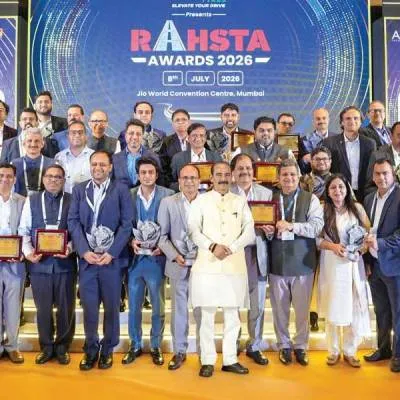
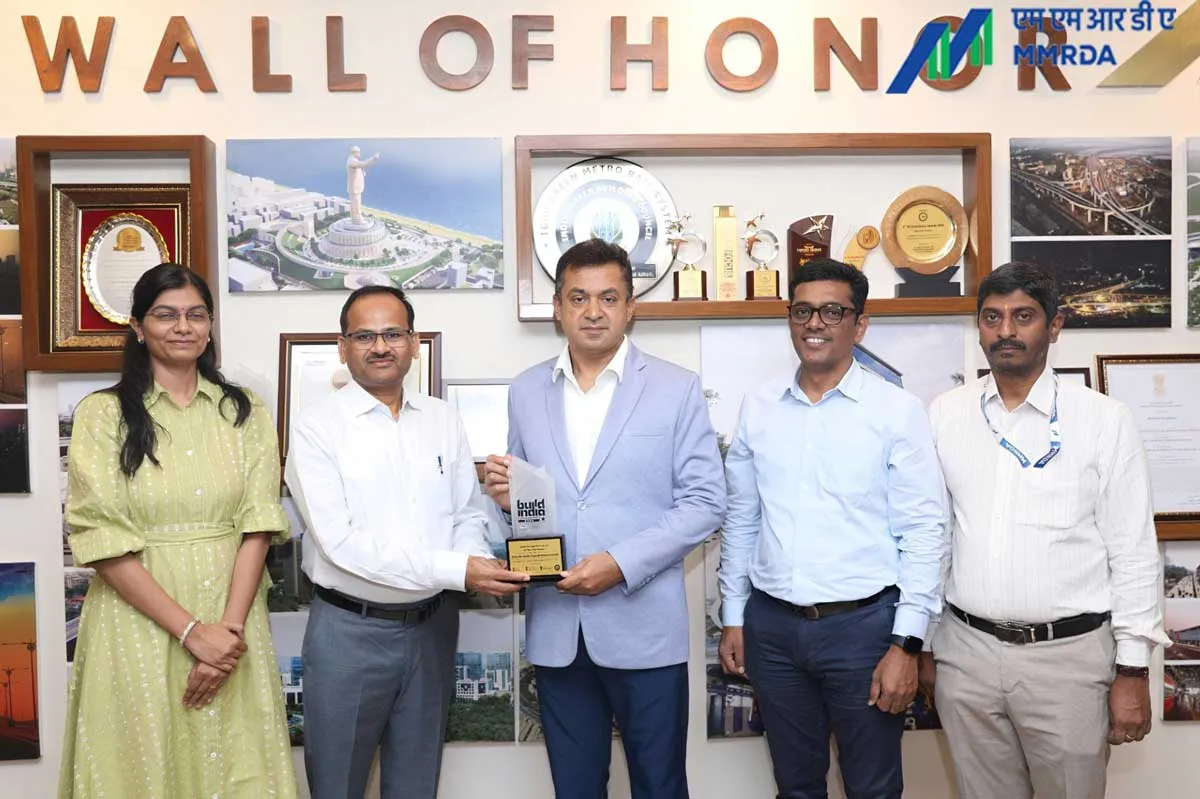
The Mumbai Metropolitan Region Development Authority’s (MMRDA) Santacruz-Chembur Link Road (SCLR) Cable-Stayed Bridge has won the ‘Engineering Innovation of the Year’ award at the Build India Infrastructure Awards 2026, according to the authority’s official X (formerly Twitter) handle.

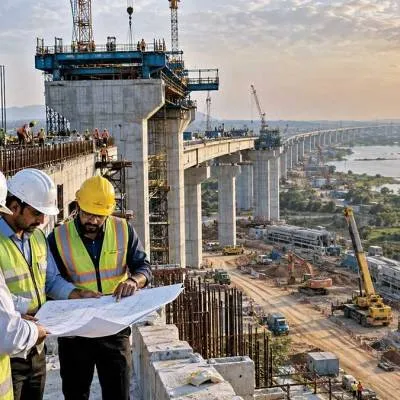
The bridge is described as South Asia’s first cable-stayed bridge featuring a 100-m horizontal curve. The project includes a 105-m main span and a two-lane ramp crossing above the Western Express Highway.

As per MMRDA, the bridge was constructed over live highway traffic while accommodating an existing flyover and two Metro tunnels beneath the alignment, making execution highly complex. The project involved the erection of prefabricated structural steel segments under significant space and utility constraints.

The authority stated that the bridge is expected to improve east-west connectivity across Mumbai, reduce congestion on key corridors and lower travel time for commuters.

MMRDA added that the recognition reflects its focus on delivering large-scale infrastructure projects aimed at enhancing urban mobility across the Mumbai Metropolitan Region.

Photo source: MMRDA via X

The Mumbai Metropolitan Region Development Authority’s (MMRDA) Santacruz-Chembur Link Road (SCLR) Cable-Stayed Bridge has won the ‘Engineering Innovation of the Year’ award at the Build India Infrastructure Awards 2026, according to the authority’s official X (formerly Twitter) handle.The bridge is described as South Asia’s first cable-stayed bridge featuring a 100-m horizontal curve. The project includes a 105-m main span and a two-lane ramp crossing above the Western Express Highway.As per MMRDA, the bridge was constructed over live highway traffic while accommodating an existing flyover and two Metro tunnels beneath the alignment, making execution highly complex. The project involved the erection of prefabricated structural steel segments under significant space and utility constraints.The authority stated that the bridge is expected to improve east-west connectivity across Mumbai, reduce congestion on key corridors and lower travel time for commuters.MMRDA added that the recognition reflects its focus on delivering large-scale infrastructure projects aimed at enhancing urban mobility across the Mumbai Metropolitan Region.Photo source: MMRDA via X

Next Story
Infrastructure Urban

Cabinet Approves Two Year Scheme To Replace Old Trucks And Buses

The Union Cabinet, chaired by the Prime Minister, approved a two-year scheme to reduce air pollution in the Delhi–NCR region and promote cleaner mobility. The programme will be funded through the National Capital Region Planning Board under the Ministry of Housing and Urban Affairs and implemented by the Ministry of Road Transport and Highways and the Ministry of Petroleum and Natural Gas, with participating States and Union Territories of Delhi, Haryana, Rajasthan and Uttar Pradesh. The total financial outlay has been set at Rs 95.85 billion (bn), with the Central Government contributing Rs..

Next Story
Infrastructure Transport

Bengaluru Suburban Rail And Metro To Share 500-Metre Corridor

Bengaluru suburban rail and the Metro will share a 500-metre corridor at Benniganahalli, a decision that planners say will reduce capital expenditure and urban disruption. The consolidation of alignments across the short stretch is intended to avoid duplication of elevated structures and station facilities while cutting land acquisition needs. Authorities put the maximum savings at Rs 1.69 bn (1,690 mn). The arrangement also aims to streamline construction interfaces between the two systems. The shared corridor will require coordinated design of track beds, piers and passenger access so that s..

Next Story
Infrastructure Urban

DRDO And IAF Complete Successful RudraM-II Flight Tests

The Defence Research and Development Organisation (DRDO) and the Indian Air Force (IAF) have conducted successful flight tests of the RudraM-II air-to-surface missile from an airborne platform. The trials were carried out under extreme release conditions with a critical trajectory that established the capability of all subsystems. The series of releases tested the missile's guidance, seeker and propulsion elements in an operationally representative environment. The missiles, released from the aircraft, were guided to a predefined target with pinpoint accuracy and all test objectives were fully..

Advertisement

Subscribe to Our Newsletter

Get daily newsletters around different themes from Construction world.

STAY CONNECTED

Advertisement

Advertisement

Advertisement