MMRDA Begins Rs 26.8 Billion Eastern Freeway Extension
ROADS & HIGHWAYS

MMRDA Begins Rs 26.8 Billion Eastern Freeway Extension

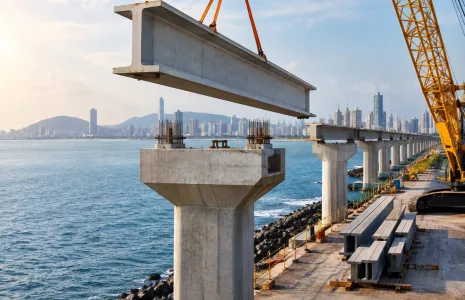
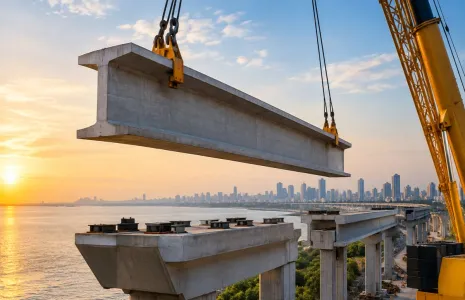
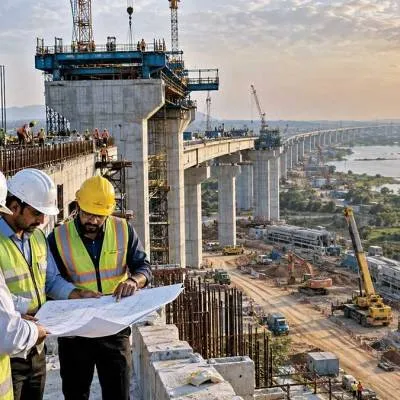
The Mumbai Metropolitan Region Development Authority (MMRDA) has begun work on the Rs 26.8 billion elevated corridor connecting Chheda Nagar near Chembur to Anand Nagar in Thane, marking a key extension of the Eastern Freeway.

Project Overview

The project forms part of MMRDA’s plan to provide a signal-free corridor between South Mumbai and Thane. The new elevated road will begin near the Eastern Freeway’s landing at Chheda Nagar in Ghatkopar and extend over 13.9 kilometres, passing through Ramabai Nagar, Vikhroli, Kanjurmarg, JVLR, Airoli, and Mulund, before terminating at Anand Nagar, Thane.

Once complete, it will connect with the proposed Anand Nagar–Saket elevated corridor at Mulund Octroi Naka, further strengthening north-south connectivity. For south-bound commuters, two-lane entry and exit ramps have been planned near Mulund Check Naka, Airoli Junction, and Vikhroli Junction.

Design and Features

The six-lane corridor will feature three lanes in each direction across a 25-metre-wide superstructure, with each span measuring 40 metres. The elevated stretch is expected to cut travel time between South Mumbai and Thane to 20–25 minutes.

Current Progress

Preliminary survey and test piling work have been completed. The MMRDA has begun geotechnical investigations and utility identification, while pier casting has already commenced. According to officials, 5.38 per cent of physical work has been completed.

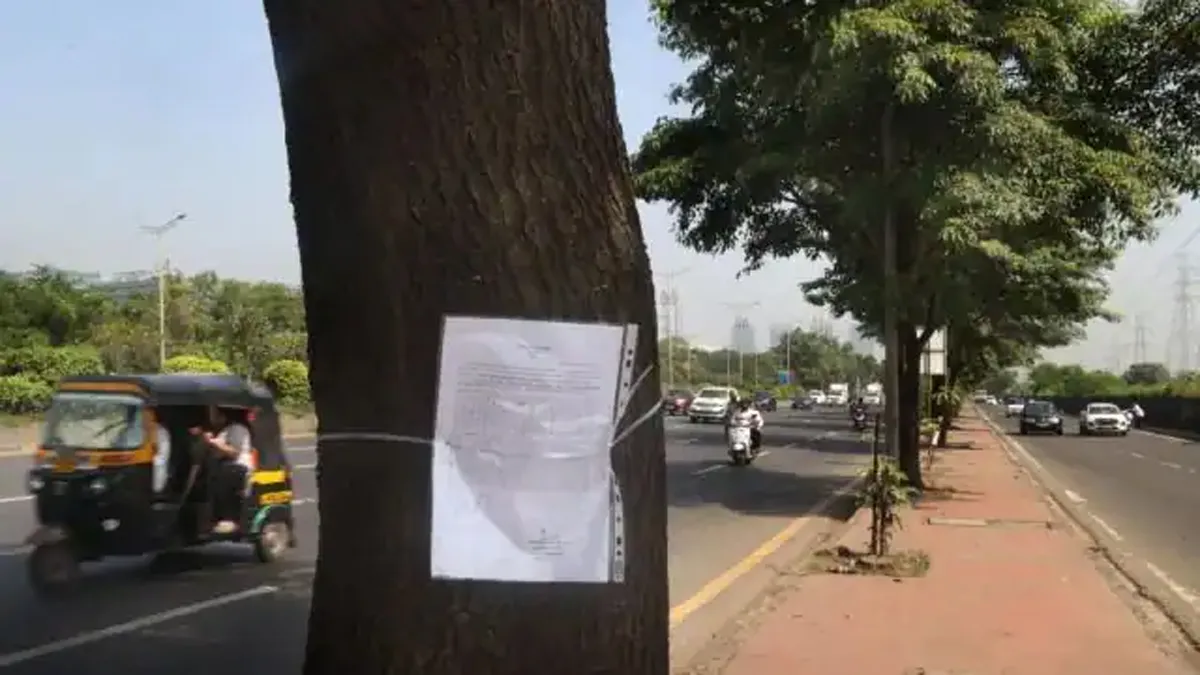
The project will impact around 700 trees along the Eastern Express Highway, for which the Brihanmumbai Municipal Corporation (BMC) has issued public notices.

Timeline

Construction is expected to take four years, including 12 months for design and environmental clearance, followed by 36 months of civil execution.

Official Statement

Dr Sanjay Mukherjee, IAS, Metropolitan Commissioner, MMRDA, said, “Under the Mumbai in Minutes initiative, we are reimagining urban mobility across the metropolitan region. Once operational, this corridor will make travel from South Mumbai to Thane-Saket seamless and time-efficient. It will significantly reduce congestion and integrate the city’s road and metro networks, ensuring faster movement of people and goods.”

The Mumbai Metropolitan Region Development Authority (MMRDA) has begun work on the Rs 26.8 billion elevated corridor connecting Chheda Nagar near Chembur to Anand Nagar in Thane, marking a key extension of the Eastern Freeway. Project Overview The project forms part of MMRDA’s plan to provide a signal-free corridor between South Mumbai and Thane. The new elevated road will begin near the Eastern Freeway’s landing at Chheda Nagar in Ghatkopar and extend over 13.9 kilometres, passing through Ramabai Nagar, Vikhroli, Kanjurmarg, JVLR, Airoli, and Mulund, before terminating at Anand Nagar, Thane. Once complete, it will connect with the proposed Anand Nagar–Saket elevated corridor at Mulund Octroi Naka, further strengthening north-south connectivity. For south-bound commuters, two-lane entry and exit ramps have been planned near Mulund Check Naka, Airoli Junction, and Vikhroli Junction. Design and Features The six-lane corridor will feature three lanes in each direction across a 25-metre-wide superstructure, with each span measuring 40 metres. The elevated stretch is expected to cut travel time between South Mumbai and Thane to 20–25 minutes. Current Progress Preliminary survey and test piling work have been completed. The MMRDA has begun geotechnical investigations and utility identification, while pier casting has already commenced. According to officials, 5.38 per cent of physical work has been completed. The project will impact around 700 trees along the Eastern Express Highway, for which the Brihanmumbai Municipal Corporation (BMC) has issued public notices. Timeline Construction is expected to take four years, including 12 months for design and environmental clearance, followed by 36 months of civil execution. Official Statement Dr Sanjay Mukherjee, IAS, Metropolitan Commissioner, MMRDA, said, “Under the Mumbai in Minutes initiative, we are reimagining urban mobility across the metropolitan region. Once operational, this corridor will make travel from South Mumbai to Thane-Saket seamless and time-efficient. It will significantly reduce congestion and integrate the city’s road and metro networks, ensuring faster movement of people and goods.”

Next Story
Infrastructure Energy

Rosatom Connects First Kursk NPP-2 Unit to National Grid

Rosatom has launched the first power unit of the Kursk Nuclear Power Plant-2 (Kursk NPP-2) into Russia’s Unified Energy System, marking a key milestone in the country’s nuclear energy programme. The initial grid connection took place at the end of the year, bringing a new source of low-carbon electricity online for the Kursk region and the broader Central Energy System.The newly commissioned unit is the first implementation of the VVER-TOI reactor design, which incorporates advanced safety and performance features. With an installed capacity of 1,250 MW, it is the most powerful nuclear pow..

Next Story
Infrastructure Urban

TOTO Crosses 70 Million WASHLET Sales as India Fuels Growth

TOTO has announced that global shipments of its WASHLET range have surpassed 70 million units, marking a major milestone in the brand’s more than four decades of innovation in bathroom hygiene and wellness. Headquartered in Japan, the company supplies WASHLET products across residential and public restroom applications in over 100 countries, with rising demand across the Americas, Europe and Asia.The milestone reflects a global shift toward higher standards of hygiene, comfort and wellness. While overall demand continues to grow worldwide, India has emerged as one of TOTO’s fastest-growing..

Next Story
Infrastructure Urban

Hindustan Zinc, Silox India Boost Low-Carbon Manufacturing Push

Hindustan Zinc Limited and Silox India have strengthened their long-standing partnership with the adoption of Hindustan Zinc’s low-carbon zinc brand, EcoZen, across Silox India’s manufacturing operations. The move marks a key step in advancing low-carbon manufacturing practices and underlines the role of upstream material producers in enabling downstream decarbonisation across India’s industrial value chains.EcoZen is Asia’s first low-carbon zinc produced entirely using renewable energy and carries a verified carbon footprint of less than one tonne of CO₂ per tonne of zinc—around 7..

Advertisement

Subscribe to Our Newsletter

Get daily newsletters around different themes from Construction world.

STAY CONNECTED

Advertisement

Advertisement

Advertisement

Advertisement

Open In App