Nearly Half of Andhra Pradesh Rural Roads Remain Unpaved
ROADS & HIGHWAYS

Nearly Half of Andhra Pradesh Rural Roads Remain Unpaved

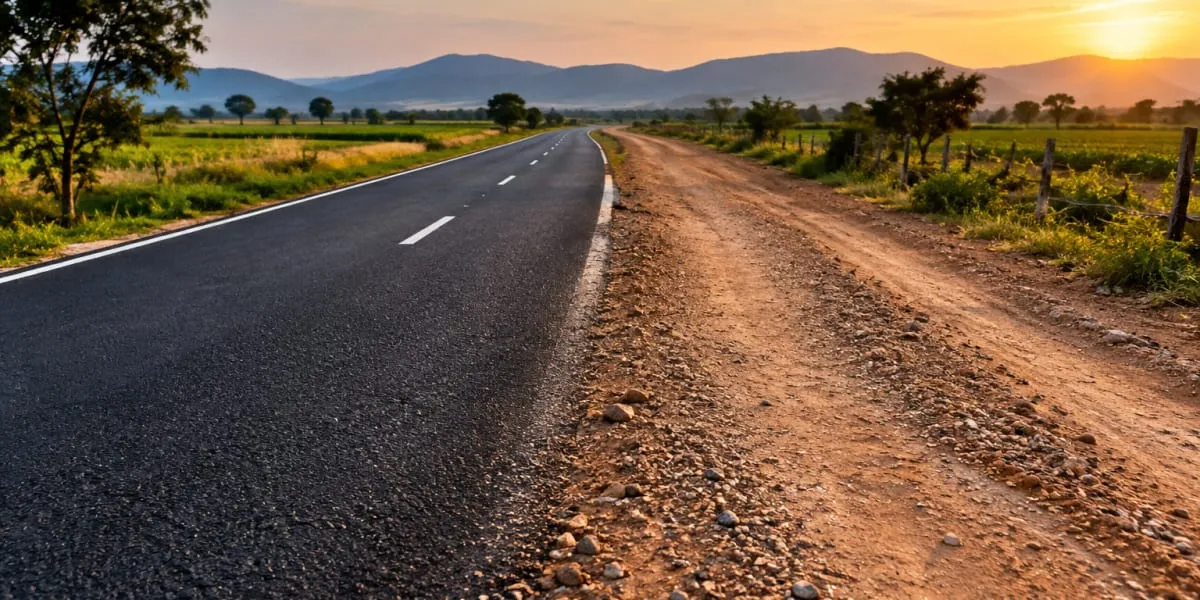
More than 46 per cent of rural roads in Andhra Pradesh remain unpaved, while over 16,000 km of existing blacktop and cement concrete roads require repairs or reconstruction, according to a recent assessment by the Panchayat Raj department. The findings highlight continuing gaps in rural connectivity across the state.

Andhra Pradesh has 36,894 km of blacktop and cement concrete roads, along with 31,339 km of mud and gravel roads. Only 54 per cent of the state’s 68,233 km rural road network is paved, leaving 46 per cent unpaved. Rayalaseema districts have the highest proportion of mud and gravel roads.

Of the paved network, 20,657 km is classified as fully motorable. A further 1,463 km requires renewal work and pothole repairs, while 14,774 km needs reconstruction. The poor condition of the roads is affecting the movement of residents, agricultural produce, public transport and emergency services, particularly during the rainy season.

Road users in several villages are facing difficulties reaching nearby towns, markets, hospitals and educational institutions. In Nandyal district, residents have reported that damaged village roads make even two-wheeler travel difficult and hamper the movement of farm produce. Rural road connectivity has also become a prominent concern during the ongoing panchayat elections.

Roads covering 5,314 km and requiring reconstruction or renewal have received approvals under the National Bank for Agriculture and Rural Development and the Andhra Pradesh Rural Road Programme. Proposals covering another 10,923 km are awaiting sanction. Officials said work would begin after the pending approvals are received.

In Kurnool district, repair work on roads requiring immediate attention is being taken up on a priority basis under the Palle Panduga programme, according to Panchayat Raj superintendent engineer S.J. Jayachandra Reddy. He also indicated that new road construction was progressing and that the works were expected to be completed soon. Villagers are seeking timely execution of sanctioned projects and better monitoring by newly elected local bodies.

More than 46 per cent of rural roads in Andhra Pradesh remain unpaved, while over 16,000 km of existing blacktop and cement concrete roads require repairs or reconstruction, according to a recent assessment by the Panchayat Raj department. The findings highlight continuing gaps in rural connectivity across the state. Andhra Pradesh has 36,894 km of blacktop and cement concrete roads, along with 31,339 km of mud and gravel roads. Only 54 per cent of the state’s 68,233 km rural road network is paved, leaving 46 per cent unpaved. Rayalaseema districts have the highest proportion of mud and gravel roads. Of the paved network, 20,657 km is classified as fully motorable. A further 1,463 km requires renewal work and pothole repairs, while 14,774 km needs reconstruction. The poor condition of the roads is affecting the movement of residents, agricultural produce, public transport and emergency services, particularly during the rainy season. Road users in several villages are facing difficulties reaching nearby towns, markets, hospitals and educational institutions. In Nandyal district, residents have reported that damaged village roads make even two-wheeler travel difficult and hamper the movement of farm produce. Rural road connectivity has also become a prominent concern during the ongoing panchayat elections. Roads covering 5,314 km and requiring reconstruction or renewal have received approvals under the National Bank for Agriculture and Rural Development and the Andhra Pradesh Rural Road Programme. Proposals covering another 10,923 km are awaiting sanction. Officials said work would begin after the pending approvals are received. In Kurnool district, repair work on roads requiring immediate attention is being taken up on a priority basis under the Palle Panduga programme, according to Panchayat Raj superintendent engineer S.J. Jayachandra Reddy. He also indicated that new road construction was progressing and that the works were expected to be completed soon. Villagers are seeking timely execution of sanctioned projects and better monitoring by newly elected local bodies.

Related Stories

Gold Stories

Next Story
Infrastructure Energy

JSW Motors Signs MoU with ARAI for Vehicle Development

JSW Motors, the passenger vehicle arm of JSW Group, has signed a memorandum of understanding (MoU) with the Automotive Research Association of India (ARAI) for technical collaboration on the design, validation and localisation of new energy vehicles (NEVs). The agreement is intended to create technical foundations for vehicles designed for Indian operating conditions. The companies will work on vehicle engineering and technical baselines, testing, validation and performance assessment, according to JSW Motors. Their programme will also cover advanced driver assistance systems (ADAS), battery s..

Next Story
Infrastructure Urban

Karnataka Offers Support for Toyota Expansion Plans

Karnataka Chief Minister D K Shivakumar assured Toyota Motor Corporation of the state government’s support for expanding its manufacturing operations during a meeting with the company’s senior leadership in Japan. The discussions covered higher production, new mobility solutions and further investment in Karnataka, as Toyota looks to increase vehicle production capacity to 1 mn in the near future. Shivakumar was accompanied by M B Patil, Karnataka’s Minister for Large and Medium Industries and Infrastructure Development. The Toyota delegation was led by Masakazu Yoshimura, the company’..

Next Story
Infrastructure Transport

Railways to Begin Bullet Train Trial on Surat-Bilimora Section

Indian Railways will begin a trial run of its bullet train service on the 50 km Surat-Bilimora section by May 2027. The section is part of the Mumbai-Ahmedabad high-speed rail corridor and is expected to provide the first operational segment of the project. The trial will use an indigenous trainset capable of travelling at 280 km per hour. Railway Ministry sources said the first section of the corridor, extending from Surat to Vapi, is scheduled to become operational by the end of 2027. The planned trial marks a step towards introducing high-speed rail services on the corridor, which connects ..

Subscribe to Our Newsletter

Get daily newsletters around different themes from Construction world.

STAY CONNECTED

Advertisement

SPECIAL OFFER
QR Code