NHAI Dismisses Cave In Claim On Lucknow Kanpur Expressway
ROADS & HIGHWAYS

NHAI Dismisses Cave In Claim On Lucknow Kanpur Expressway

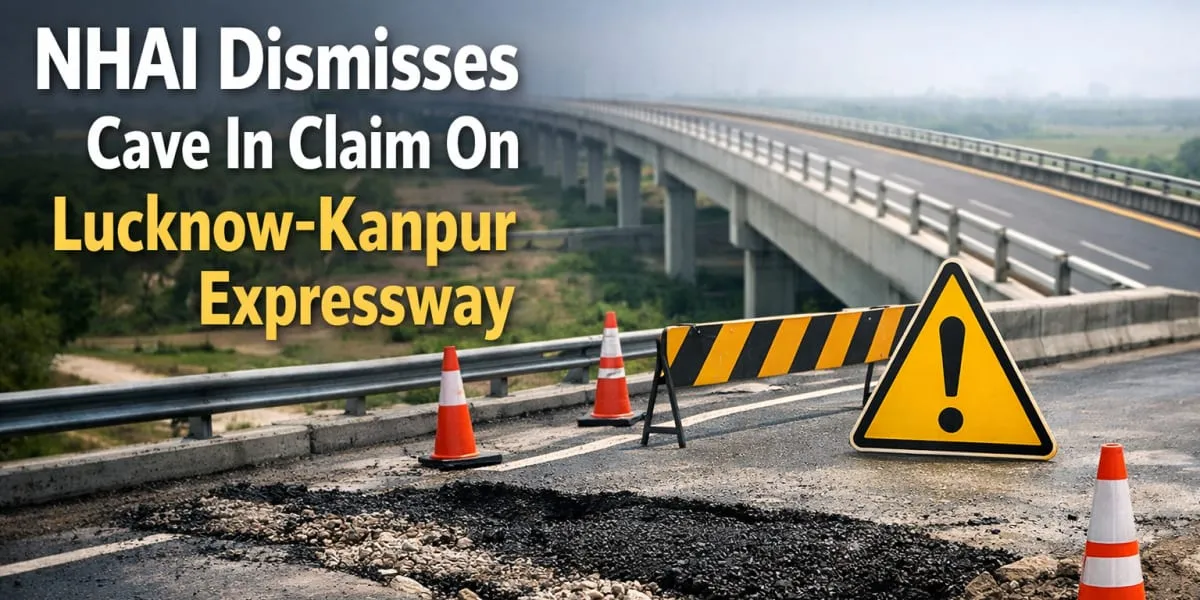
NHAI said a viral claim that a section of the recently inaugurated Lucknow-Kanpur Greenfield Elevated Expressway had caved in was incorrect, stating that only the upper surface of the carriageway was affected and that repairs were completed within hours. NHAI Project Director Nakul Prakash Verma told PTI that the affected stretch measured 40 metres and that the incident could not be described as a road cave-in because that denotes settlement of the soil beneath the road and sinking of the entire carriageway. He said repairs were completed before five pm on Sunday and traffic resumed normally.

On questions about construction quality, Verma said technical issues of this kind may occur occasionally on long stretches of bituminous or asphalt roads, while such problems are generally uncommon on concrete pavements. He said there was no proposal at present for a separate inquiry, describing the episode as a routine technical matter that had been rectified promptly by the project team. The NHAI framed the response as part of routine maintenance and oversight on a large infrastructure project.

A video purportedly showing damage at the Korari area of Unnao circulated on social media and was first shared by a local Samajwadi Party worker before the party media cell reposted it while questioning construction standards. Several social media users raised concerns about execution, material quality and the use of public funds, and some alleged corruption, although those claims have not been verified by any government agency. The authority limited its account to technical details and confirmed that the expressway was fit for traffic following repairs.

The 63 km long Lucknow-Kanpur Greenfield Elevated Expressway was built at an estimated cost of about Rs 47 bn and was inaugurated on 13 July by the Defence Minister, the Union Road Transport and Highways Minister and the Chief Minister of Uttar Pradesh. The project is intended to reduce travel time between Lucknow and Kanpur and ease traffic congestion on the corridor. NHAI said it would continue routine inspections and maintenance of the stretch.

NHAI said a viral claim that a section of the recently inaugurated Lucknow-Kanpur Greenfield Elevated Expressway had caved in was incorrect, stating that only the upper surface of the carriageway was affected and that repairs were completed within hours. NHAI Project Director Nakul Prakash Verma told PTI that the affected stretch measured 40 metres and that the incident could not be described as a road cave-in because that denotes settlement of the soil beneath the road and sinking of the entire carriageway. He said repairs were completed before five pm on Sunday and traffic resumed normally. On questions about construction quality, Verma said technical issues of this kind may occur occasionally on long stretches of bituminous or asphalt roads, while such problems are generally uncommon on concrete pavements. He said there was no proposal at present for a separate inquiry, describing the episode as a routine technical matter that had been rectified promptly by the project team. The NHAI framed the response as part of routine maintenance and oversight on a large infrastructure project. A video purportedly showing damage at the Korari area of Unnao circulated on social media and was first shared by a local Samajwadi Party worker before the party media cell reposted it while questioning construction standards. Several social media users raised concerns about execution, material quality and the use of public funds, and some alleged corruption, although those claims have not been verified by any government agency. The authority limited its account to technical details and confirmed that the expressway was fit for traffic following repairs. The 63 km long Lucknow-Kanpur Greenfield Elevated Expressway was built at an estimated cost of about Rs 47 bn and was inaugurated on 13 July by the Defence Minister, the Union Road Transport and Highways Minister and the Chief Minister of Uttar Pradesh. The project is intended to reduce travel time between Lucknow and Kanpur and ease traffic congestion on the corridor. NHAI said it would continue routine inspections and maintenance of the stretch.

Next Story
Infrastructure Urban

Centre Clears Power Distribution Upgrade for Uttar Pradesh

The Central Government has approved power distribution projects worth Rs 407.39 billion for Uttar Pradesh under the Revamped Distribution Sector Scheme (RDSS). The investment will be used to modernise the state's electricity distribution infrastructure and strengthen network capacity across urban and rural areas. The package targets one of the country's largest distribution networks as the state experiences rapid urbanisation and rising electricity consumption. Planned interventions include the strengthening of distribution lines, modernisation of substations, replacement of ageing electrical ..

Next Story
Infrastructure Energy

India Data Centres To Consume 191 TWh By 2040 Driving Renewables

A Wood Mackenzie report says India's operational data centre capacity is projected to increase more than fivefold to 12 gigawatt (GW) by 2030 from 2.2 GW in 2025 as artificial intelligence (AI) and cloud computing drive demand. It projects electricity consumption to rise from 10 terawatt-hour (TWh) in 2025 to 191 TWh by 2040. The study forecasts a compound annual growth rate of around 40 per cent and notes AI-dedicated capacity will surge nearly 24-fold from 275 megawatt (MW) in 2025 to 6,546 MW by 2030. The report places India's digital economy at Rs 32 trillion (tn) in 2025 and says it contr..

Next Story
Infrastructure Transport

Hydrogen Train Completes 1,200 Kilometres Of Trials

India's first hydrogen train was flagged off between Jind and Sonipat on July 17 and has travelled over 1,200 kilometres in trials, saving diesel consumption of more than 3,200 litres, a Railway Ministry press release said. The deployment marks the introduction of a zero-emission fuel cell train into route testing and represents a milestone in domestic rail innovation. The train generates electricity onboard through a chemical reaction between hydrogen and oxygen, producing electricity to propel the vehicle while emitting only water vapour as a by-product. There is no smoke and no tailpipe car..

Advertisement

Subscribe to Our Newsletter

Get daily newsletters around different themes from Construction world.

STAY CONNECTED

Advertisement

Advertisement

Advertisement