NHAI Formula Could Lower Tolls On Bridges And Elevated Stretches
ROADS & HIGHWAYS

NHAI Formula Could Lower Tolls On Bridges And Elevated Stretches

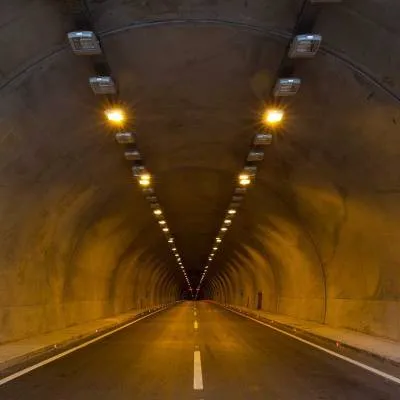
The National Highways Authority of India (NHAI) has directed field offices to process toll notifications and revisions under an amended fee formula for stretches that include one or more independent bridges, tunnels, flyovers or elevated highways. The change follows an amendment by the Ministry of Road Transport and Highways on July one to the National Highways Fee (Determination of Rates and Collection) Rules, 2008; structures measuring 60 metres or less will not be treated separately for chargeable distance.

Under the revised rule, toll will be calculated by adding 10 times the length of such structures to the length of the remaining highway section, or five times the total length of the highway section, whichever is lower. The amendment therefore places a ceiling on chargeable distance and replaces the earlier approach that generally linked the fee to 10 times the structure length to reflect higher construction and maintenance costs.

The Gazette notification provides illustrations of the practical effect. For a 40 km section with 30 km of structures and 10 km of ordinary road the chargeable length would be 200 km rather than 310 km, while a 40 km section with 10 km of structures and 30 km of ordinary road would be charged on 130 km instead of 200 km.

The formula will apply to existing publicly funded toll plazas from their next scheduled user fee revision, concessionaire operated plazas after the concession period ends or on project transfer to the authority, and newly operational plazas from the date toll collection begins. A former NHAI official and ITS India Forum president, Akhilesh Srivastava, noted that previously a stretch dominated by bridge or tunnel could be charged at 10 times the structure length with no upper limit, and that the new cap ensures the fee is the lower of the two prescribed calculations.

The National Highways Authority of India (NHAI) has directed field offices to process toll notifications and revisions under an amended fee formula for stretches that include one or more independent bridges, tunnels, flyovers or elevated highways. The change follows an amendment by the Ministry of Road Transport and Highways on July one to the National Highways Fee (Determination of Rates and Collection) Rules, 2008; structures measuring 60 metres or less will not be treated separately for chargeable distance. Under the revised rule, toll will be calculated by adding 10 times the length of such structures to the length of the remaining highway section, or five times the total length of the highway section, whichever is lower. The amendment therefore places a ceiling on chargeable distance and replaces the earlier approach that generally linked the fee to 10 times the structure length to reflect higher construction and maintenance costs. The Gazette notification provides illustrations of the practical effect. For a 40 km section with 30 km of structures and 10 km of ordinary road the chargeable length would be 200 km rather than 310 km, while a 40 km section with 10 km of structures and 30 km of ordinary road would be charged on 130 km instead of 200 km. The formula will apply to existing publicly funded toll plazas from their next scheduled user fee revision, concessionaire operated plazas after the concession period ends or on project transfer to the authority, and newly operational plazas from the date toll collection begins. A former NHAI official and ITS India Forum president, Akhilesh Srivastava, noted that previously a stretch dominated by bridge or tunnel could be charged at 10 times the structure length with no upper limit, and that the new cap ensures the fee is the lower of the two prescribed calculations.

Next Story
Infrastructure Urban

Centre Clears Power Distribution Upgrade for Uttar Pradesh

The Central Government has approved power distribution projects worth Rs 407.39 billion for Uttar Pradesh under the Revamped Distribution Sector Scheme (RDSS). The investment will be used to modernise the state's electricity distribution infrastructure and strengthen network capacity across urban and rural areas. The package targets one of the country's largest distribution networks as the state experiences rapid urbanisation and rising electricity consumption. Planned interventions include the strengthening of distribution lines, modernisation of substations, replacement of ageing electrical ..

Next Story
Infrastructure Energy

India Data Centres To Consume 191 TWh By 2040 Driving Renewables

A Wood Mackenzie report says India's operational data centre capacity is projected to increase more than fivefold to 12 gigawatt (GW) by 2030 from 2.2 GW in 2025 as artificial intelligence (AI) and cloud computing drive demand. It projects electricity consumption to rise from 10 terawatt-hour (TWh) in 2025 to 191 TWh by 2040. The study forecasts a compound annual growth rate of around 40 per cent and notes AI-dedicated capacity will surge nearly 24-fold from 275 megawatt (MW) in 2025 to 6,546 MW by 2030. The report places India's digital economy at Rs 32 trillion (tn) in 2025 and says it contr..

Next Story
Infrastructure Transport

Hydrogen Train Completes 1,200 Kilometres Of Trials

India's first hydrogen train was flagged off between Jind and Sonipat on July 17 and has travelled over 1,200 kilometres in trials, saving diesel consumption of more than 3,200 litres, a Railway Ministry press release said. The deployment marks the introduction of a zero-emission fuel cell train into route testing and represents a milestone in domestic rail innovation. The train generates electricity onboard through a chemical reaction between hydrogen and oxygen, producing electricity to propel the vehicle while emitting only water vapour as a by-product. There is no smoke and no tailpipe car..

Advertisement

Subscribe to Our Newsletter

Get daily newsletters around different themes from Construction world.

STAY CONNECTED

Advertisement

Advertisement

Advertisement