NHAI To Fine Abrupt Lane Changes On Delhi-Mumbai Expressway
ROADS & HIGHWAYS

NHAI To Fine Abrupt Lane Changes On Delhi-Mumbai Expressway

The National Highways Authority of India will begin imposing fines for abrupt lane changes on the Delhi-Mumbai Expressway from next week, a move aimed at improving road safety and traffic discipline on one of the country's busiest corridors. The authority indicated the step forms part of broader efforts to reduce avoidable lane-change incidents that can cause sudden braking and collisions. Motorists using the expressway are being notified of the forthcoming enforcement.

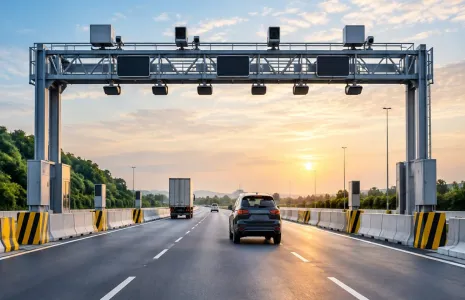
Enforcement will rely on a combination of roadway monitoring and traffic surveillance to identify abrupt lane changes and other unsafe manoeuvres that disrupt traffic flow. The authority plans to coordinate with highway patrol and concessionaire operators to ensure fines are issued promptly and to streamline processing of violations. Officials expect clearer lane discipline to ease congestion and contribute to a safer transit environment for both commercial and private vehicles.

Drivers are being urged to maintain consistent lane discipline, use indicators appropriately and avoid sudden lateral movements that can endanger following traffic. The move is also intended to reduce incidents that necessitate emergency response and to limit secondary collisions that often occur when vehicles make unexpected lane changes. Complementary measures such as driver education and improved signage are expected to reinforce the enforcement regime, and the authority will monitor effectiveness.

Officials anticipate the policy will lead to smoother traffic movement along long stretches of the expressway and a reduction in incidents that cause delays and injuries. Motorists found in violation will face fines and administrative action under prevailing highway rules, and operators will report enforcement statistics to central authorities to assess impact over coming months. The initiative on the Delhi-Mumbai route follows a broader national focus on reducing road casualties and the authority has said the measures will be reviewed and adjusted as required to improve compliance.

The National Highways Authority of India will begin imposing fines for abrupt lane changes on the Delhi-Mumbai Expressway from next week, a move aimed at improving road safety and traffic discipline on one of the country's busiest corridors. The authority indicated the step forms part of broader efforts to reduce avoidable lane-change incidents that can cause sudden braking and collisions. Motorists using the expressway are being notified of the forthcoming enforcement. Enforcement will rely on a combination of roadway monitoring and traffic surveillance to identify abrupt lane changes and other unsafe manoeuvres that disrupt traffic flow. The authority plans to coordinate with highway patrol and concessionaire operators to ensure fines are issued promptly and to streamline processing of violations. Officials expect clearer lane discipline to ease congestion and contribute to a safer transit environment for both commercial and private vehicles. Drivers are being urged to maintain consistent lane discipline, use indicators appropriately and avoid sudden lateral movements that can endanger following traffic. The move is also intended to reduce incidents that necessitate emergency response and to limit secondary collisions that often occur when vehicles make unexpected lane changes. Complementary measures such as driver education and improved signage are expected to reinforce the enforcement regime, and the authority will monitor effectiveness. Officials anticipate the policy will lead to smoother traffic movement along long stretches of the expressway and a reduction in incidents that cause delays and injuries. Motorists found in violation will face fines and administrative action under prevailing highway rules, and operators will report enforcement statistics to central authorities to assess impact over coming months. The initiative on the Delhi-Mumbai route follows a broader national focus on reducing road casualties and the authority has said the measures will be reviewed and adjusted as required to improve compliance.

Next Story
Infrastructure Transport

Surya Roshni delivers customised lighting for NCRTC RRTS stations

Surya Roshni has supplied customised indoor lighting solutions for 18 elevated stations on the National Capital Region Transport Corporation's (NCRTC) Rapid Rail Transit System (RRTS), strengthening its presence in India's infrastructure lighting segment.The project involved the design and deployment of lighting systems for platforms, concourses, foot overbridges (FOBs) and back-of-house (BOH) areas. According to the company, the luminaires were developed specifically to meet NCRTC's design, operational and performance requirements rather than using standard products.Surya introduced two custo..

Next Story
Real Estate

Hilton debuts Tapestry Collection brand in Vietnam

Hilton has opened NHAAN Resort & Spa Hoi An, Tapestry Collection by Hilton, marking the debut of the Tapestry Collection brand in Vietnam and expanding its lifestyle hospitality portfolio in Southeast Asia.Located along the Co Co River in Cam Thanh village, the 174-key resort provides access to Hoi An Ancient Town, Cua Dai Beach and the Cam Thanh Nipa Forest. The property has been designed by Vietnamese architect Vo Trong Nghia, incorporating biophilic architecture, locally sourced materials and riverfront landscapes.The resort offers a mix of guest rooms and suites, including family-frien..

Next Story
Building Material

Electrent expands lithium energy storage system portfolio

Electrent Energy has expanded its lithium-based energy storage portfolio with the launch of the ESS 850 and ESS 1050, targeting compact and maintenance-free power backup solutions for Indian homes.The new systems integrate a Home UPS and a LiFePO4 lithium battery into a single unit, extending the company's product range following the launch of its ESS 1350 and ESS 2500 models.Designed for apartments and smaller homes, the ESS 850 provides up to 1 hour 15 minutes of backup, while the ESS 1050 offers up to 1 hour 45 minutes on a typical 400 W household load. The systems can power essential appli..

Advertisement

Subscribe to Our Newsletter

Get daily newsletters around different themes from Construction world.

STAY CONNECTED

Advertisement

Advertisement

Advertisement