
+
Punjab And Haryana Highway Toll Rates Increased
ROADS & HIGHWAYS

Punjab And Haryana Highway Toll Rates Increased

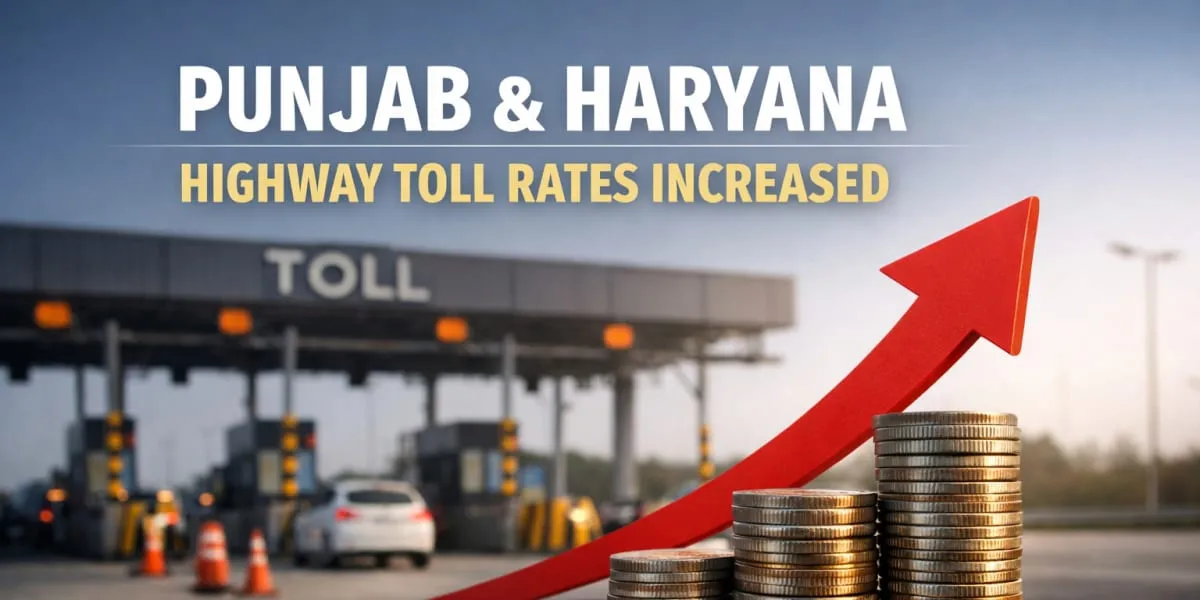
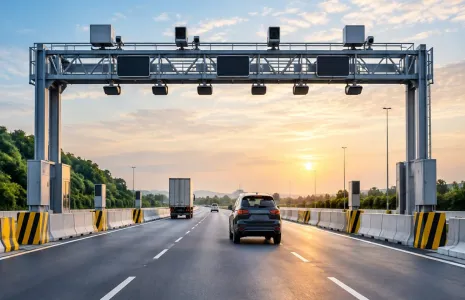
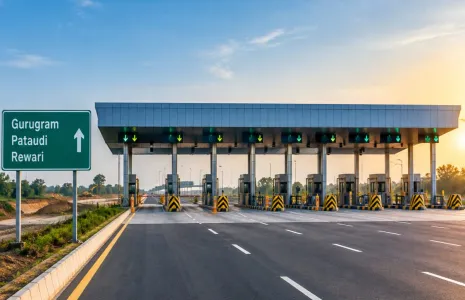
The National Highways Authority of India (NHAI) has revised user fees at several toll plazas in Punjab and Haryana, with the changes coming into effect today. Motorists travelling on highways connecting Chandigarh, Ludhiana, Sangrur, Amritsar, Bathinda, Tarn Taran, Faridkot and Abohar will face higher charges under the notified structure. The adjustments form part of routine tariff resets undertaken by the authority.

NHAI has notified new rates at over 50 toll plazas across the two states and has specified that seven toll plazas will see increases starting today, including Ghulal Toll Plaza on the Chandigarh–Kharar–Ludhiana stretch, Paind Toll Plaza on the Sangrur–Dogal Kalan route, Kot Karor Toll Plaza on the Amritsar–Tarn Taran–Harike–Faridkot–Bathinda corridor, Ladowal Toll Plaza on the Ludhiana–Jalandhar section, Jandiala Guru Toll Plaza on the Amritsar stretch, Abohar Toll Plaza and Maur Toll Plaza. The authority has provided the revised tariff schedule to concessionaires for implementation. Road users have been advised to note the updated charges before commencing travel.

Under the revised schedule, charges for most private vehicles will increase by Rs five or Rs ten at affected plazas while return journeys may attract increases of up to Rs 15. Commercial vehicles, including buses and heavy goods vehicles, will face hikes of at least Rs 15 in many cases. The authority has indicated that such changes reflect periodic adjustments to address inflationary pressures and contractual terms.

The timing and quantum of revisions vary according to individual concession agreements and the scheduled review mechanisms set out therein. Concessionaires are responsible for applying the new tariffs and managing fee collection at plaza locations. Commuters and transport operators in the region are expected to factor the higher tolls into travel and logistics planning.

The National Highways Authority of India (NHAI) has revised user fees at several toll plazas in Punjab and Haryana, with the changes coming into effect today. Motorists travelling on highways connecting Chandigarh, Ludhiana, Sangrur, Amritsar, Bathinda, Tarn Taran, Faridkot and Abohar will face higher charges under the notified structure. The adjustments form part of routine tariff resets undertaken by the authority. NHAI has notified new rates at over 50 toll plazas across the two states and has specified that seven toll plazas will see increases starting today, including Ghulal Toll Plaza on the Chandigarh–Kharar–Ludhiana stretch, Paind Toll Plaza on the Sangrur–Dogal Kalan route, Kot Karor Toll Plaza on the Amritsar–Tarn Taran–Harike–Faridkot–Bathinda corridor, Ladowal Toll Plaza on the Ludhiana–Jalandhar section, Jandiala Guru Toll Plaza on the Amritsar stretch, Abohar Toll Plaza and Maur Toll Plaza. The authority has provided the revised tariff schedule to concessionaires for implementation. Road users have been advised to note the updated charges before commencing travel. Under the revised schedule, charges for most private vehicles will increase by Rs five or Rs ten at affected plazas while return journeys may attract increases of up to Rs 15. Commercial vehicles, including buses and heavy goods vehicles, will face hikes of at least Rs 15 in many cases. The authority has indicated that such changes reflect periodic adjustments to address inflationary pressures and contractual terms. The timing and quantum of revisions vary according to individual concession agreements and the scheduled review mechanisms set out therein. Concessionaires are responsible for applying the new tariffs and managing fee collection at plaza locations. Commuters and transport operators in the region are expected to factor the higher tolls into travel and logistics planning.

Related Stories

Gold Stories
Next Story
Real Estate

BMC OC Amnesty Scheme Requires Key Approvals from Mumbai Societies

The Brihanmumbai Municipal Corporation (BMC) has clarified that housing societies applying under its Occupation Certificate (OC) amnesty scheme must possess key approvals linked to the original construction. The requirements include a valid Intimation of Disapproval (IOD), an approved building plan and a Commencement Certificate (CC), along with a No Objection Certificate (NOC) from the developer or original construction applicant. The Standard Operating Procedure (SOP) makes clear that the absence of an OC alone will not qualify a building for relief. Societies must establish that their build..

Next Story
Real Estate

Gurugram Emerges as Luxury Senior Living Hub

Gurugram is emerging as a potential hub for luxury senior living, supported by available land, healthcare infrastructure, connectivity and a concentration of affluent professionals, high-net-worth individuals and non-resident Indians. These factors could give the city an advantage over land-constrained metros such as Mumbai. A report by the Association of Senior Living India (ASLI) and JLL estimates that India’s organised senior living market could represent a $10.1 bn opportunity by 2030. The sector had about 25,050 organised units as of June 2026, while penetration stood at only 1.5 per ce..

Next Story
Real Estate

Corrosion Costs India’s Infrastructure Rs. 142 bn Annually

Corrosion costs India an estimated Rs. 1.42 tn annually, equivalent to 4.3 per cent of gross domestic product, according to a report by the Confederation of Indian Industry and the National Research Institute. Infrastructure accounts for Rs. 142 bn of the annual burden, making it the sector with the largest absolute cost among those examined. The report, presented at the CII Annual Infrastructure Summit 2026, said the infrastructure-sector cost equals about 2.9 per cent of the sector’s gross domestic product. It estimated that effective measures could generate maximum savings of Rs. 495.8 bn..

Advertisement

Subscribe to Our Newsletter

Get daily newsletters around different themes from Construction world.

STAY CONNECTED

Advertisement

SPECIAL OFFER
QR Code