Tamil Nadu Seeks Metro Line Over Kilambakkam Elevated Road
ROADS & HIGHWAYS

Tamil Nadu Seeks Metro Line Over Kilambakkam Elevated Road

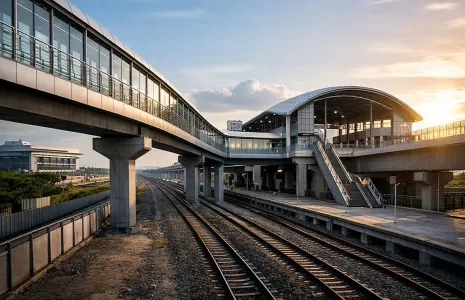
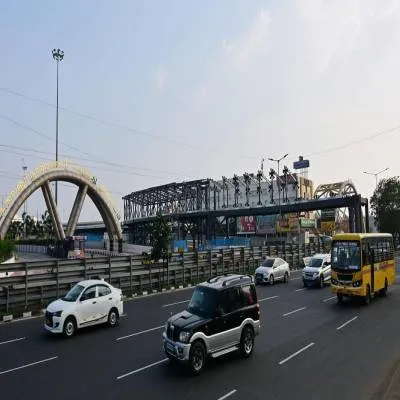
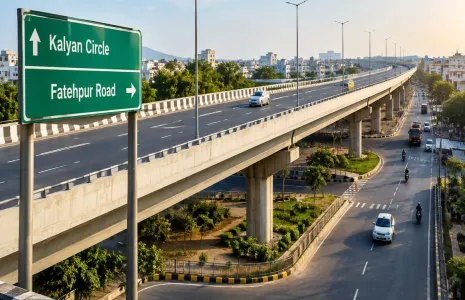
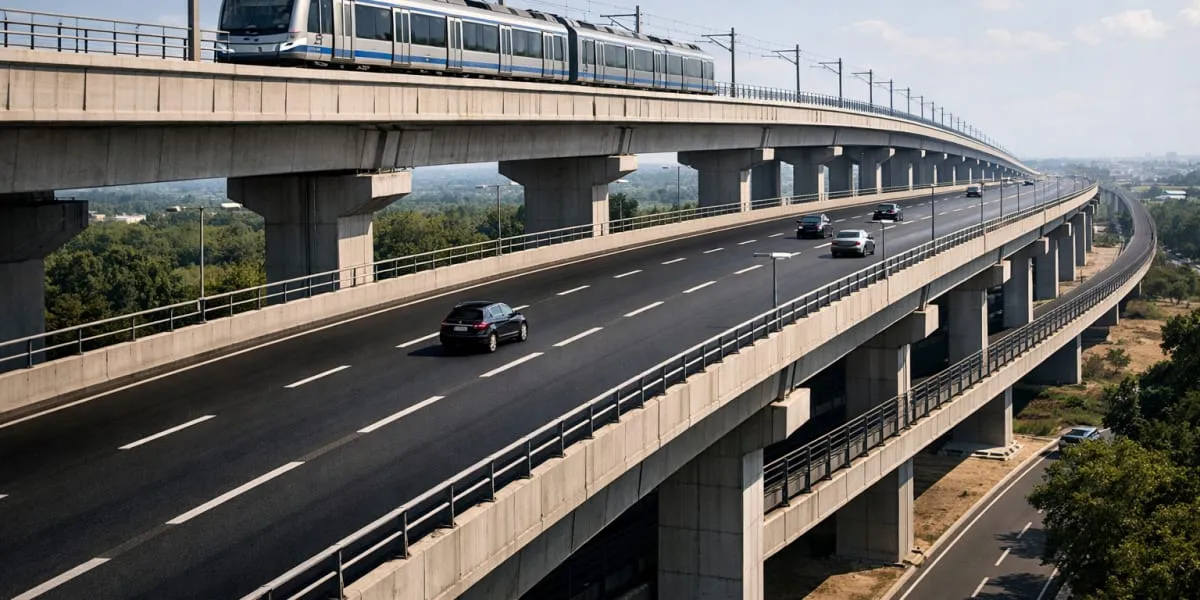
The Tamil Nadu government has asked the National Highways Authority of India (NHAI) to prepare an integrated design for a double-decker viaduct comprising a six-lane elevated highway on the lower deck and a metro rail corridor on the upper deck for the proposed 18.4 kilometre (km) corridor from Kilambakkam bus terminus (KCBT) to Chettipunniyam.

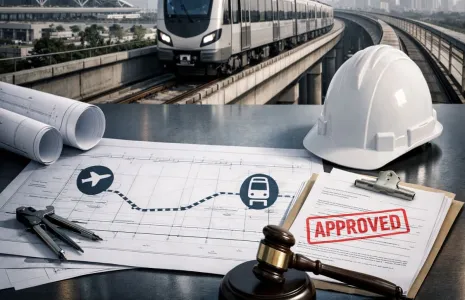
The state granted in-principle approval in December for extension of the metro corridor from KCBT to Chettipunniyam. Officials said the request requires a revision of the Detailed Project Report (DPR) that was earlier prepared for a single-deck elevated corridor.

They said the piers will need to be redesigned to bear combined loads for both highway and metro infrastructure and that the cost-sharing arrangement between the NHAI and the state government will have to be reworked before the DPR can be finalised. Design finalisation is expected to take nearly five months, after which the state government’s share of the project cost can be determined. NHAI officials noted that constructing both decks simultaneously, as done on the Mugaliwakkam-Ramapuram stretch, would be more feasible than adding the metro later.

Officials added that NHAI is prepared to proceed either by building the elevated highway first and developing the metro corridor later or by incorporating the civil infrastructure for the metro during highway construction, subject to approvals from the Union government. If the state opts to include pier caps and the launching of U-girders and I-girders as part of the elevated corridor work, its financial contribution would rise but future disruption to traffic could be minimised. Subsequent work such as track laying and installation of overhead electrical systems would then be able to proceed with reduced inconvenience.

The proposal to extend the Blue Line metro from the airport to KCBT remains pending Union approval and the further extension from Kilambakkam to Chengalpattu is expected to be delayed as a result. A rail activist said that the DPR has been with the Union government for more than a year and urged that approval be granted at the earliest to commence work.

"Join industry leaders at RAHSTA Expo, India's premier platform for roads, highways and traffic infrastructure. Register now to explore innovations, network with experts and shape the future of mobility."

The Tamil Nadu government has asked the National Highways Authority of India (NHAI) to prepare an integrated design for a double-decker viaduct comprising a six-lane elevated highway on the lower deck and a metro rail corridor on the upper deck for the proposed 18.4 kilometre (km) corridor from Kilambakkam bus terminus (KCBT) to Chettipunniyam. The state granted in-principle approval in December for extension of the metro corridor from KCBT to Chettipunniyam. Officials said the request requires a revision of the Detailed Project Report (DPR) that was earlier prepared for a single-deck elevated corridor. They said the piers will need to be redesigned to bear combined loads for both highway and metro infrastructure and that the cost-sharing arrangement between the NHAI and the state government will have to be reworked before the DPR can be finalised. Design finalisation is expected to take nearly five months, after which the state government’s share of the project cost can be determined. NHAI officials noted that constructing both decks simultaneously, as done on the Mugaliwakkam-Ramapuram stretch, would be more feasible than adding the metro later. Officials added that NHAI is prepared to proceed either by building the elevated highway first and developing the metro corridor later or by incorporating the civil infrastructure for the metro during highway construction, subject to approvals from the Union government. If the state opts to include pier caps and the launching of U-girders and I-girders as part of the elevated corridor work, its financial contribution would rise but future disruption to traffic could be minimised. Subsequent work such as track laying and installation of overhead electrical systems would then be able to proceed with reduced inconvenience. The proposal to extend the Blue Line metro from the airport to KCBT remains pending Union approval and the further extension from Kilambakkam to Chengalpattu is expected to be delayed as a result. A rail activist said that the DPR has been with the Union government for more than a year and urged that approval be granted at the earliest to commence work.

Next Story
Real Estate

NICMAR’s campus is a live lesson in construction methodology

At NICMAR University, architecture becomes a live lesson in construction innovation. Pankaj Nande, Principal Architect, TDC Architecture and Design, explains how Alumil’s fenestration systems helped turn a precast campus vision into a functional, durable and future-facing learning environment for the next generation of builders.Please take us through your journey as an architect and some of the projects you have worked on.I am the founder of TDC- Architecture & Design, Pune. Our journey started with the thought of doing justice not only to design, but also to construction methodology, te..

Next Story
Infrastructure Urban

India needs to build a building health operating system

Cyond is bringing engineering-led diagnostics, AI-assisted data and standardised repair systems to building preservation, after screening nearly 1.5 lakh buildings and finding water-related deterioration in 67 per cent. In this interaction with Construction World, Sunil Gorle, Founder, Cyond, discusses how building health insights can make maintenance more predictive.What business opportunity did Cyond identify in structural diagnostics and waterproofing?India has invested trillions of rupees in creating its built environment. Yet, many assets expected to last 70-100 years begin showing deteri..

Next Story
Infrastructure Urban

Waterproofing Blueprint

Waterproofing buildings used to be an annual pre-monsoon affair but the evolution of real-estate development has changed that approach. In new developments, developers are weaving waterproofing solutions into both the design and construction phases, an approach that Nikhil Madan, Managing Director, Mahima Group, says, “is all about ensuring lasting durability [of the building] and keeping lifecycle risks including water seepage and extensive maintenance to a minimum.”Watertight by designAluminium formwork systems aren’t commonly thought of as a waterproofing tool but at the Mahima Group,..

Advertisement

Subscribe to Our Newsletter

Get daily newsletters around different themes from Construction world.

STAY CONNECTED

Advertisement

Advertisement

Advertisement