

AI To Transform Railway Safety Systems
RAILWAYS & METRO RAIL

AI To Transform Railway Safety Systems

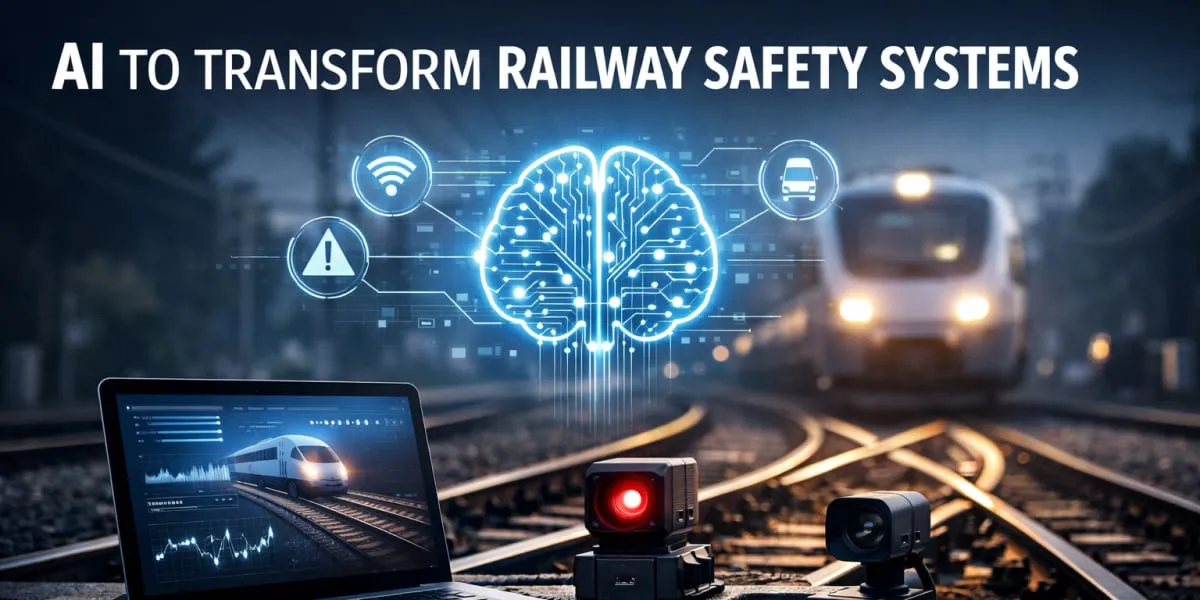
Artificial intelligence and machine learning are reshaping business operations by automating routine tasks, improving efficiency and enabling real-time decision making. In India, banking, financial services, manufacturing and information technology sectors have adopted AI at scale, while the railway sector has been slower despite government efforts to modernise ageing infrastructure. Much of the rail network still depends on manual inspection and maintenance even as Automatic Train Protection systems are introduced.

Bengaluru-based Nova Control Technologix, a subsidiary of e2E Rail, has partnered Tata Elxsi to integrate AI into signalling systems, coaches and other equipment to develop predictive systems that identify potential failures. Nova Control Technologix plans to invest Rs one billion (bn) over the next two to three years to develop advanced signalling and AI enabled coach technologies, and Tata Elxsi will supply cybersecurity and data protection expertise. The firms say the aim is to move from reactive maintenance to continuous self monitoring and early fault prediction.

They are also developing digital twin technology to simulate and validate AI models before deployment across Indian Railways' 0.132 million kilometres (mn-km) network. Tata Elxsi has built AI into the architecture from the design stage to create a modular, scalable and adaptable platform. The architecture is intended to allow advanced algorithms that support decision making for safety and predictive maintenance.

Industry estimates indicate Indian Railways spends 65 to 70 per cent of its maintenance budget on existing assets, and experts say wider adoption of AI driven predictive maintenance could reduce that share below 50 per cent. Indian Railways currently spends around Rs one trillion (tn) annually on safety and maintenance. The companies contend that AI can make systems self diagnostic and more autonomous by identifying patterns, predicting failures and recommending corrective action, which should improve asset availability and punctuality.

"Join industry leaders at RAHSTA Expo, India's premier platform for roads, highways and traffic infrastructure. Register now to explore innovations, network with experts and shape the future of mobility."

Artificial intelligence and machine learning are reshaping business operations by automating routine tasks, improving efficiency and enabling real-time decision making. In India, banking, financial services, manufacturing and information technology sectors have adopted AI at scale, while the railway sector has been slower despite government efforts to modernise ageing infrastructure. Much of the rail network still depends on manual inspection and maintenance even as Automatic Train Protection systems are introduced. Bengaluru-based Nova Control Technologix, a subsidiary of e2E Rail, has partnered Tata Elxsi to integrate AI into signalling systems, coaches and other equipment to develop predictive systems that identify potential failures. Nova Control Technologix plans to invest Rs one billion (bn) over the next two to three years to develop advanced signalling and AI enabled coach technologies, and Tata Elxsi will supply cybersecurity and data protection expertise. The firms say the aim is to move from reactive maintenance to continuous self monitoring and early fault prediction. They are also developing digital twin technology to simulate and validate AI models before deployment across Indian Railways' 0.132 million kilometres (mn-km) network. Tata Elxsi has built AI into the architecture from the design stage to create a modular, scalable and adaptable platform. The architecture is intended to allow advanced algorithms that support decision making for safety and predictive maintenance. Industry estimates indicate Indian Railways spends 65 to 70 per cent of its maintenance budget on existing assets, and experts say wider adoption of AI driven predictive maintenance could reduce that share below 50 per cent. Indian Railways currently spends around Rs one trillion (tn) annually on safety and maintenance. The companies contend that AI can make systems self diagnostic and more autonomous by identifying patterns, predicting failures and recommending corrective action, which should improve asset availability and punctuality.

Next Story
Infrastructure Urban

Nagaland Signs MoU With T-Works To Boost MSMEs

Nagaland marked Micro, Small and Medium Enterprises (MSMEs) Day by launching Naturally Nagaland and signing an MoU with T-Works to bolster the entrepreneurial ecosystem. Advisor Hekani Jakhalu launched the initiative at the Industries & Commerce directorate in Kohima and the MoU was signed by the director of Industries and Commerce and the chief executive officer of T-Works. The agreement is intended to strengthen innovation, product development and prototyping support across the state. Jakhalu said 52,801 enterprises were registered on Udyam as of June 25, 2026, about 4,000 more than three mo..

Next Story
Infrastructure Urban

Tiruchy MSME Engineering Units Seek Revival Package

The Tamil Nadu Boilers Association has urged the state chief minister to announce a comprehensive revival package for stressed micro, small and medium enterprises (MSME) engineering units, citing years of recession, the impact of the Covid-19 pandemic, mounting debt burdens and delayed payments from customers. In a letter sent last week the association sought a range of measures to reboot local industry and restore employment and production levels. It said the proposal aimed to bring closed units back into operation and to ease financial bottlenecks that have constrained growth. The measures r..

Next Story
Infrastructure Energy

Delhi And Tehran Explore Energy Cooperation As US Sanctions Ease

India and Iran have agreed to explore cooperation in the oil and gas sector after a temporary US sanctions waiver opened access for Iranian crude to global markets. The understanding was reached on the sidelines of the 11th BRICS Energy Ministers' Meeting in Gurugram where officials discussed bilateral engagement. The talks were framed as part of efforts to strengthen energy ties and address security concerns. Union Minister for Petroleum and Natural Gas Hardeep Singh Puri met his Iranian counterpart Mohsen Paknejad and conveyed that India remained committed to enhancing energy security throug..

Advertisement

Subscribe to Our Newsletter

Get daily newsletters around different themes from Construction world.

STAY CONNECTED

Advertisement

Advertisement

Advertisement