Chandigarh MP Pushes Metro For Quad Cities
RAILWAYS & METRO RAIL

Chandigarh MP Pushes Metro For Quad Cities

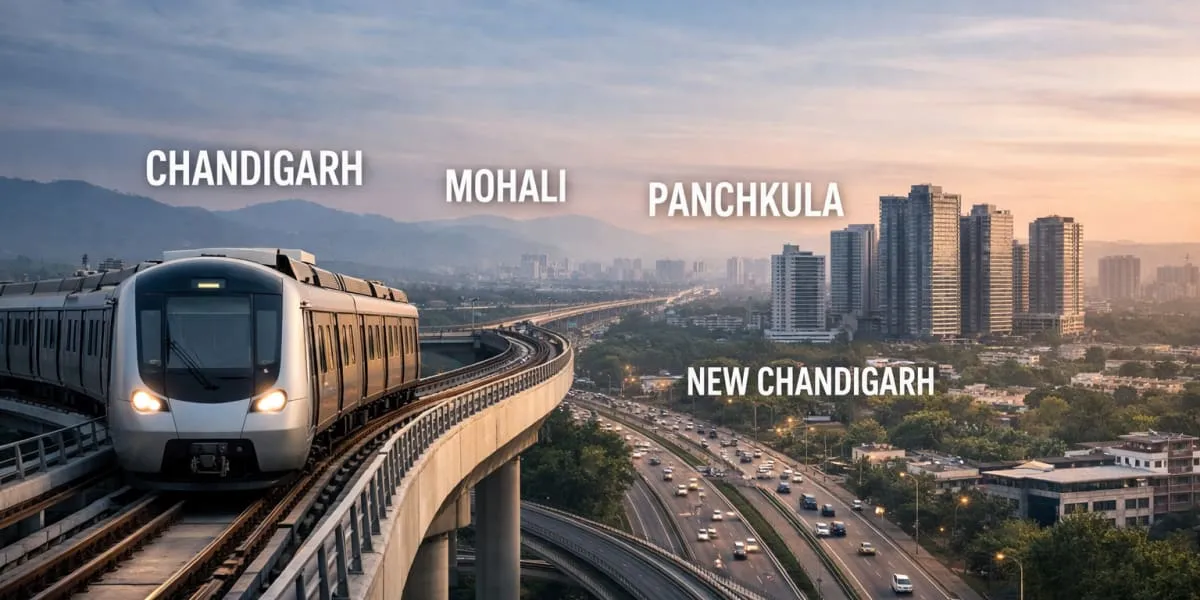
Senior Congress leader and Member of Parliament Manish Tewari has urged development of a Mass Rapid Transport Project (MRTS) to connect Chandigarh, Mohali, Panchkula and New Chandigarh as a single metropolitan area. He framed the proposal as more than a transport scheme and said it could unlock the region's economic potential and act as a mercantile multiplier. His intervention came amid concerns about current traffic and future growth in the region.

He questioned what traffic conditions might look like by 2036 and criticised fears that a metro would overwhelm Chandigarh, describing such concerns as unfounded. He added that the real economic growth was occurring on the periphery of Chandigarh rather than within the city and that residents of Chandigarh in the next five years would increasingly commute to adjoining areas for employment. He used social media to press the case and cited technical studies that have examined the project's feasibility.

He argued that if the states of Punjab and Haryana claim Chandigarh as their capital then both those states and the Union Territory of Chandigarh should provide funding to integrate the four cities into a seamless metropolitan area. He urged a joint financial commitment to bring the metro to fruition and noted that RITES (Rail India Technical and Economic Service) has twice assessed the plan as feasible. He described the region as constrained by limited agriculture, minimal heavy industry and a weak services sector owing in part to the closure of the country's western border.

He suggested the metro could transform the quad cities into a research and innovation hub comparable to the Research Triangle of Raleigh, Durham and Chapel Hill, positioning the area to capture frontier technologies and related investment that underpin the Fourth Industrial Revolution. He called on the relevant state governments and the Union Territory to collaborate on planning and funding so that the transport investment translates into jobs and sustainable growth. Officials and planners were urged to consider integrated metropolitan governance to realise the benefits.

Senior Congress leader and Member of Parliament Manish Tewari has urged development of a Mass Rapid Transport Project (MRTS) to connect Chandigarh, Mohali, Panchkula and New Chandigarh as a single metropolitan area. He framed the proposal as more than a transport scheme and said it could unlock the region's economic potential and act as a mercantile multiplier. His intervention came amid concerns about current traffic and future growth in the region. He questioned what traffic conditions might look like by 2036 and criticised fears that a metro would overwhelm Chandigarh, describing such concerns as unfounded. He added that the real economic growth was occurring on the periphery of Chandigarh rather than within the city and that residents of Chandigarh in the next five years would increasingly commute to adjoining areas for employment. He used social media to press the case and cited technical studies that have examined the project's feasibility. He argued that if the states of Punjab and Haryana claim Chandigarh as their capital then both those states and the Union Territory of Chandigarh should provide funding to integrate the four cities into a seamless metropolitan area. He urged a joint financial commitment to bring the metro to fruition and noted that RITES (Rail India Technical and Economic Service) has twice assessed the plan as feasible. He described the region as constrained by limited agriculture, minimal heavy industry and a weak services sector owing in part to the closure of the country's western border. He suggested the metro could transform the quad cities into a research and innovation hub comparable to the Research Triangle of Raleigh, Durham and Chapel Hill, positioning the area to capture frontier technologies and related investment that underpin the Fourth Industrial Revolution. He called on the relevant state governments and the Union Territory to collaborate on planning and funding so that the transport investment translates into jobs and sustainable growth. Officials and planners were urged to consider integrated metropolitan governance to realise the benefits.

Next Story
Equipment

MYCRANE Crosses 1,000 Customers in India

MYCRANE, the global platform for crane rental and purchase, has achieved major commercial milestones in India, reinforcing the country’s position as one of its fastest-growing strategic markets. The company has surpassed 1,000 registered customers and 1,000 crane suppliers nationwide, while completing more than 100 paid orders.The growth reflects rising adoption of digital procurement solutions across India’s construction, infrastructure, energy and industrial sectors. Equipment sourced through the platform is supporting projects across the country, with several leading contractors and EPC..

Next Story
Infrastructure Urban

AMTOE 2026 Opens Global Machine Tool Sourcing Hub

The Asian Machine Tool Online Exhibition 2026 (AMTOE 2026) has officially opened as a B2B sourcing platform connecting global buyers with verified Asian suppliers across the machine tool and manufacturing sector. The exhibition will run until 31 October 2026 through a hybrid online and offline model, offering extended sourcing and business networking opportunities.Co-organised by AsianNet and TradeAsia, the event aims to strengthen links between Asian manufacturers and international importers while improving cross-border procurement efficiency and supplier matching.Since launching in 2022, AMT..

Next Story
Infrastructure Energy

Vedanta Lifts Renewable Energy Use by Over 50%

On World Earth Day, Vedanta Limited announced that its renewable energy usage rose by over 50 per cent year on year to 3.97 billion units in FY26, helping avoid 3 million tonnes of carbon dioxide emissions.The company said its portfolio of metals, minerals, power, and oil & gas continues to support advanced manufacturing, electrification, energy transition and clean technology. Aluminium, copper and silver remain critical for applications such as mobility, power transmission, renewable infrastructure and solar photovoltaics, while iron, steel and zinc continue to support energy infrastruct..

Advertisement

Subscribe to Our Newsletter

Get daily newsletters around different themes from Construction world.

STAY CONNECTED

Advertisement

Advertisement

Advertisement