+
Delhi Railway stations set for Mega Makeover under ABSS Initiative
RAILWAYS & METRO RAIL

Delhi Railway stations set for Mega Makeover under ABSS Initiative

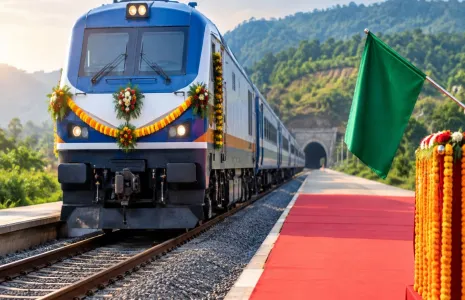
As part of the Amrit Bharat Station Scheme (ABSS) initiated by the central government, a major transformation is in the works for approximately 14 railway stations located in the Delhi-National Capital Region (NCR). This overhaul is part of a broader effort encompassing 508 stations across the nation.

Prime Minister Narendra Modi inaugurated the railway station redevelopment initiative on Sunday, laying the foundation stone for the project. Among the stations covered by Northern Railways, a total of 71 exist within the region, with 14 situated within the Delhi-NCR zone. However, noteworthy stations like New Delhi and Anand Vihar will not be included in this particular endeavour.

According to a representative from Northern Railways, both the New Delhi Station (NDLS) and Anand Vihar Station will undergo distinct projects. The NDLS renovation is of significant scale, having experienced a previous unsuccessful tender. Subsequently, a new tender has been issued, and initial discussions have taken place. In the case of Anand Vihar, the plan involves an extension of two railway lines.

The renovation blueprint emphasises several key goals, including the modernisation of stations, the installation of new rail lines, complete electrification, and an enhancement of both passenger safety and infrastructure security.

Officials disclosed that the initiative involves the removal of unnecessary structures along railway lines, improved lighting, station upgrades with parking facilities, and enhanced accessibility for individuals with disabilities. The scheme also encompasses the installation of lifts, escalators, concourses, modern waiting rooms, and retail areas, all designed to elevate the passengers' experience.

Within the Northern Railways domain, the 71 stations are distributed as follows: one in Chandigarh, one in Himachal Pradesh, 21 in Punjab, 10 in Haryana, 2 in Uttarakhand, 28 in Uttar Pradesh, 3 in Jammu and Kashmir, and 5 within the Delhi-NCR region.

As part of the Amrit Bharat Station Scheme (ABSS) initiated by the central government, a major transformation is in the works for approximately 14 railway stations located in the Delhi-National Capital Region (NCR). This overhaul is part of a broader effort encompassing 508 stations across the nation.Prime Minister Narendra Modi inaugurated the railway station redevelopment initiative on Sunday, laying the foundation stone for the project. Among the stations covered by Northern Railways, a total of 71 exist within the region, with 14 situated within the Delhi-NCR zone. However, noteworthy stations like New Delhi and Anand Vihar will not be included in this particular endeavour.According to a representative from Northern Railways, both the New Delhi Station (NDLS) and Anand Vihar Station will undergo distinct projects. The NDLS renovation is of significant scale, having experienced a previous unsuccessful tender. Subsequently, a new tender has been issued, and initial discussions have taken place. In the case of Anand Vihar, the plan involves an extension of two railway lines.The renovation blueprint emphasises several key goals, including the modernisation of stations, the installation of new rail lines, complete electrification, and an enhancement of both passenger safety and infrastructure security.Officials disclosed that the initiative involves the removal of unnecessary structures along railway lines, improved lighting, station upgrades with parking facilities, and enhanced accessibility for individuals with disabilities. The scheme also encompasses the installation of lifts, escalators, concourses, modern waiting rooms, and retail areas, all designed to elevate the passengers' experience.Within the Northern Railways domain, the 71 stations are distributed as follows: one in Chandigarh, one in Himachal Pradesh, 21 in Punjab, 10 in Haryana, 2 in Uttarakhand, 28 in Uttar Pradesh, 3 in Jammu and Kashmir, and 5 within the Delhi-NCR region.

Next Story
Infrastructure Urban

Implementation Status of Jal Jeevan Mission

Since August 2019 the Government has implemented Jal Jeevan Mission to provide assured potable water through household tap connections in rural India. At the start of the mission only 32.3 million (mn) rural households, representing 16.7 per cent, were reported to have tap water connections. States and union territories have reported that 125.8 mn additional rural households have since been provided with tap connections. As a result, of about 193.6 mn rural households roughly 158.2 mn, or 81.71 per cent, are reported to have tap water supply at home.\n\nThe State, district and village level st..

Next Story
Infrastructure Urban

Jal Jeevan Mission Reaches Eighty One Per Cent Rural Coverage

The Government reported substantial progress under the Jal Jeevan Mission, launched in August 2019 to provide tap water to every rural household. At launch only 32.3 million (mn) rural households had tap connections and states and Union territories reported provision of 125.8 mn additional households by March 2026. Consequently, out of about 193.6 mn rural households around 158.2 mn, or 81.71 per cent, are reported to have tap water at home. The Finance Minister announced extension of the mission until 2028 in the 2025-26 budget speech. The Swachh Bharat Mission Grameen, launched in October 20..

Next Story
Infrastructure Urban

Empowering Local Governance for Sustainable Rural Water Supply

The Ministry of Jal Shakti has aligned the Jal Jeevan Mission (JJM) with the 73rd Amendment to strengthen village level planning and community ownership of water supply. Gram Panchayats, village water and sanitation committees and Pani Samitis are to plan, implement, manage and maintain piped water systems, with gram sabha processes formalising handover and oversight. Implementation support agencies including non government organisations, community based organisations and self help groups have been empanelled to train local committees and promote women participation. Under JJM, the department ..

Advertisement

Subscribe to Our Newsletter

Get daily newsletters around different themes from Construction world.

STAY CONNECTED

Advertisement

Advertisement

Advertisement