DPR for Navi Mumbai Metro Lines 2, 3, and 4 Underway
RAILWAYS & METRO RAIL

DPR for Navi Mumbai Metro Lines 2, 3, and 4 Underway

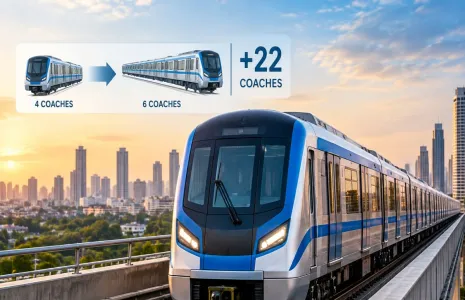
In a significant move towards advancing Navi Mumbai's metro network, Detailed Project Reports (DPRs) are currently in progress for Lines 2, 3, and 4. This development signals a strategic effort to expand and optimise the metro infrastructure, addressing the region's growing demands for seamless and accessible public transportation.

The DPRs under development are expected to provide comprehensive insights into the feasibility, design, budget, and timeline for the proposed metro lines. The initiative aligns with the broader vision of enhancing urban connectivity, reducing traffic congestion, and fostering sustainable transportation solutions in Navi Mumbai.

Lines 2, 3, and 4 are poised to play a crucial role in the city's transportation network, connecting key areas and contributing to the overall development of Navi Mumbai. As the DPRs take shape, stakeholders and the public eagerly anticipate the detailed plans that will shape the future of these metro lines.

This proactive step towards expanding the Navi Mumbai Metro network reflects a commitment to modernising urban transportation infrastructure, ensuring that the metro system continues to be a vital component of the city's growth and development.

In a significant move towards advancing Navi Mumbai's metro network, Detailed Project Reports (DPRs) are currently in progress for Lines 2, 3, and 4. This development signals a strategic effort to expand and optimise the metro infrastructure, addressing the region's growing demands for seamless and accessible public transportation. The DPRs under development are expected to provide comprehensive insights into the feasibility, design, budget, and timeline for the proposed metro lines. The initiative aligns with the broader vision of enhancing urban connectivity, reducing traffic congestion, and fostering sustainable transportation solutions in Navi Mumbai. Lines 2, 3, and 4 are poised to play a crucial role in the city's transportation network, connecting key areas and contributing to the overall development of Navi Mumbai. As the DPRs take shape, stakeholders and the public eagerly anticipate the detailed plans that will shape the future of these metro lines. This proactive step towards expanding the Navi Mumbai Metro network reflects a commitment to modernising urban transportation infrastructure, ensuring that the metro system continues to be a vital component of the city's growth and development.

Related Stories

Gold Stories
Next Story
Infrastructure Urban

KONE Opens India's First Digital Experience Centre in Pune

KONE, a global elevator and escalator manufacturer, has inaugurated its first Digital Experience Centre (DEC) in India, located in Pune. The facility aims to showcase how artificial intelligence (AI), connectivity and data-driven technologies can enhance customer experiences and improve building operations.The centre was inaugurated by Jussi Herlin, Executive Vice Chair, KONE Corporation; Philippe Delorme, President and CEO, KONE; and Nandan Nilekani, Co-founder and Chairman of the Board, Infosys.Designed as an interactive customer environment, the facility demonstrates digital solutions cover..

Next Story
Infrastructure Urban

CII GreenCo Launches Circularity Guidelines for Indian Industry

The Confederation of Indian Industry (CII) GreenCo Council has launched the CII GreenCo Circularity Guidelines – Pilot Version at the 17th CII GreenCo Waste & Resource Management Summit 2026 in Chennai. The initiative aims to strengthen resource efficiency, waste reduction and circular economy practices across Indian manufacturing and process industries.The guidelines introduce a structured framework with circularity indices covering raw materials, consumables, packaging and other resource inputs. These indicators will help industries assess existing practices, identify opportunities to ..

Next Story
Infrastructure Energy

Global Electronics Association Launches IPC-1783-CO2E Standard

The Global Electronics Association has introduced IPC-1783-CO2E, a new international standard aimed at improving consistency, transparency and comparability in product carbon footprint reporting across the electronics manufacturing industry.The standard, titled International Standard for Data Collection and Reporting of CO2 Equivalent (CO2e) Emissions for the Electronics Manufacturing Supply Chain, provides industry-specific guidance for collecting, estimating and reporting carbon emissions data.With increasing regulatory requirements and customer expectations, electronics manufacturers face c..

Advertisement

Subscribe to Our Newsletter

Get daily newsletters around different themes from Construction world.

STAY CONNECTED

Advertisement

SPECIAL OFFER
QR Code