+
INOX India Supplies LNG Systems For Indian Railways DEMU Trial
RAILWAYS & METRO RAIL

INOX India Supplies LNG Systems For Indian Railways DEMU Trial

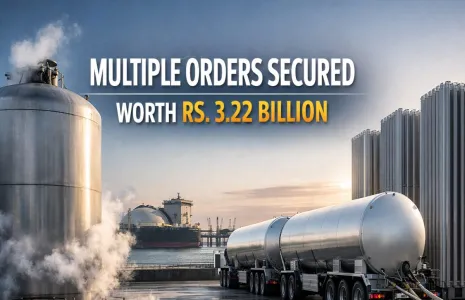
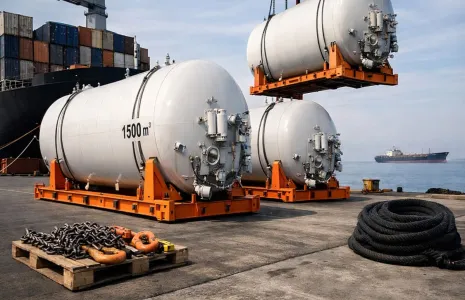
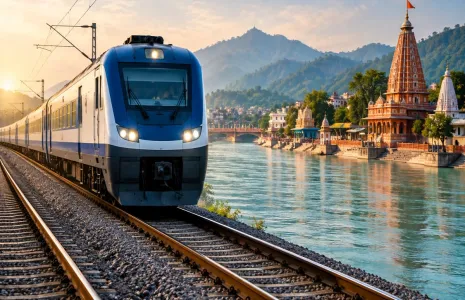
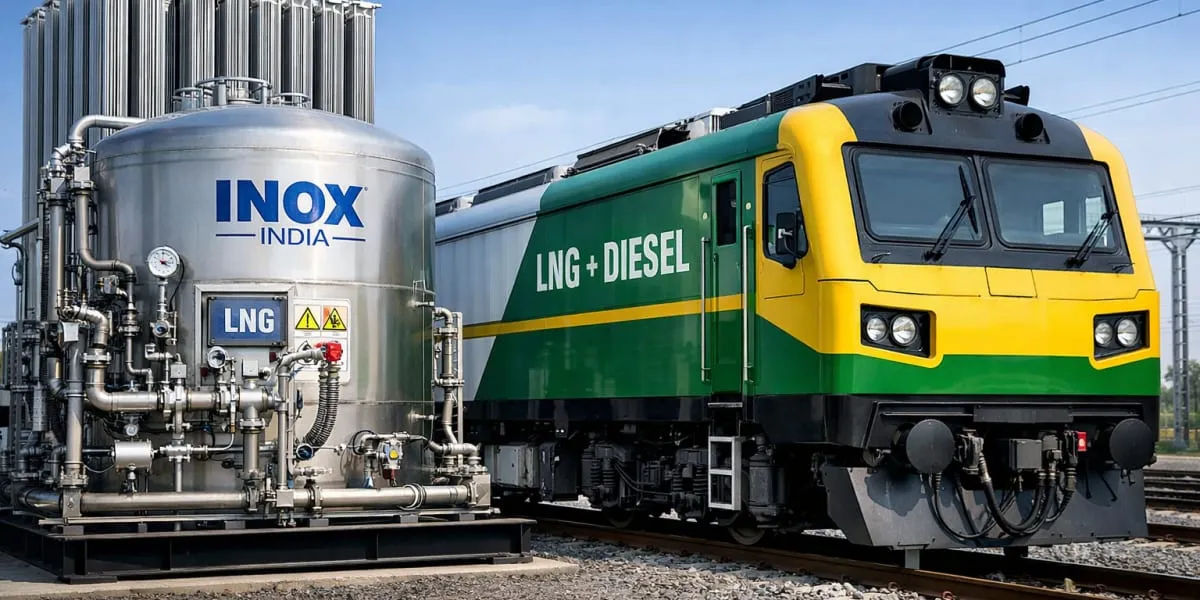
Indian Railways has operationalised the nation's first liquefied natural gas (LNG)-diesel dual-fuel Diesel Electric Multiple Unit (DEMU) train at Sabarmati in Ahmedabad after INOX India Limited (INOXCVA) supplied specialised cryogenic systems. The supplier delivered 2,200-litre LNG receiving, storage and regasification systems for integration with 1,400 horsepower (HP) driving power cars (DPUs) in the dual-fuel DEMU configuration. The initiative follows planned trials and certifications undertaken by the rail operator and its divisions and represents a practical test of cleaner fuel pathways for passenger services.

The commissioned systems are engineered to enable continuous dual-fuel operation with LNG and diesel while preserving engine performance and operational reliability. The technology is intended to permit substitution of diesel by up to 40 per cent, improving fuel efficiency and reducing greenhouse gas and particulate emissions on short and medium-distance routes. The systems are presented as compatible with existing maintenance practices and operational requirements for DEMU fleets deployed across diverse regional services.

The dual-fuel programme was conceived by the Alternative Fuels Division of Indian Railways to convert an initial batch of 10 driving power cars to a hybrid model running on LNG alongside diesel. INOXCVA previously delivered two units that underwent extensive trials and certification in the Sabarmati Division and demonstrated operational viability and safety compliance. Following those assessments, the rail operator has indicated readiness to induct further units and the supplier is prepared to fulfil deliveries under its contract.

The deployment is described as an important step towards energy-efficient, low-emission rail mobility that can enhance operational efficiency and long-term sustainability of passenger services. Company executives characterised LNG as a transition fuel that can reduce diesel dependence and signalled continued research and development toward liquid hydrogen as a potential future zero-emission option. The project reinforces the supplier's position in cryogenic technology solutions and aligns with national clean mobility objectives.

Indian Railways has operationalised the nation's first liquefied natural gas (LNG)-diesel dual-fuel Diesel Electric Multiple Unit (DEMU) train at Sabarmati in Ahmedabad after INOX India Limited (INOXCVA) supplied specialised cryogenic systems. The supplier delivered 2,200-litre LNG receiving, storage and regasification systems for integration with 1,400 horsepower (HP) driving power cars (DPUs) in the dual-fuel DEMU configuration. The initiative follows planned trials and certifications undertaken by the rail operator and its divisions and represents a practical test of cleaner fuel pathways for passenger services. The commissioned systems are engineered to enable continuous dual-fuel operation with LNG and diesel while preserving engine performance and operational reliability. The technology is intended to permit substitution of diesel by up to 40 per cent, improving fuel efficiency and reducing greenhouse gas and particulate emissions on short and medium-distance routes. The systems are presented as compatible with existing maintenance practices and operational requirements for DEMU fleets deployed across diverse regional services. The dual-fuel programme was conceived by the Alternative Fuels Division of Indian Railways to convert an initial batch of 10 driving power cars to a hybrid model running on LNG alongside diesel. INOXCVA previously delivered two units that underwent extensive trials and certification in the Sabarmati Division and demonstrated operational viability and safety compliance. Following those assessments, the rail operator has indicated readiness to induct further units and the supplier is prepared to fulfil deliveries under its contract. The deployment is described as an important step towards energy-efficient, low-emission rail mobility that can enhance operational efficiency and long-term sustainability of passenger services. Company executives characterised LNG as a transition fuel that can reduce diesel dependence and signalled continued research and development toward liquid hydrogen as a potential future zero-emission option. The project reinforces the supplier's position in cryogenic technology solutions and aligns with national clean mobility objectives.

Next Story
Equipment

Kabelschlepp India Installs Robotic VMC in Bengaluru

Kabelschlepp India, part of the Tsubaki Group, has installed a state-of-the-art Vertical Machining Center (VMC) integrated with robotic automation at its Bengaluru facility. The inauguration was held in the presence of Henning Preis, President & CEO, Kabelschlepp Group, Jörg Schulz, Vice President – Production, and Srinivas P. Kamisetty, Managing Director, Kabelschlepp India.The high-precision CNC VMC is designed for advanced milling, drilling, tapping and multi-axis machining. Equipped with a vertical spindle orientation, automatic tool changer and intelligent CNC control system, it en..

Next Story
Infrastructure Transport

Highway Delivery Reset!

Project delays and inefficiencies continue to bedevil the progress of India’s National Highways network. A multi-pronged reform agenda is needed to inject greater transparency and accountability at every stage – from planning and procurement to execution, maintenance and oversight. This article offers key recommendations and reform strategies that government stakeholders – from the Ministry of Road Transport & Highways (MoRTH) and the National Highways Authority of India (NHAI) to state agencies and oversight bodies – should pursue to put highway development on a better track.Decen..

Next Story
Infrastructure Transport

MSIDC Executes ₹37,000 Crore Road Programme

With Rs 37,000 crore worth of road projects under execution across Maharashtra, Maharashtra State Infrastructure Development Corporation (MSIDC) is driving one of the state’s largest infrastructure programmes. Dr Brijesh Dixit, Managing Director, discusses the institutional reforms, execution frameworks, financing strategies and technology adoption enabling timely, high-quality delivery, in conversation with PRATAP PADODE, Editor-in-Chief, CW.With over Rs 37,000 crore worth of road projects underway across districts – many under tight timelines – what institutional and executio..

Advertisement

Subscribe to Our Newsletter

Get daily newsletters around different themes from Construction world.

STAY CONNECTED

Advertisement

Advertisement

Advertisement

Open In App