Kanpur Metro Corridor One Nears Full Launch After Final CMRS Inspection
RAILWAYS & METRO RAIL

Kanpur Metro Corridor One Nears Full Launch After Final CMRS Inspection

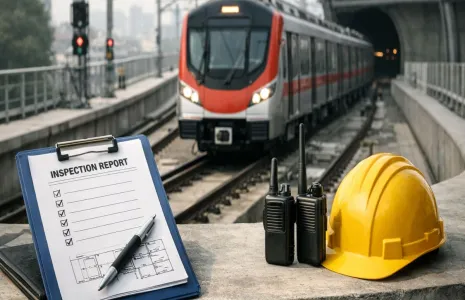
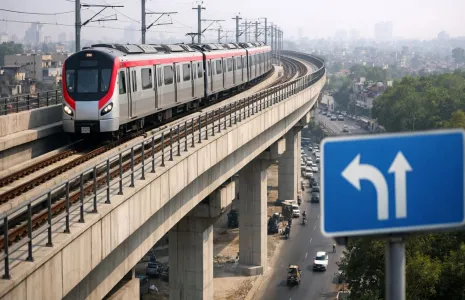
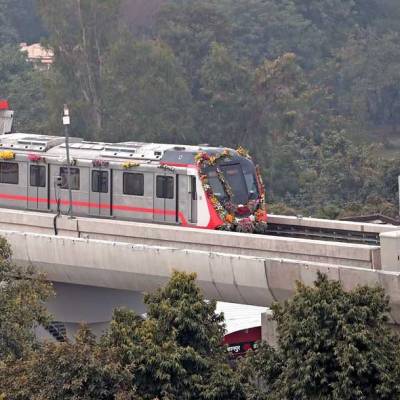
The Commissioner of Metro Rail Safety completed a three-day statutory safety inspection of the remaining section between Kanpur Central and Naubasta, moving Corridor One closer to full commissioning. Nilabhra Sengupta led a five-member expert team and senior officials of the Uttar Pradesh Metro Rail Corporation on the final day, and the group boarded a metro train at Naveen Market station for a comprehensive trial run along the stretch. The inspection concluded routine trials of operational procedures and readiness checks.\n\nThe team carried out detailed assessments of signalling and telecommunication systems, civil structures, track stability and electrical installations. Evaluations also covered traction power supply, rolling stock condition and emergency response mechanisms, including advanced fire safety arrangements.\n\nKanpur Metro began operations in December 2021 when the nine-kilometre elevated priority corridor between the Indian Institute of Technology Kanpur and Moti Jheel opened, and services were expanded in May 2025 with five underground stations to reach Kanpur Central. With the remaining section set to be commissioned, Corridor One will operate as a continuous route serving central and northern parts of the city. UPMRC officials indicated that full operation is the next procedural milestone.\n\nCorridor One will include IIT Kanpur, Kalyanpur railway station, SPM Hospital, CSJM University, Gurudev Chauraha, Geeta Nagar, Rawatpur railway station and Lala Lajpat Rai Hospital. It will also serve Moti Jheel, Chunni Ganj, Naveen Market, Bada Chauraha, Nayaganj, Kanpur Central railway station, Jhakarkati Bus Terminal, Transport Nagar, Kidwai Nagar, Vasant Vihar, Baudh Nagar and Naubasta.\n\nUPMRC data show daily ridership rose from around 6,000 to nearly 39,000 after the extension to Kanpur Central, and the corporation expects average daily figures to increase further to between 80,000 and 0.1 million (mn) passengers once Corridor One is fully commissioned. The authority said the metro will benefit a large population of students, working professionals, industrial workers and commuters from surrounding areas, and that improved connectivity is intended to support urban mobility and economic activity.

The Commissioner of Metro Rail Safety completed a three-day statutory safety inspection of the remaining section between Kanpur Central and Naubasta, moving Corridor One closer to full commissioning. Nilabhra Sengupta led a five-member expert team and senior officials of the Uttar Pradesh Metro Rail Corporation on the final day, and the group boarded a metro train at Naveen Market station for a comprehensive trial run along the stretch. The inspection concluded routine trials of operational procedures and readiness checks.\n\nThe team carried out detailed assessments of signalling and telecommunication systems, civil structures, track stability and electrical installations. Evaluations also covered traction power supply, rolling stock condition and emergency response mechanisms, including advanced fire safety arrangements.\n\nKanpur Metro began operations in December 2021 when the nine-kilometre elevated priority corridor between the Indian Institute of Technology Kanpur and Moti Jheel opened, and services were expanded in May 2025 with five underground stations to reach Kanpur Central. With the remaining section set to be commissioned, Corridor One will operate as a continuous route serving central and northern parts of the city. UPMRC officials indicated that full operation is the next procedural milestone.\n\nCorridor One will include IIT Kanpur, Kalyanpur railway station, SPM Hospital, CSJM University, Gurudev Chauraha, Geeta Nagar, Rawatpur railway station and Lala Lajpat Rai Hospital. It will also serve Moti Jheel, Chunni Ganj, Naveen Market, Bada Chauraha, Nayaganj, Kanpur Central railway station, Jhakarkati Bus Terminal, Transport Nagar, Kidwai Nagar, Vasant Vihar, Baudh Nagar and Naubasta.\n\nUPMRC data show daily ridership rose from around 6,000 to nearly 39,000 after the extension to Kanpur Central, and the corporation expects average daily figures to increase further to between 80,000 and 0.1 million (mn) passengers once Corridor One is fully commissioned. The authority said the metro will benefit a large population of students, working professionals, industrial workers and commuters from surrounding areas, and that improved connectivity is intended to support urban mobility and economic activity.

Related Stories

Gold Stories

Next Story
Infrastructure Urban

KONE Opens India's First Digital Experience Centre in Pune

KONE, a global elevator and escalator manufacturer, has inaugurated its first Digital Experience Centre (DEC) in India, located in Pune. The facility aims to showcase how artificial intelligence (AI), connectivity and data-driven technologies can enhance customer experiences and improve building operations.The centre was inaugurated by Jussi Herlin, Executive Vice Chair, KONE Corporation; Philippe Delorme, President and CEO, KONE; and Nandan Nilekani, Co-founder and Chairman of the Board, Infosys.Designed as an interactive customer environment, the facility demonstrates digital solutions cover..

Next Story
Infrastructure Urban

CII GreenCo Launches Circularity Guidelines for Indian Industry

The Confederation of Indian Industry (CII) GreenCo Council has launched the CII GreenCo Circularity Guidelines – Pilot Version at the 17th CII GreenCo Waste & Resource Management Summit 2026 in Chennai. The initiative aims to strengthen resource efficiency, waste reduction and circular economy practices across Indian manufacturing and process industries.The guidelines introduce a structured framework with circularity indices covering raw materials, consumables, packaging and other resource inputs. These indicators will help industries assess existing practices, identify opportunities to ..

Next Story
Infrastructure Energy

Global Electronics Association Launches IPC-1783-CO2E Standard

The Global Electronics Association has introduced IPC-1783-CO2E, a new international standard aimed at improving consistency, transparency and comparability in product carbon footprint reporting across the electronics manufacturing industry.The standard, titled International Standard for Data Collection and Reporting of CO2 Equivalent (CO2e) Emissions for the Electronics Manufacturing Supply Chain, provides industry-specific guidance for collecting, estimating and reporting carbon emissions data.With increasing regulatory requirements and customer expectations, electronics manufacturers face c..

Advertisement

Subscribe to Our Newsletter

Get daily newsletters around different themes from Construction world.

STAY CONNECTED

Advertisement

SPECIAL OFFER
QR Code