+
Kochi’s Electric Buses Offer Blueprint for Kerala’s EV Transition
RAILWAYS & METRO RAIL

Kochi’s Electric Buses Offer Blueprint for Kerala’s EV Transition

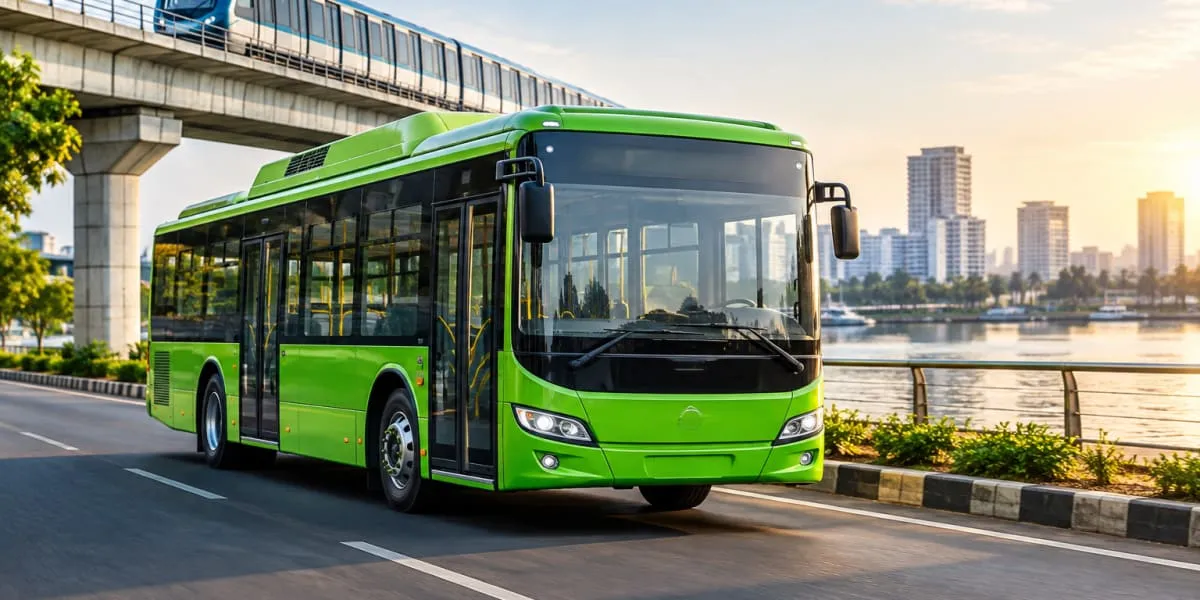
Kochi’s Metro Connect is testing how electric public transport can address first- and last-mile gaps in Kerala. Launched in January 2025 by Kochi Metro Rail, the service began with 15 air-conditioned, 33-seater electric buses linking neighbourhoods and key destinations with the Metro and Water Metro.

The fleet operates across six routes, covers around 2,300 km a day and travelled nearly 700,000 km in its first year. It carried about 1.4 mn passengers during that period, with routes connecting Aluva to Cochin International Airport, Kalamassery to Medical College, High Court to MG Road, and other major residential and employment centres.

The initiative is designed to make mass transit more accessible by replacing conventional feeder vehicles and reducing dependence on autorickshaws, taxis and private vehicles. Its significance lies in treating electric buses as part of an integrated public transport network rather than as isolated vehicles.

Kochi Metro Rail’s earlier electric feeder-bus operation faced low ridership, operational inefficiencies, charging constraints and dead mileage. The agency subsequently assumed greater control over the fleet and began using ticketing data, vehicle telematics and charging information to adjust routes and services. This optimisation has reportedly improved ridership and revenue by 15 per cent.

The project’s data indicate that passengers have shifted to the feeder service from autorickshaws, taxis, longer bus journeys and private vehicles. That change is important because electric public transport can deliver wider environmental benefits when it replaces car and fossil-fuelled autorickshaw journeys, although electrification alone cannot resolve congestion, battery waste or rising vehicle ownership.

Kochi Metro Rail is considering adding another 15 to 17 electric buses to strengthen links between the Metro and Water Metro. The service began with seven charging stations and a dedicated depot, with charging integrated into route planning. Its limited scale allows the operator to test passenger behaviour, route performance and energy use before expansion, offering Kerala a potential model for cleaner, more connected mobility.

Kochi’s Metro Connect is testing how electric public transport can address first- and last-mile gaps in Kerala. Launched in January 2025 by Kochi Metro Rail, the service began with 15 air-conditioned, 33-seater electric buses linking neighbourhoods and key destinations with the Metro and Water Metro. The fleet operates across six routes, covers around 2,300 km a day and travelled nearly 700,000 km in its first year. It carried about 1.4 mn passengers during that period, with routes connecting Aluva to Cochin International Airport, Kalamassery to Medical College, High Court to MG Road, and other major residential and employment centres. The initiative is designed to make mass transit more accessible by replacing conventional feeder vehicles and reducing dependence on autorickshaws, taxis and private vehicles. Its significance lies in treating electric buses as part of an integrated public transport network rather than as isolated vehicles. Kochi Metro Rail’s earlier electric feeder-bus operation faced low ridership, operational inefficiencies, charging constraints and dead mileage. The agency subsequently assumed greater control over the fleet and began using ticketing data, vehicle telematics and charging information to adjust routes and services. This optimisation has reportedly improved ridership and revenue by 15 per cent. The project’s data indicate that passengers have shifted to the feeder service from autorickshaws, taxis, longer bus journeys and private vehicles. That change is important because electric public transport can deliver wider environmental benefits when it replaces car and fossil-fuelled autorickshaw journeys, although electrification alone cannot resolve congestion, battery waste or rising vehicle ownership. Kochi Metro Rail is considering adding another 15 to 17 electric buses to strengthen links between the Metro and Water Metro. The service began with seven charging stations and a dedicated depot, with charging integrated into route planning. Its limited scale allows the operator to test passenger behaviour, route performance and energy use before expansion, offering Kerala a potential model for cleaner, more connected mobility.

Related Stories

Gold Stories

Next Story
Infrastructure Urban

VECV Sales Rise 49.6% to 11,396 Units in September

VE Commercial Vehicles Ltd (VECV), a joint venture between Volvo Group and Eicher Motors, recorded sales of 11,396 units in September 2026, up 49.6 per cent from 7,619 units in September 2025.The total included 11,146 units under the Eicher brand and 250 units under the Volvo brand.Eicher-branded trucks and buses recorded sales of 11,146 units during the month, compared with 7,352 units in September 2025, registering growth of 51.6 per cent.In the domestic commercial vehicle market, Eicher trucks and buses reported sales of 10,479 units, up 57.5 per cent from 6,652 units in the corresponding p..

Next Story
Infrastructure Urban

"Agentic AI set to transform supply chain decision-making."

Interview with: Lalit Das, Founder & CEO, Agentra AIWhy the next phase of supply chain technology will be about AI that acts, not just advises?Supply chains no longer have a visibility problem. They have a decision-latency problem. It takes about 8.7 hours to detect a disruption and more than 40 more to understand its impact, all before anyone acts. Meanwhile, disruption costs the global economy an estimated $184 billion a year.Enterprises already own excellent systems of record. What they lack is a system of action. Copilots don't fix that, they just give faster answers about a broken pro..

Next Story
Real Estate

BNW Developments Opens Sydney Office to Target UAE Investors

BNW Developments has expanded its international presence with the opening of a new office in Sydney, Australia, aimed at strengthening engagement with Australian investors interested in the UAE residential property market.The Sydney office will serve as a local platform for investors, wealth advisers, brokerage firms and real estate professionals exploring opportunities in Dubai and Ras Al Khaimah.Headquartered in Dubai, BNW Developments has launched 13 projects and has another 16 projects in its pipeline, representing a combined gross development value of around AED 32 billion (USD 8.7 billio..

Advertisement

Subscribe to Our Newsletter

Get daily newsletters around different themes from Construction world.

STAY CONNECTED

Advertisement

SPECIAL OFFER
QR Code