Mathikere One Point Two Kilometre Double Decker to Stack Road and Rail
RAILWAYS & METRO RAIL

Mathikere One Point Two Kilometre Double Decker to Stack Road and Rail

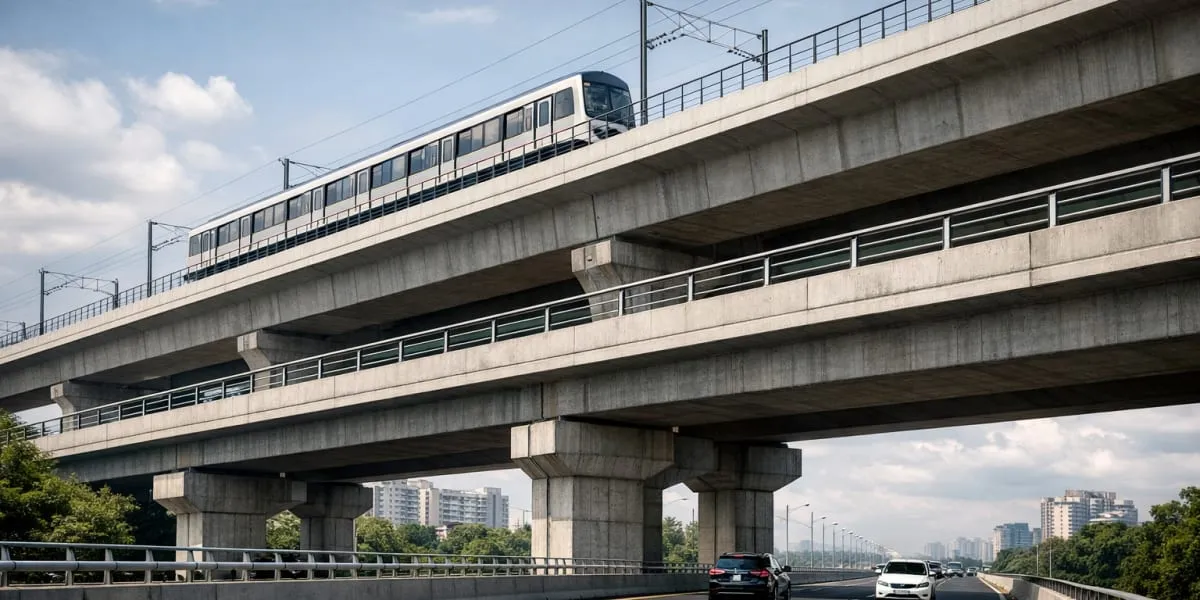
The one point two kilometre (km) double-decker structure at Mathikere is emerging as a key engineering feature of Corridor two (Benniganahalli-Chikkabanavara) of the Bengaluru Suburban Transport Project (BSTP).

The design stacks road and elevated suburban rail within a constrained urban corridor to make efficient use of space. The first level will function as a road flyover to facilitate vehicular movement, while the second level will carry the elevated suburban rail viaduct of Corridor two. Project documentation indicates the arrangement aims to align infrastructure within a single corridor.

The configuration is intended to reduce the need for separate land corridors for road and rail and to limit additional acquisition in densely populated areas. Planners expect the stacked approach to allow continued surface activity beneath the structure during construction and after completion, reducing long term disruption. The design calls for coordinated structural supports and clearance standards to accommodate both vehicular loads and rail track geometry. Engineers will need to reconcile differing load paths and vibration control measures within a compact cross section.

Delivery will require phased construction and close coordination with utility agencies to relocate or protect existing services. Traffic management plans are being integrated into works schedules to maintain movement on adjacent roads and to safeguard residents. The elevated rail component forms part of the broader suburban network planned under BSTP and will connect with other transport elements at designated nodes. Safety, maintenance access and drainage have been emphasised in design reviews as critical to long term performance.

The Mathikere double-decker is presented as a demonstration of urban multimodal integration for Corridor two and the wider BSTP programme. Municipal and transport authorities are positioning the structure as a complex but necessary solution to accommodate growth within constrained right of way. Project updates and technical notes will guide subsequent segments that deploy similar stacking where corridor space is limited. The approach underlines a shift towards vertical infrastructure layering in the city.

The one point two kilometre (km) double-decker structure at Mathikere is emerging as a key engineering feature of Corridor two (Benniganahalli-Chikkabanavara) of the Bengaluru Suburban Transport Project (BSTP). The design stacks road and elevated suburban rail within a constrained urban corridor to make efficient use of space. The first level will function as a road flyover to facilitate vehicular movement, while the second level will carry the elevated suburban rail viaduct of Corridor two. Project documentation indicates the arrangement aims to align infrastructure within a single corridor. The configuration is intended to reduce the need for separate land corridors for road and rail and to limit additional acquisition in densely populated areas. Planners expect the stacked approach to allow continued surface activity beneath the structure during construction and after completion, reducing long term disruption. The design calls for coordinated structural supports and clearance standards to accommodate both vehicular loads and rail track geometry. Engineers will need to reconcile differing load paths and vibration control measures within a compact cross section. Delivery will require phased construction and close coordination with utility agencies to relocate or protect existing services. Traffic management plans are being integrated into works schedules to maintain movement on adjacent roads and to safeguard residents. The elevated rail component forms part of the broader suburban network planned under BSTP and will connect with other transport elements at designated nodes. Safety, maintenance access and drainage have been emphasised in design reviews as critical to long term performance. The Mathikere double-decker is presented as a demonstration of urban multimodal integration for Corridor two and the wider BSTP programme. Municipal and transport authorities are positioning the structure as a complex but necessary solution to accommodate growth within constrained right of way. Project updates and technical notes will guide subsequent segments that deploy similar stacking where corridor space is limited. The approach underlines a shift towards vertical infrastructure layering in the city.

Related Stories

Gold Stories

Next Story
Infrastructure Transport

GMDA to Spend Rs 86 mn on Green Belts Along Seven Gurugram Roads

The Gurugram Metropolitan Development Authority (GMDA) will spend Rs 86 mn to develop, upgrade and maintain green areas along seven key sector-dividing roads in the city after three tenders were floated, officials said. The project is intended to create landscaped stretches that can absorb additional rainwater runoff and reduce waterlogging during the monsoon. Contractors will be given six months to complete development work and 36 months of maintenance obligations. GMDA chief executive officer PC Meena stated that green areas will be established along sector-dividing roads in sectors 47/49, 4..

Next Story
Infrastructure Urban

Modern College Inaugurates Phase Two Campus Road Supported By HiKOKI

Modern College in Kohima formally inaugurated Phase two of its campus road on 12 August 2026 in an event marked by senior officials of HiKOKI Power Tools India Pvt. Ltd. The programme began at 10:30 am with a prayer led by Pezangulie Keyho, pastor of Piphema A Baptist Church, followed by the unveiling of a road monolith and a sapling plantation drive. The ceremony brought together college administrators, company representatives and students to witness completion of the latest stretch of the thoroughfare. The HiKOKI delegation included Rajan Batra, director of sales, Harsha Kumar, assistant gen..

Next Story
Infrastructure Urban

158 Remote Villages in Andhra Pradesh to Get Roads

In a major push to take development to the doorstep of people in remote habitations, 158 villages and hamlets in Andhra Pradesh will receive road connectivity for the first time under the Pradhan Mantri Gram Sadak Yojana. The project carries an administrative sanction of Rs 4.22 billion (bn) and officials said it is expected to transform access to education, healthcare, markets and other essential services for thousands of residents. The scheme covers construction and bridging works across several districts. The plan provides for 146 roads covering 347 km and 19 bridges to be built, with execu..

Advertisement

Subscribe to Our Newsletter

Get daily newsletters around different themes from Construction world.

STAY CONNECTED

Advertisement