+
Metro Revises Khajrana Bengali Square Corridor Plan
RAILWAYS & METRO RAIL

Metro Revises Khajrana Bengali Square Corridor Plan

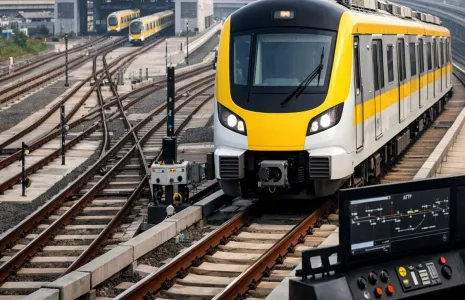
Madhya Pradesh Metro Rail Corporation Limited (MPMRCL) will revise the Rs five point four three bn contract awarded to URC Construction for a five-kilometre elevated corridor after a review of the alignment prompted by directions from the chief minister Mohan Yadav. The original plan envisaged an elevated structure from Robot Square to Khajrana Square passing through Bengali Square, Palasia Square and MG Road. Under the revised proposal the elevated section will extend only to Khajrana Square and the remaining stretch will be developed underground. The decision follows a detailed assessment of route feasibility and urban constraints.

The contractor had completed only about one point three kilometres of the elevated stretch, leaving the remainder of the five-kilometre corridor unexecuted. Work on the partially completed piers and viaducts will be evaluated to determine whether they can be integrated into the amended design. Project teams are examining technical, environmental and traffic implications before finalising the revised alignment. The review aims to minimise disruptions while addressing engineering challenges.

MPMRCL has indicated that construction on other segments will continue as planned and has identified the elevated corridor from Gandhi Nagar to Radisson Square as unaffected by the change. Contractual adjustments arising from the alignment revision will be addressed through arbitration between the authority and the contractor. The corporation expects the arbitration process to define financial and schedule responsibilities without halting unrelated work. Stakeholders have been asked to cooperate with preparatory surveys and site investigations.

The revision is likely to influence timelines and may require supplementary approvals and clearances from civic agencies, although specific cost changes have not been disclosed. Officials have emphasised the need to balance commuter convenience with urban planning priorities during execution of the amended design. The authority plans to communicate further details as technical studies conclude and arbitration progresses. Residents and commuters have been advised that phased construction and mitigation measures will be adopted to reduce impact.

Madhya Pradesh Metro Rail Corporation Limited (MPMRCL) will revise the Rs five point four three bn contract awarded to URC Construction for a five-kilometre elevated corridor after a review of the alignment prompted by directions from the chief minister Mohan Yadav. The original plan envisaged an elevated structure from Robot Square to Khajrana Square passing through Bengali Square, Palasia Square and MG Road. Under the revised proposal the elevated section will extend only to Khajrana Square and the remaining stretch will be developed underground. The decision follows a detailed assessment of route feasibility and urban constraints. The contractor had completed only about one point three kilometres of the elevated stretch, leaving the remainder of the five-kilometre corridor unexecuted. Work on the partially completed piers and viaducts will be evaluated to determine whether they can be integrated into the amended design. Project teams are examining technical, environmental and traffic implications before finalising the revised alignment. The review aims to minimise disruptions while addressing engineering challenges. MPMRCL has indicated that construction on other segments will continue as planned and has identified the elevated corridor from Gandhi Nagar to Radisson Square as unaffected by the change. Contractual adjustments arising from the alignment revision will be addressed through arbitration between the authority and the contractor. The corporation expects the arbitration process to define financial and schedule responsibilities without halting unrelated work. Stakeholders have been asked to cooperate with preparatory surveys and site investigations. The revision is likely to influence timelines and may require supplementary approvals and clearances from civic agencies, although specific cost changes have not been disclosed. Officials have emphasised the need to balance commuter convenience with urban planning priorities during execution of the amended design. The authority plans to communicate further details as technical studies conclude and arbitration progresses. Residents and commuters have been advised that phased construction and mitigation measures will be adopted to reduce impact.

Next Story
Infrastructure Urban

Implementation Status of Jal Jeevan Mission

Since August 2019 the Government has implemented Jal Jeevan Mission to provide assured potable water through household tap connections in rural India. At the start of the mission only 32.3 million (mn) rural households, representing 16.7 per cent, were reported to have tap water connections. States and union territories have reported that 125.8 mn additional rural households have since been provided with tap connections. As a result, of about 193.6 mn rural households roughly 158.2 mn, or 81.71 per cent, are reported to have tap water supply at home.\n\nThe State, district and village level st..

Next Story
Infrastructure Urban

Jal Jeevan Mission Reaches Eighty One Per Cent Rural Coverage

The Government reported substantial progress under the Jal Jeevan Mission, launched in August 2019 to provide tap water to every rural household. At launch only 32.3 million (mn) rural households had tap connections and states and Union territories reported provision of 125.8 mn additional households by March 2026. Consequently, out of about 193.6 mn rural households around 158.2 mn, or 81.71 per cent, are reported to have tap water at home. The Finance Minister announced extension of the mission until 2028 in the 2025-26 budget speech. The Swachh Bharat Mission Grameen, launched in October 20..

Next Story
Infrastructure Urban

Empowering Local Governance for Sustainable Rural Water Supply

The Ministry of Jal Shakti has aligned the Jal Jeevan Mission (JJM) with the 73rd Amendment to strengthen village level planning and community ownership of water supply. Gram Panchayats, village water and sanitation committees and Pani Samitis are to plan, implement, manage and maintain piped water systems, with gram sabha processes formalising handover and oversight. Implementation support agencies including non government organisations, community based organisations and self help groups have been empanelled to train local committees and promote women participation. Under JJM, the department ..

Advertisement

Subscribe to Our Newsletter

Get daily newsletters around different themes from Construction world.

STAY CONNECTED

Advertisement

Advertisement

Advertisement