

Namo Bharat Train Trial Run Begins
RAILWAYS & METRO RAIL

Namo Bharat Train Trial Run Begins

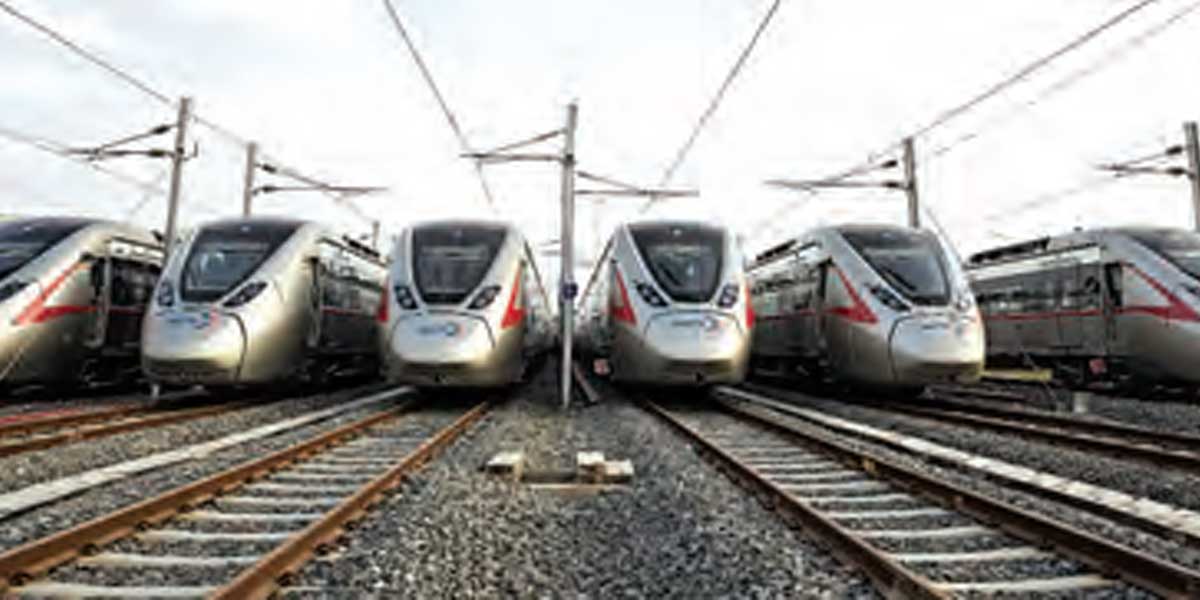
The Namo Bharat train, a new addition to India's railway network, has commenced its trial run on a 25-kilometre stretch in Ghaziabad. This marks a significant step in the project's testing phase, as the train aims to enhance connectivity and transportation services in the region.

During the trial run, authorities will evaluate various aspects of the Namo Bharat train, including its performance, safety features, and adherence to the proposed schedule. The project holds promise for improving transportation efficiency and providing a more convenient travel option for passengers in the Ghaziabad area.

The Namo Bharat train is part of the broader efforts to modernize and upgrade India's railway infrastructure. Its introduction aligns with the intention to enhance connectivity, reduce travel time, and improve the overall travel experience for commuters.

As the trial run progresses, it will offer valuable insights into the train's operational capabilities and any adjustments needed before its full-fledged launch. The Namo Bharat project reflects the ongoing commitment to advancing the country's railway sector and contributing to the development of a robust and efficient transportation network.

The Namo Bharat train, a new addition to India's railway network, has commenced its trial run on a 25-kilometre stretch in Ghaziabad. This marks a significant step in the project's testing phase, as the train aims to enhance connectivity and transportation services in the region. During the trial run, authorities will evaluate various aspects of the Namo Bharat train, including its performance, safety features, and adherence to the proposed schedule. The project holds promise for improving transportation efficiency and providing a more convenient travel option for passengers in the Ghaziabad area. The Namo Bharat train is part of the broader efforts to modernize and upgrade India's railway infrastructure. Its introduction aligns with the intention to enhance connectivity, reduce travel time, and improve the overall travel experience for commuters. As the trial run progresses, it will offer valuable insights into the train's operational capabilities and any adjustments needed before its full-fledged launch. The Namo Bharat project reflects the ongoing commitment to advancing the country's railway sector and contributing to the development of a robust and efficient transportation network.

Next Story
Infrastructure Urban

Implementation Status of Jal Jeevan Mission

Since August 2019 the Government has implemented Jal Jeevan Mission to provide assured potable water through household tap connections in rural India. At the start of the mission only 32.3 million (mn) rural households, representing 16.7 per cent, were reported to have tap water connections. States and union territories have reported that 125.8 mn additional rural households have since been provided with tap connections. As a result, of about 193.6 mn rural households roughly 158.2 mn, or 81.71 per cent, are reported to have tap water supply at home.\n\nThe State, district and village level st..

Next Story
Infrastructure Urban

Jal Jeevan Mission Reaches Eighty One Per Cent Rural Coverage

The Government reported substantial progress under the Jal Jeevan Mission, launched in August 2019 to provide tap water to every rural household. At launch only 32.3 million (mn) rural households had tap connections and states and Union territories reported provision of 125.8 mn additional households by March 2026. Consequently, out of about 193.6 mn rural households around 158.2 mn, or 81.71 per cent, are reported to have tap water at home. The Finance Minister announced extension of the mission until 2028 in the 2025-26 budget speech. The Swachh Bharat Mission Grameen, launched in October 20..

Next Story
Infrastructure Urban

Empowering Local Governance for Sustainable Rural Water Supply

The Ministry of Jal Shakti has aligned the Jal Jeevan Mission (JJM) with the 73rd Amendment to strengthen village level planning and community ownership of water supply. Gram Panchayats, village water and sanitation committees and Pani Samitis are to plan, implement, manage and maintain piped water systems, with gram sabha processes formalising handover and oversight. Implementation support agencies including non government organisations, community based organisations and self help groups have been empanelled to train local committees and promote women participation. Under JJM, the department ..

Advertisement

Subscribe to Our Newsletter

Get daily newsletters around different themes from Construction world.

STAY CONNECTED

Advertisement

Advertisement

Advertisement