Over 22,000 ILPs Issued at Sairang Station Since Rail Link
RAILWAYS & METRO RAIL

Over 22,000 ILPs Issued at Sairang Station Since Rail Link

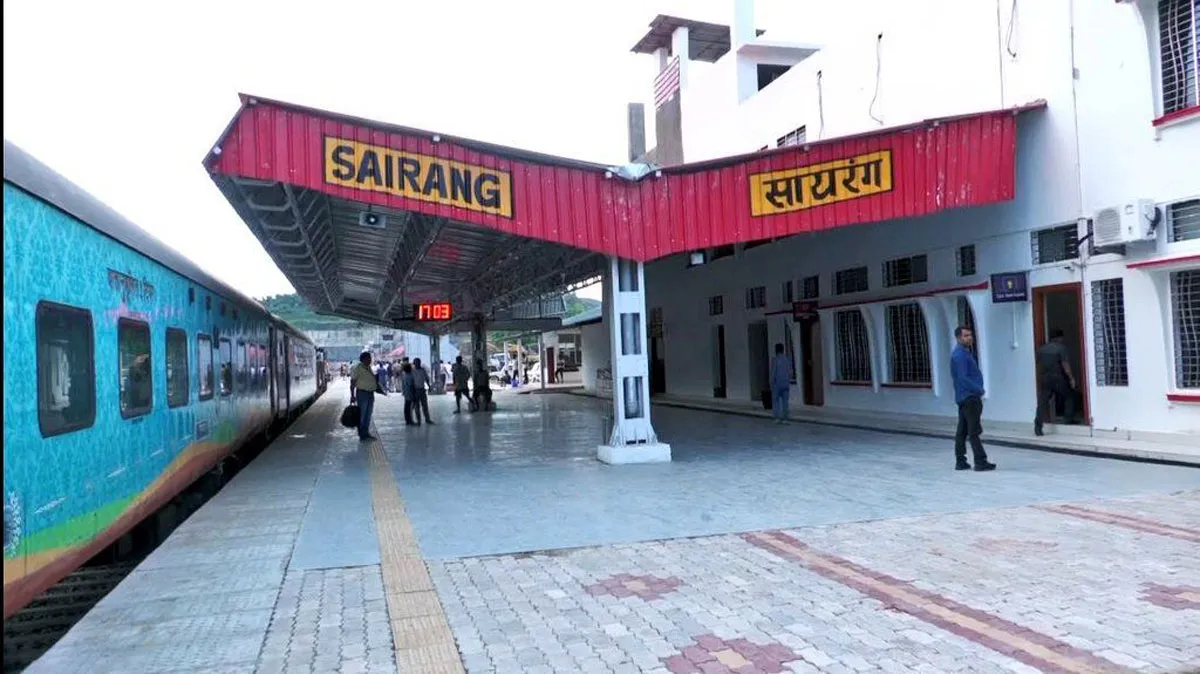
More than 22,000 Inner Line Permits (ILPs) have been issued to visitors at Sairang railway station since the inauguration of the Bairabi–Sairang railway line in September last year, reflecting a sharp rise in footfall following improved rail connectivity to Mizoram.

The Inner Line Permit is a mandatory travel document required for Indian citizens entering protected areas such as Mizoram. According to an officer stationed at the ILP counter at Sairang, 20,914 permits were issued between September 13, 2025, and December 31, soon after the railway line became operational. A further 1,517 permits were issued between January 1 and 8, taking the total to 22,431.

On average, 100 to 200 ILPs are issued with every train arrival, with generally two trains reaching the station each day, the officer said. Police officials noted that tourists accounted for most visitors during October and November, while migrant workers and traders formed the bulk of arrivals in December. Visitors have travelled from across the country, including Delhi, West Bengal and several southern states, with the highest numbers coming from neighbouring Assam.

Authorities have also detected several violations, including attempts to bypass ILP checks. Beggars found entering the state without valid permits were immediately sent back to their native places, officials said.

Police personnel at Sairang station said they are facing an acute manpower shortage, as they are currently performing the duties of the Government Railway Police in addition to maintaining law and order and managing ILP verification. Although the Government Railway Police has not yet been formally notified, station police are handling responsibilities such as traffic and parking management.

At present, only 20 policemen are posted at the station, often working late into the night due to train delays and resuming duty early in the morning. Officials said the pressure is particularly intense when 1,500 to 2,000 passengers arrive at the station at the same time, adding that no additional allowance is provided for carrying out Government Railway Police-related duties.

More than 22,000 Inner Line Permits (ILPs) have been issued to visitors at Sairang railway station since the inauguration of the Bairabi–Sairang railway line in September last year, reflecting a sharp rise in footfall following improved rail connectivity to Mizoram. The Inner Line Permit is a mandatory travel document required for Indian citizens entering protected areas such as Mizoram. According to an officer stationed at the ILP counter at Sairang, 20,914 permits were issued between September 13, 2025, and December 31, soon after the railway line became operational. A further 1,517 permits were issued between January 1 and 8, taking the total to 22,431. On average, 100 to 200 ILPs are issued with every train arrival, with generally two trains reaching the station each day, the officer said. Police officials noted that tourists accounted for most visitors during October and November, while migrant workers and traders formed the bulk of arrivals in December. Visitors have travelled from across the country, including Delhi, West Bengal and several southern states, with the highest numbers coming from neighbouring Assam. Authorities have also detected several violations, including attempts to bypass ILP checks. Beggars found entering the state without valid permits were immediately sent back to their native places, officials said. Police personnel at Sairang station said they are facing an acute manpower shortage, as they are currently performing the duties of the Government Railway Police in addition to maintaining law and order and managing ILP verification. Although the Government Railway Police has not yet been formally notified, station police are handling responsibilities such as traffic and parking management. At present, only 20 policemen are posted at the station, often working late into the night due to train delays and resuming duty early in the morning. Officials said the pressure is particularly intense when 1,500 to 2,000 passengers arrive at the station at the same time, adding that no additional allowance is provided for carrying out Government Railway Police-related duties.

Next Story
Infrastructure Urban

Implementation Status of Jal Jeevan Mission

Since August 2019 the Government has implemented Jal Jeevan Mission to provide assured potable water through household tap connections in rural India. At the start of the mission only 32.3 million (mn) rural households, representing 16.7 per cent, were reported to have tap water connections. States and union territories have reported that 125.8 mn additional rural households have since been provided with tap connections. As a result, of about 193.6 mn rural households roughly 158.2 mn, or 81.71 per cent, are reported to have tap water supply at home.\n\nThe State, district and village level st..

Next Story
Infrastructure Urban

Jal Jeevan Mission Reaches Eighty One Per Cent Rural Coverage

The Government reported substantial progress under the Jal Jeevan Mission, launched in August 2019 to provide tap water to every rural household. At launch only 32.3 million (mn) rural households had tap connections and states and Union territories reported provision of 125.8 mn additional households by March 2026. Consequently, out of about 193.6 mn rural households around 158.2 mn, or 81.71 per cent, are reported to have tap water at home. The Finance Minister announced extension of the mission until 2028 in the 2025-26 budget speech. The Swachh Bharat Mission Grameen, launched in October 20..

Next Story
Infrastructure Urban

Empowering Local Governance for Sustainable Rural Water Supply

The Ministry of Jal Shakti has aligned the Jal Jeevan Mission (JJM) with the 73rd Amendment to strengthen village level planning and community ownership of water supply. Gram Panchayats, village water and sanitation committees and Pani Samitis are to plan, implement, manage and maintain piped water systems, with gram sabha processes formalising handover and oversight. Implementation support agencies including non government organisations, community based organisations and self help groups have been empanelled to train local committees and promote women participation. Under JJM, the department ..

Advertisement

Subscribe to Our Newsletter

Get daily newsletters around different themes from Construction world.

STAY CONNECTED

Advertisement

Advertisement

Advertisement