Pune To Pilot Metro-Like Electric Rapid Transit On Roads
RAILWAYS & METRO RAIL

Pune To Pilot Metro-Like Electric Rapid Transit On Roads

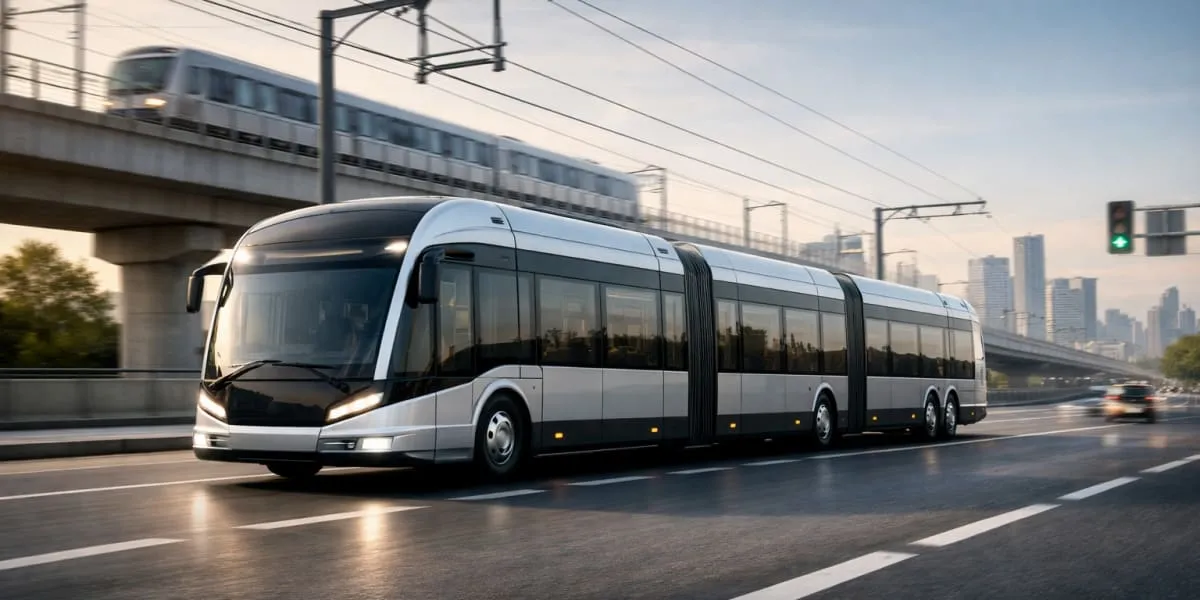
The Maharashtra government plans a pilot of an Electric Rapid Transit System (e-RTS) that is intended to give commuters a metro-like travel experience while operating on regular roads. The system will use three-coach fully electric vehicles running on rubber tyres, combining bus flexibility with higher metro capacity. The decision to pursue the pilot was taken at a review meeting on urban transport for Pune and Pimpri-Chinchwad chaired by Chief Minister Devendra Fadnavis on July 27. Officials said the move aims to provide a higher-capacity, cleaner alternative to existing surface transport.

The pilot will cover a 17-km corridor linking Godown Chowk in Bhosari with Wakad, and will pass through Kudalwadi Chowk, Auto Cluster, Kalewadi Phata and Jagtap Dairy Chowk. The route is designed to connect residential, industrial and commercial areas and to improve links for commuters travelling between Bhosari, Wakad, Hinjawadi, Kalewadi, Kudalwadi, Ravet and Punawale. Many of these areas currently rely on limited municipal bus services, and planners expect the new system to provide greater capacity and predictability for daily travel. The corridor will be tested for around 18 months before any wider roll-out decision.

Each three-coach vehicle will have capacity for up to 240 passengers and will feature low-floor, step-free boarding for universal accessibility. The vehicles will be equipped with air conditioning, Wi-Fi and passenger amenities to improve comfort and to attract a broader ridership. Services are expected to operate at a frequency of 10 minutes and to run for up to 23 hours a day, providing both peak and off-peak coverage. Authorities have described the concept as a way to deliver higher throughput on city roads without laying new rail track.

Chief Minister Devendra Fadnavis directed officials to integrate the e-RTS with Pune Metro, Indian Railways and other public transport to enable seamless transfers. The integration aims to improve last-mile connectivity and convenience for commuters. Planners will evaluate expansion across the High Capacity Mass Transit Route and the existing Bus Rapid Transit network if trials meet targets.

The Maharashtra government plans a pilot of an Electric Rapid Transit System (e-RTS) that is intended to give commuters a metro-like travel experience while operating on regular roads. The system will use three-coach fully electric vehicles running on rubber tyres, combining bus flexibility with higher metro capacity. The decision to pursue the pilot was taken at a review meeting on urban transport for Pune and Pimpri-Chinchwad chaired by Chief Minister Devendra Fadnavis on July 27. Officials said the move aims to provide a higher-capacity, cleaner alternative to existing surface transport. The pilot will cover a 17-km corridor linking Godown Chowk in Bhosari with Wakad, and will pass through Kudalwadi Chowk, Auto Cluster, Kalewadi Phata and Jagtap Dairy Chowk. The route is designed to connect residential, industrial and commercial areas and to improve links for commuters travelling between Bhosari, Wakad, Hinjawadi, Kalewadi, Kudalwadi, Ravet and Punawale. Many of these areas currently rely on limited municipal bus services, and planners expect the new system to provide greater capacity and predictability for daily travel. The corridor will be tested for around 18 months before any wider roll-out decision. Each three-coach vehicle will have capacity for up to 240 passengers and will feature low-floor, step-free boarding for universal accessibility. The vehicles will be equipped with air conditioning, Wi-Fi and passenger amenities to improve comfort and to attract a broader ridership. Services are expected to operate at a frequency of 10 minutes and to run for up to 23 hours a day, providing both peak and off-peak coverage. Authorities have described the concept as a way to deliver higher throughput on city roads without laying new rail track. Chief Minister Devendra Fadnavis directed officials to integrate the e-RTS with Pune Metro, Indian Railways and other public transport to enable seamless transfers. The integration aims to improve last-mile connectivity and convenience for commuters. Planners will evaluate expansion across the High Capacity Mass Transit Route and the existing Bus Rapid Transit network if trials meet targets.

Next Story
Infrastructure Transport

Surya Roshni delivers customised lighting for NCRTC RRTS stations

Surya Roshni has supplied customised indoor lighting solutions for 18 elevated stations on the National Capital Region Transport Corporation's (NCRTC) Rapid Rail Transit System (RRTS), strengthening its presence in India's infrastructure lighting segment.The project involved the design and deployment of lighting systems for platforms, concourses, foot overbridges (FOBs) and back-of-house (BOH) areas. According to the company, the luminaires were developed specifically to meet NCRTC's design, operational and performance requirements rather than using standard products.Surya introduced two custo..

Next Story
Real Estate

Hilton debuts Tapestry Collection brand in Vietnam

Hilton has opened NHAAN Resort & Spa Hoi An, Tapestry Collection by Hilton, marking the debut of the Tapestry Collection brand in Vietnam and expanding its lifestyle hospitality portfolio in Southeast Asia.Located along the Co Co River in Cam Thanh village, the 174-key resort provides access to Hoi An Ancient Town, Cua Dai Beach and the Cam Thanh Nipa Forest. The property has been designed by Vietnamese architect Vo Trong Nghia, incorporating biophilic architecture, locally sourced materials and riverfront landscapes.The resort offers a mix of guest rooms and suites, including family-frien..

Next Story
Building Material

Electrent expands lithium energy storage system portfolio

Electrent Energy has expanded its lithium-based energy storage portfolio with the launch of the ESS 850 and ESS 1050, targeting compact and maintenance-free power backup solutions for Indian homes.The new systems integrate a Home UPS and a LiFePO4 lithium battery into a single unit, extending the company's product range following the launch of its ESS 1350 and ESS 2500 models.Designed for apartments and smaller homes, the ESS 850 provides up to 1 hour 15 minutes of backup, while the ESS 1050 offers up to 1 hour 45 minutes on a typical 400 W household load. The systems can power essential appli..

Advertisement

Subscribe to Our Newsletter

Get daily newsletters around different themes from Construction world.

STAY CONNECTED

Advertisement

Advertisement

Advertisement