Vande Bharat Sleeper To Link Guwahati And Howrah
RAILWAYS & METRO RAIL

Vande Bharat Sleeper To Link Guwahati And Howrah

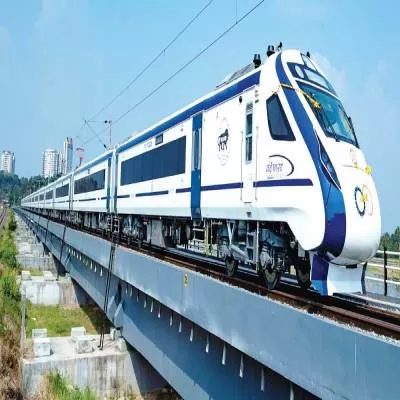
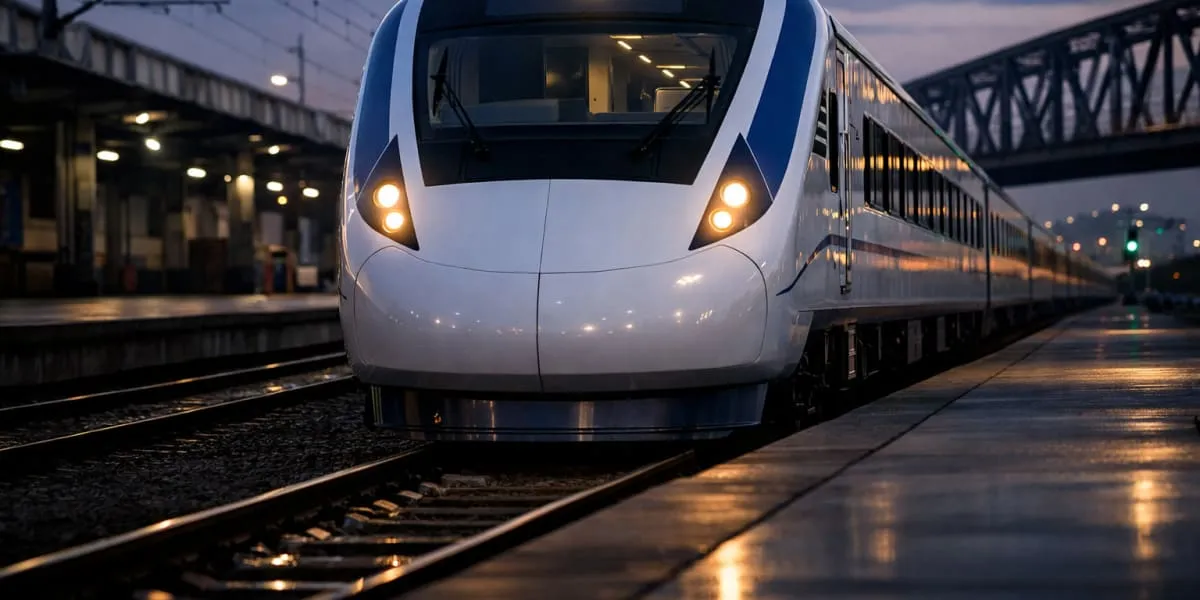
India will introduce its first Vande Bharat Sleeper service to strengthen overnight rail links between Guwahati and Howrah following successful trials and safety certification. The service is expected to begin operations this month and aims to provide faster overnight travel for commuters, students, businesses and tourists. The launch represents a step in modernising long-distance passenger transport across eastern and north-eastern India.

Railway authorities said the inaugural route will create a high-capacity corridor linking two major economic centres and supporting trade, education and healthcare in the eastern region. The train offers fully air-conditioned sleeper accommodation across multiple travel classes and will carry more than 800 passengers in a 16-coach configuration. While capable of higher speeds, operations will initially follow approved limits to balance efficiency with network safety and infrastructure readiness.

Urban mobility analysts said improved overnight rail services can influence regional economic activity by encouraging business travel and enhancing labour mobility. Faster and more dependable connections are likely to improve access to educational institutions and healthcare facilities and to support tourism along the corridor. Planners suggested reliable overnight options could change travel patterns and broaden opportunities for inter-city commuters.

Improved rail infrastructure can reduce reliance on short-haul flights and long-distance road journeys, supporting lower transport emissions as electrification of the network progresses. The route is expected to serve several districts across West Bengal and Assam and to improve access to urban centres and smaller cities along the corridor. Development around stations may stimulate commercial activity and encourage transit-oriented growth if integrated with local planning.

Officials said the sleeper service includes upgraded passenger amenities and modern safety technologies developed for the next generation of trains, reflecting wider investment in long-distance rail infrastructure. Stakeholders cautioned that realisation of broader benefits will depend on seamless last-mile connectivity, station upgrades and affordable access for diverse passenger groups. The Vande Bharat Sleeper therefore signals a shift in regional transport towards faster, safer and more energy-efficient public mobility that can support balanced urban growth.

India will introduce its first Vande Bharat Sleeper service to strengthen overnight rail links between Guwahati and Howrah following successful trials and safety certification. The service is expected to begin operations this month and aims to provide faster overnight travel for commuters, students, businesses and tourists. The launch represents a step in modernising long-distance passenger transport across eastern and north-eastern India. Railway authorities said the inaugural route will create a high-capacity corridor linking two major economic centres and supporting trade, education and healthcare in the eastern region. The train offers fully air-conditioned sleeper accommodation across multiple travel classes and will carry more than 800 passengers in a 16-coach configuration. While capable of higher speeds, operations will initially follow approved limits to balance efficiency with network safety and infrastructure readiness. Urban mobility analysts said improved overnight rail services can influence regional economic activity by encouraging business travel and enhancing labour mobility. Faster and more dependable connections are likely to improve access to educational institutions and healthcare facilities and to support tourism along the corridor. Planners suggested reliable overnight options could change travel patterns and broaden opportunities for inter-city commuters. Improved rail infrastructure can reduce reliance on short-haul flights and long-distance road journeys, supporting lower transport emissions as electrification of the network progresses. The route is expected to serve several districts across West Bengal and Assam and to improve access to urban centres and smaller cities along the corridor. Development around stations may stimulate commercial activity and encourage transit-oriented growth if integrated with local planning. Officials said the sleeper service includes upgraded passenger amenities and modern safety technologies developed for the next generation of trains, reflecting wider investment in long-distance rail infrastructure. Stakeholders cautioned that realisation of broader benefits will depend on seamless last-mile connectivity, station upgrades and affordable access for diverse passenger groups. The Vande Bharat Sleeper therefore signals a shift in regional transport towards faster, safer and more energy-efficient public mobility that can support balanced urban growth.

Related Stories

Gold Stories

Next Story
Infrastructure Urban

KONE Opens India's First Digital Experience Centre in Pune

KONE, a global elevator and escalator manufacturer, has inaugurated its first Digital Experience Centre (DEC) in India, located in Pune. The facility aims to showcase how artificial intelligence (AI), connectivity and data-driven technologies can enhance customer experiences and improve building operations.The centre was inaugurated by Jussi Herlin, Executive Vice Chair, KONE Corporation; Philippe Delorme, President and CEO, KONE; and Nandan Nilekani, Co-founder and Chairman of the Board, Infosys.Designed as an interactive customer environment, the facility demonstrates digital solutions cover..

Next Story
Infrastructure Urban

CII GreenCo Launches Circularity Guidelines for Indian Industry

The Confederation of Indian Industry (CII) GreenCo Council has launched the CII GreenCo Circularity Guidelines – Pilot Version at the 17th CII GreenCo Waste & Resource Management Summit 2026 in Chennai. The initiative aims to strengthen resource efficiency, waste reduction and circular economy practices across Indian manufacturing and process industries.The guidelines introduce a structured framework with circularity indices covering raw materials, consumables, packaging and other resource inputs. These indicators will help industries assess existing practices, identify opportunities to ..

Next Story
Infrastructure Energy

Global Electronics Association Launches IPC-1783-CO2E Standard

The Global Electronics Association has introduced IPC-1783-CO2E, a new international standard aimed at improving consistency, transparency and comparability in product carbon footprint reporting across the electronics manufacturing industry.The standard, titled International Standard for Data Collection and Reporting of CO2 Equivalent (CO2e) Emissions for the Electronics Manufacturing Supply Chain, provides industry-specific guidance for collecting, estimating and reporting carbon emissions data.With increasing regulatory requirements and customer expectations, electronics manufacturers face c..

Advertisement

Subscribe to Our Newsletter

Get daily newsletters around different themes from Construction world.

STAY CONNECTED

Advertisement

SPECIAL OFFER
QR Code