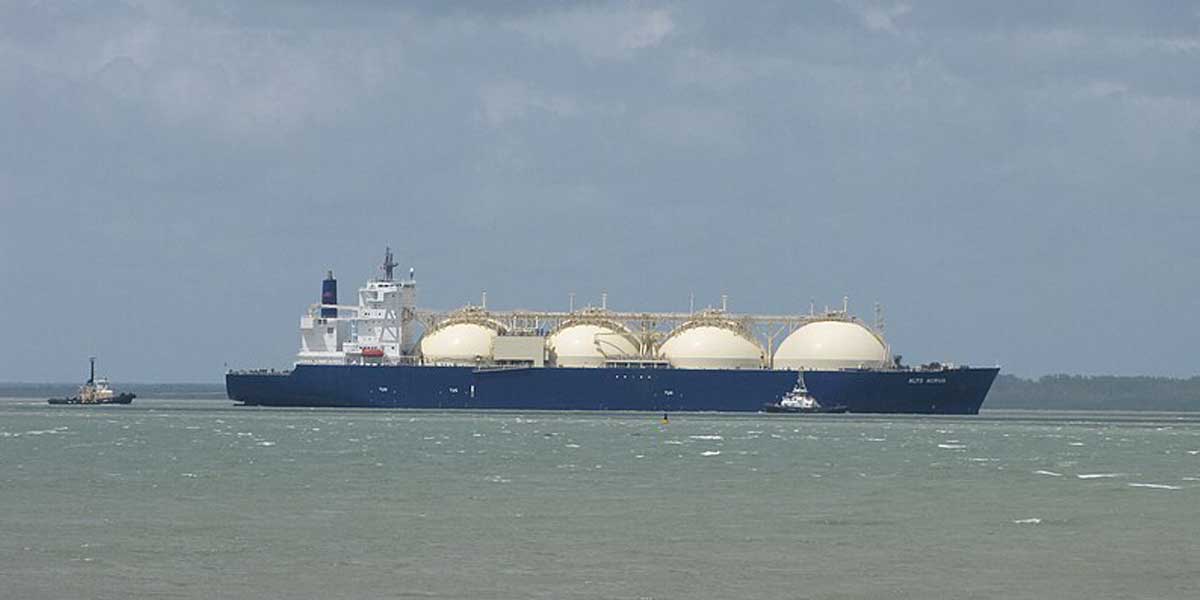
APM Terminals Pipavav initiates operations for Very Large Gas Carriers
PORTS & SHIPPING

APM Terminals Pipavav initiates operations for Very Large Gas Carriers

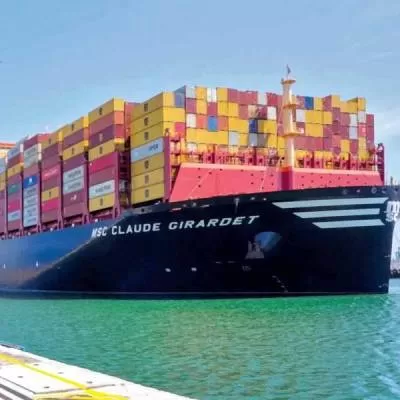
In a significant development, APM Terminals Pipavav has officially initiated operations for Very Large Gas Carriers (VLGCS), reinforcing its position in handling LPG imports into India. The vessel, laden with cargo from Ruwais, ADNOC Refinery Jetty, recently discharged a substantial 21,907 MT parcel at the Port Pipavav, serving key entities like Bharat Petroleum EPS Corporation Ltd, Indian Oil Corporation Ltd, and Hindustan Petroleum Corporation Ltd.

This milestone achievement follows the successful maiden berthing of the vessel MT Jag Viraat earlier this month. As India's LPG imports undergo a major transition to Very Large Gas Carriers (VLGC) from Medium Gas Carrier (MGC) ships, the VLGC handling capability at APM Terminals Pipavav assumes pivotal importance. This advancement empowers oil marketing companies to optimise their LPG imports efficiently and securely, ensuring the stability of energy supply across the nation.

With a length of 230 metres, MT Jag Viraat is a VLGC vessel owned by the Great Eastern Shipping Company. Notably, the surge in demand for LPG, driven by Indian households adopting it as a preferred household fuel, underscores the need for such infrastructure enhancements.

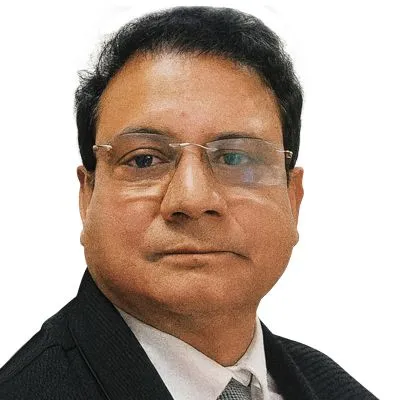
Girish Aggarwal, Managing Director at APM Terminals Pipavav, emphasised the manifold benefits of introducing VLGC-compliant berth facilities. "The introduction of the VLGC compliant-berth facility will help us bring in large vessels with larger parcel size to achieve economies of scale," he stated. Additionally, APM Terminals Pipavav's Dedicated Freight Corridor-compliant LPG rakes facilitate the safe distribution of LPG cargo to remote regions through eco-friendly train connectivity.

Aggarwal expressed the company's commitment to India's energy sector growth through continuous investments in infrastructure development. APM Terminals Pipavav had announced plans for a dedicated VLGC-compliant LPG berth in March 2023, with expected readiness by 2025. Collaborating with terminal partner Aegis Vopak Terminal Ltd., the expansion of the LPG Terminal capacity further underscores APM Terminals Pipavav's dedication to advancing India's energy infrastructure.

In a significant development, APM Terminals Pipavav has officially initiated operations for Very Large Gas Carriers (VLGCS), reinforcing its position in handling LPG imports into India. The vessel, laden with cargo from Ruwais, ADNOC Refinery Jetty, recently discharged a substantial 21,907 MT parcel at the Port Pipavav, serving key entities like Bharat Petroleum EPS Corporation Ltd, Indian Oil Corporation Ltd, and Hindustan Petroleum Corporation Ltd.This milestone achievement follows the successful maiden berthing of the vessel MT Jag Viraat earlier this month. As India's LPG imports undergo a major transition to Very Large Gas Carriers (VLGC) from Medium Gas Carrier (MGC) ships, the VLGC handling capability at APM Terminals Pipavav assumes pivotal importance. This advancement empowers oil marketing companies to optimise their LPG imports efficiently and securely, ensuring the stability of energy supply across the nation.With a length of 230 metres, MT Jag Viraat is a VLGC vessel owned by the Great Eastern Shipping Company. Notably, the surge in demand for LPG, driven by Indian households adopting it as a preferred household fuel, underscores the need for such infrastructure enhancements.Girish Aggarwal, Managing Director at APM Terminals Pipavav, emphasised the manifold benefits of introducing VLGC-compliant berth facilities. The introduction of the VLGC compliant-berth facility will help us bring in large vessels with larger parcel size to achieve economies of scale, he stated. Additionally, APM Terminals Pipavav's Dedicated Freight Corridor-compliant LPG rakes facilitate the safe distribution of LPG cargo to remote regions through eco-friendly train connectivity.Aggarwal expressed the company's commitment to India's energy sector growth through continuous investments in infrastructure development. APM Terminals Pipavav had announced plans for a dedicated VLGC-compliant LPG berth in March 2023, with expected readiness by 2025. Collaborating with terminal partner Aegis Vopak Terminal Ltd., the expansion of the LPG Terminal capacity further underscores APM Terminals Pipavav's dedication to advancing India's energy infrastructure.

Next Story
Real Estate

RBI Rate Cut Boosts Confidence Across Housing Market

Industry Context and Market DynamicsThe real estate industry has welcomed the RBI’s rate cut as a timely boost to affordability and demand. With home prices having risen steadily across major markets, even a marginal reduction in interest rates meaningfully strengthens purchasing power, especially for first-time and mid-income buyers.Ashish Jerath, President – Sales & Marketing, Smartworld Developers, observes:“The RBI’s 25-basis-point cut, bringing the repo rate down to 5.25%, is a timely boost for the real estate sector. Lower interest rates reduce borrowing costs, enabling homeb..

Next Story
Infrastructure Transport

BMC Resumes Rs 170 Billion Road Works, Targets 80 per cent By Jan 2026

Following the withdrawal of the southwest monsoon in October, the Brihanmumbai Municipal Corporation (BMC) has restarted work on 645 roads—covering 297.49 kilometres—under its large-scale concretisation programme. Data shows that more than 60 per cent of the resumed works are located in the western suburbs. Officials said the civic body aims to complete concretisation on 80 per cent of the roads where fresh work has begun by January 2026. Launched in 2022, the Rs 170 billion project seeks to concretise 700 kilometres of roads across Mumbai. All civil works were halted during the monsoon ..

Next Story
Infrastructure Urban

India Pushes Digital Shift In Urban Land Mapping

The Department of Land Resources (DoLR) under the Ministry of Rural Development has convened a National Symposium on NAKSHA – the National Geospatial Knowledge-based Land Survey of Urban Habitations – to advance India’s transition to modern, technology-driven land mapping. Speaking at the inaugural session, Secretary Manoj Joshi underscored the urgent need to move revenue departments away from outdated, tape-based methods and rough hand-drawn sketches. He stressed that adopting latitude–longitude-based digital mapping and GIS-linked registration systems is essential for economic stabi..

Advertisement

Subscribe to Our Newsletter

Get daily newsletters around different themes from Construction world.

STAY CONNECTED

Advertisement

Advertisement

Advertisement

Advertisement

Open In App