



+
GVMC And Moscow Sign MoU To Boost Smart Mobility
SMART CITIES

GVMC And Moscow Sign MoU To Boost Smart Mobility

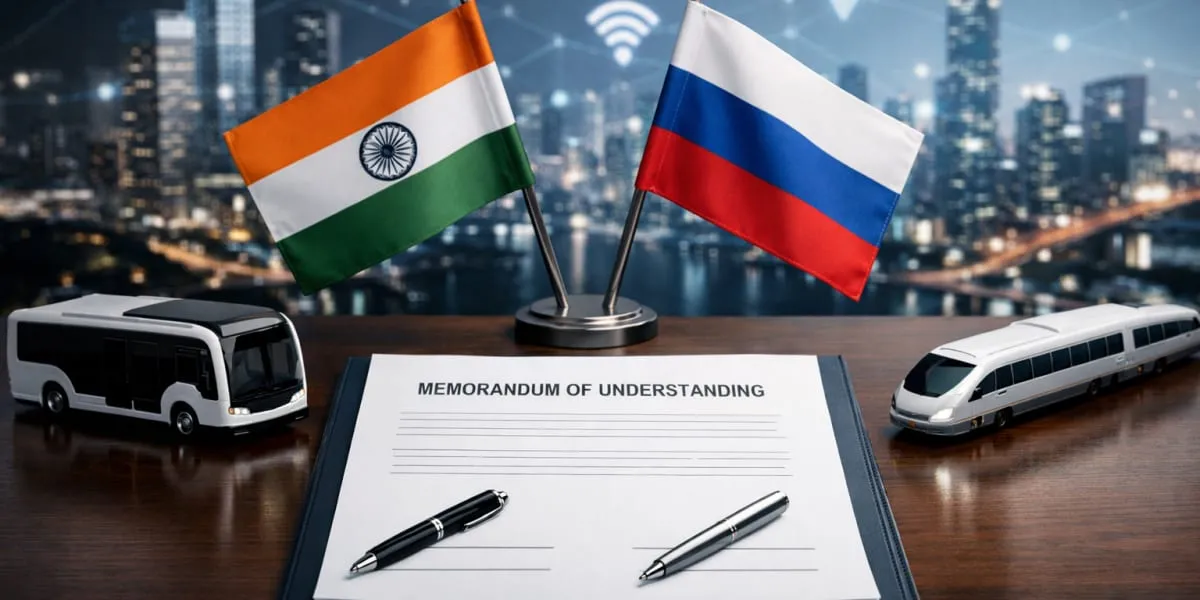
The Greater Visakhapatnam Municipal Corporation has signed a memorandum of understanding with the Government of Moscow to broaden cooperation on smart mobility and digital governance. The agreement establishes a formal framework for exchanges of technical expertise and collaborative research to support Visakhapatnam's smart city transformation. Officials said the partnership will allow the cities to adapt global practices to local priorities and accelerate implementation of technology driven municipal services and modernise service delivery timelines.

The collaboration concentrates on intelligent transport systems, integrated digital public services and traffic management to improve urban mobility and reduce congestion. It also covers urban infrastructure planning, environmental sustainability and the deployment of artificial intelligence and geographic information systems for urban analytics. The partners will explore intelligent surveillance, data driven decision making and digital platforms to strengthen infrastructure management and emergency response and support longer term urban resilience planning.

The memorandum envisages practical cooperation through technical workshops, capacity building programmes, exchange visits and pilot projects that can be adapted to local needs. Experts and city administrators from both sides will share implementation experience and jointly develop prototypes for municipal service delivery. The arrangement is intended to build institutional capability and enable future joint investment and innovation initiatives and foster knowledge transfer with academic partners.

For Visakhapatnam, the partnership aligns with a vision of becoming a technology centred and sustainable urban centre and aims to enhance operational efficiency and the quality of civic services. By drawing on Moscow's experience in digital infrastructure and intelligent mobility systems, GVMC expects to create a more connected urban ecosystem and improve resident outcomes. The agreement reflects a wider trend of international collaboration to support India's urban development agenda and encourage innovation and investment in city level projects. Implementation will be monitored against measurable performance indicators to track progress and inform policy making.

The Greater Visakhapatnam Municipal Corporation has signed a memorandum of understanding with the Government of Moscow to broaden cooperation on smart mobility and digital governance. The agreement establishes a formal framework for exchanges of technical expertise and collaborative research to support Visakhapatnam's smart city transformation. Officials said the partnership will allow the cities to adapt global practices to local priorities and accelerate implementation of technology driven municipal services and modernise service delivery timelines. The collaboration concentrates on intelligent transport systems, integrated digital public services and traffic management to improve urban mobility and reduce congestion. It also covers urban infrastructure planning, environmental sustainability and the deployment of artificial intelligence and geographic information systems for urban analytics. The partners will explore intelligent surveillance, data driven decision making and digital platforms to strengthen infrastructure management and emergency response and support longer term urban resilience planning. The memorandum envisages practical cooperation through technical workshops, capacity building programmes, exchange visits and pilot projects that can be adapted to local needs. Experts and city administrators from both sides will share implementation experience and jointly develop prototypes for municipal service delivery. The arrangement is intended to build institutional capability and enable future joint investment and innovation initiatives and foster knowledge transfer with academic partners. For Visakhapatnam, the partnership aligns with a vision of becoming a technology centred and sustainable urban centre and aims to enhance operational efficiency and the quality of civic services. By drawing on Moscow's experience in digital infrastructure and intelligent mobility systems, GVMC expects to create a more connected urban ecosystem and improve resident outcomes. The agreement reflects a wider trend of international collaboration to support India's urban development agenda and encourage innovation and investment in city level projects. Implementation will be monitored against measurable performance indicators to track progress and inform policy making.

Related Stories

Gold Stories

Next Story
Infrastructure Transport

Madhya Pradesh Plans Airport Every 150 Km, Airstrip Every 75 Km

The Madhya Pradesh government plans to establish an airport every 150 km, an airstrip every 75 km and a helipad every 45 km, according to the state aviation department. Airports being developed in Ujjain and Shivpuri are expected to take the state’s airport count to 10. The government stated that Madhya Pradesh currently has eight airports in eight cities. The locations named by the department include Indore, Bhopal, Jabalpur, Gwalior, Khajuraho, Rewa and Satna. The state also has more than 20 airstrips and 220 helipads, while permanent helipads are planned in all 230 Assembly constituencies..

Next Story
Infrastructure Transport

West Bengal Plans Four Airports for 2028 Completion Under UDAN

West Bengal will develop four new airports under an agreement signed between the Union Civil Aviation Ministry and the state government, with all facilities targeted for completion by 2028. Union Civil Aviation Minister K Rammohan Naidu said the airports would be located at Charra in Purulia, Kalaikunda in Paschim Medinipur, Balurghat in Dakshin Dinajpur and Hasimara in Alipurduar. The project is part of the Centre’s regional connectivity UDAN programme. The Union government has committed Rs. 290 bn for West Bengal’s aviation sector over the next decade, while the state government will pro..

Next Story
Infrastructure Transport

Mumbai Airport Bars Russian Airlines as Agent Seeks Ministry Intervention

Mumbai airport has stopped accepting cargo booked on Russian flag carrier Aeroflot, disrupting shipments and prompting the airline’s cargo sales agent, Delmos Aviation, to seek intervention from the Ministry of Civil Aviation. The restrictions also affect cargo booked on Volga-Dnepr Airlines, according to a letter submitted by Delmos Aviation to the ministry on September 30. Aeroflot operates daily flights between Moscow and Delhi and runs a winter seasonal service to Goa. Bonded cargo from Mumbai and other cities is transported by road to Delhi before being flown to Russia. The agent said t..

Advertisement

Subscribe to Our Newsletter

Get daily newsletters around different themes from Construction world.

STAY CONNECTED

Advertisement

SPECIAL OFFER
QR Code