+
Manohar Lal Inaugurates Municipalika 2026
SMART CITIES

Manohar Lal Inaugurates Municipalika 2026

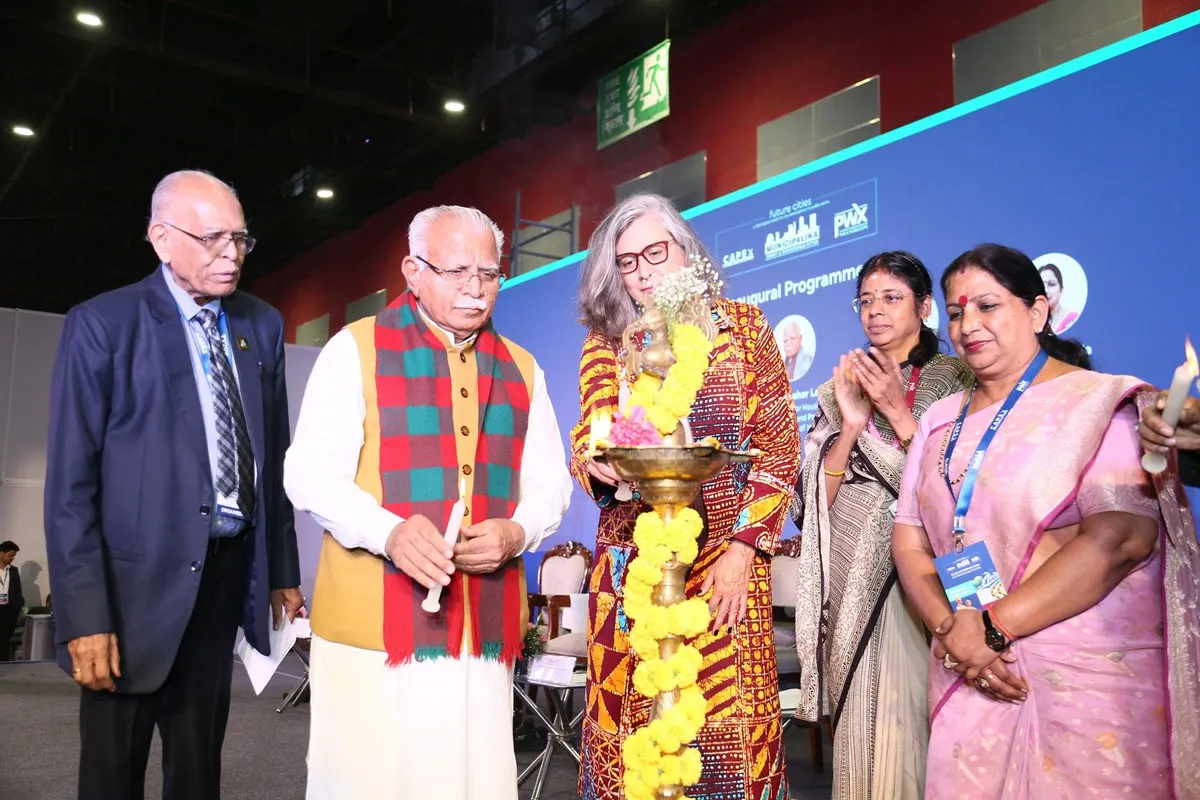
Union Minister for Housing and Urban Affairs and Power, Shri Manohar Lal, inaugurated Municipalika 2026 at Bharat Mandapam, New Delhi, outlining a comprehensive roadmap for India’s evolving urban landscape under the vision of Viksit Bharat @2047.

The three-day exhibition and conference, recognised as India’s only 360-degree platform on safe, smart and sustainable city solutions, is being held from 25 to 27 February 2026. The 18th edition brings together ministers, mayors, municipal commissioners, Smart City CEOs, policymakers, planners and technology providers to deliberate on governance, housing, mobility, sanitation, energy systems and digital public works.

Organised by Fairfest Media in association with the Good Governance India Foundation and co-organised by the India Trade Promotion Organisation, the event reflects expanding institutional collaboration. With rapid urbanisation reshaping India’s demographic and economic structure, the platform focuses on resilient infrastructure, climate-responsive planning and technology-led governance reforms.

In his address, Shri Manohar Lal highlighted that nearly 40 per cent of India’s population resides in cities, and close to 800 million people are expected to live in urban areas over the next 25 years. Cities contribute nearly 70 per cent of GDP and about 90 per cent of revenues, underscoring their central role in national growth.

He emphasised coordinated governance, policy clarity and infrastructure investment as critical drivers of sustainable urbanisation. Citing flagship initiatives such as the Swachh Bharat Mission, Pradhan Mantri Awas Yojana, rental housing promotion, metro expansion, electric mobility and Integrated Command and Control Centres in 100 cities supported by over 84,000 CCTV cameras, the Minister said the government aims to strengthen safety, service delivery and municipal financial resilience. A target of 5,000 km of metro connectivity by 2047 was also reiterated.

Providing a policy perspective, Ms D Thara, Additional Secretary, Ministry of Housing and Urban Affairs, stated that nearly Rs 14 trillion has been invested in the urban sector over the past decade. She noted improvements in urban tap water coverage, sewerage infrastructure and implementation capacity, and stressed that the next phase must prioritise quality, efficiency and transformative planning.

Referring to the Rs 1 trillion Urban Challenge Fund structured as a performance-linked mechanism, she urged cities to build financial discipline and strategically mobilise resources to unlock central support. She added that while urbanisation is inevitable, its effectiveness will depend on proactive planning and governance.

Since 2003, Municipalika has hosted 17 editions across major cities, showcasing over 10,000 urban solutions and engaging more than 50,000 stakeholders. The 2026 edition features participation from over 300 cities across 25-plus states, with more than 300 exhibitors, 3,000 delegates and upwards of 10,000 trade visitors.

The inaugural session included remarks from Mr V Suresh, President, Good Governance India Foundation and Former CMD, HUDCO; Ms Renu Bala, Chairperson, All India Council of Mayors; and Ms Anaclaudia Rossbach, United Nations Under-Secretary-General and Executive Director, UN-Habitat.

The opening day featured parallel thematic tracks on urban policy, governance and ease of doing business; safe and secure cities; disaster response; building materials and technology innovation; fire safety; resilient infrastructure; and digital transformation in public works, including BIM and AI integration.

Municipalika is co-located with CAPEx – Construction, Architecture, Planning and Engineering Expo – and PWX, the Public Works Expo. Together, the events create an integrated ecosystem covering housing, mobility, sanitation, digital governance, energy systems and civic infrastructure.

The event is supported by the Ministry of Housing and Urban Affairs, Ministry of Electronics and Information Technology, Ministry of Jal Shakti, and Ministry of Earth Sciences, alongside national missions including AMRUT, PMAY-Urban, Swachh Bharat Mission, Namami Gange and the River Cities Alliance. UN-Habitat joins as Global Partner, reinforcing the international dimension of India’s urban transformation agenda.

As India prepares for a significant phase of urban expansion, Municipalika 2026 positions itself as a strategic forum for policy alignment, financial innovation and public-private collaboration aimed at building safe, smart and globally competitive cities.


Union Minister for Housing and Urban Affairs and Power, Shri Manohar Lal, inaugurated Municipalika 2026 at Bharat Mandapam, New Delhi, outlining a comprehensive roadmap for India’s evolving urban landscape under the vision of Viksit Bharat @2047. The three-day exhibition and conference, recognised as India’s only 360-degree platform on safe, smart and sustainable city solutions, is being held from 25 to 27 February 2026. The 18th edition brings together ministers, mayors, municipal commissioners, Smart City CEOs, policymakers, planners and technology providers to deliberate on governance, housing, mobility, sanitation, energy systems and digital public works. Organised by Fairfest Media in association with the Good Governance India Foundation and co-organised by the India Trade Promotion Organisation, the event reflects expanding institutional collaboration. With rapid urbanisation reshaping India’s demographic and economic structure, the platform focuses on resilient infrastructure, climate-responsive planning and technology-led governance reforms. In his address, Shri Manohar Lal highlighted that nearly 40 per cent of India’s population resides in cities, and close to 800 million people are expected to live in urban areas over the next 25 years. Cities contribute nearly 70 per cent of GDP and about 90 per cent of revenues, underscoring their central role in national growth. He emphasised coordinated governance, policy clarity and infrastructure investment as critical drivers of sustainable urbanisation. Citing flagship initiatives such as the Swachh Bharat Mission, Pradhan Mantri Awas Yojana, rental housing promotion, metro expansion, electric mobility and Integrated Command and Control Centres in 100 cities supported by over 84,000 CCTV cameras, the Minister said the government aims to strengthen safety, service delivery and municipal financial resilience. A target of 5,000 km of metro connectivity by 2047 was also reiterated. Providing a policy perspective, Ms D Thara, Additional Secretary, Ministry of Housing and Urban Affairs, stated that nearly Rs 14 trillion has been invested in the urban sector over the past decade. She noted improvements in urban tap water coverage, sewerage infrastructure and implementation capacity, and stressed that the next phase must prioritise quality, efficiency and transformative planning. Referring to the Rs 1 trillion Urban Challenge Fund structured as a performance-linked mechanism, she urged cities to build financial discipline and strategically mobilise resources to unlock central support. She added that while urbanisation is inevitable, its effectiveness will depend on proactive planning and governance. Since 2003, Municipalika has hosted 17 editions across major cities, showcasing over 10,000 urban solutions and engaging more than 50,000 stakeholders. The 2026 edition features participation from over 300 cities across 25-plus states, with more than 300 exhibitors, 3,000 delegates and upwards of 10,000 trade visitors. The inaugural session included remarks from Mr V Suresh, President, Good Governance India Foundation and Former CMD, HUDCO; Ms Renu Bala, Chairperson, All India Council of Mayors; and Ms Anaclaudia Rossbach, United Nations Under-Secretary-General and Executive Director, UN-Habitat. The opening day featured parallel thematic tracks on urban policy, governance and ease of doing business; safe and secure cities; disaster response; building materials and technology innovation; fire safety; resilient infrastructure; and digital transformation in public works, including BIM and AI integration. Municipalika is co-located with CAPEx – Construction, Architecture, Planning and Engineering Expo – and PWX, the Public Works Expo. Together, the events create an integrated ecosystem covering housing, mobility, sanitation, digital governance, energy systems and civic infrastructure. The event is supported by the Ministry of Housing and Urban Affairs, Ministry of Electronics and Information Technology, Ministry of Jal Shakti, and Ministry of Earth Sciences, alongside national missions including AMRUT, PMAY-Urban, Swachh Bharat Mission, Namami Gange and the River Cities Alliance. UN-Habitat joins as Global Partner, reinforcing the international dimension of India’s urban transformation agenda. As India prepares for a significant phase of urban expansion, Municipalika 2026 positions itself as a strategic forum for policy alignment, financial innovation and public-private collaboration aimed at building safe, smart and globally competitive cities.
Next Story
Infrastructure Urban

Enlight Metals Speeds Metal Deliveries by 35%

Enlight Metals has introduced its Agentic AI-enabled procurement platform aimed at addressing long-standing inefficiencies in India’s metal supply chain. The company reports 35 per cent faster procurement cycles and delivery timelines of up to 24 hours across major industrial regions. As infrastructure and manufacturing activity intensify, metal sourcing has remained constrained by fragmented supply networks, limited demand visibility and manual coordination. Enlight Metals’ platform integrates Agentic AI across sourcing, inventory management and logistics, replacing reactive workflows wi..

Next Story
Infrastructure Energy

Critical Minerals Key to India’s Clean Energy Push

A new report released by FICCI in collaboration with Deloitte underscores the strategic importance of critical minerals and rare earth elements (REEs) in supporting India’s clean energy transition, industrial competitiveness and long-term economic security. As India moves towards 500 GW of renewable capacity, 30 per cent EV penetration by 2030 and net-zero emissions by 2070, access to lithium, nickel, cobalt, graphite, copper and REEs will be central to achieving these targets. The study highlights that mineral security is emerging as a decisive factor in sustaining economic growth and tech..

Next Story
Infrastructure Urban

Kvaser Launches Secure Linux Edge Platform

Kvaser has introduced Kvaser Edge, an open and secure Linux-based edge computing platform designed for automotive and industrial applications. The solution enables teams to collect, process and act on data directly at the point of generation — whether in vehicles, test benches or industrial machines. Traditional machine testing often relies on PC connections and extensive data logging. Kvaser Edge shifts this approach by enabling real-time processing on-device, with optional cloud or desktop integration for deeper analysis and collaboration. The system is intended to reduce unnecessary data ..

Advertisement

Subscribe to Our Newsletter

Get daily newsletters around different themes from Construction world.

STAY CONNECTED

Advertisement

Advertisement

Advertisement

Open In App