Bengal Plans QR-Based Waste Tracking And GPS-Linked Garbage Collection
WATER & WASTE

Bengal Plans QR-Based Waste Tracking And GPS-Linked Garbage Collection

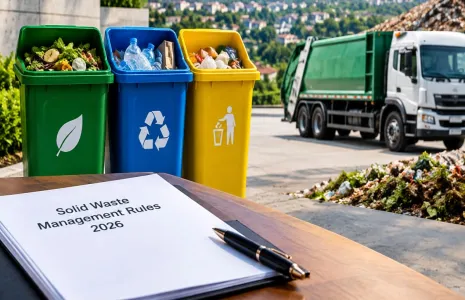
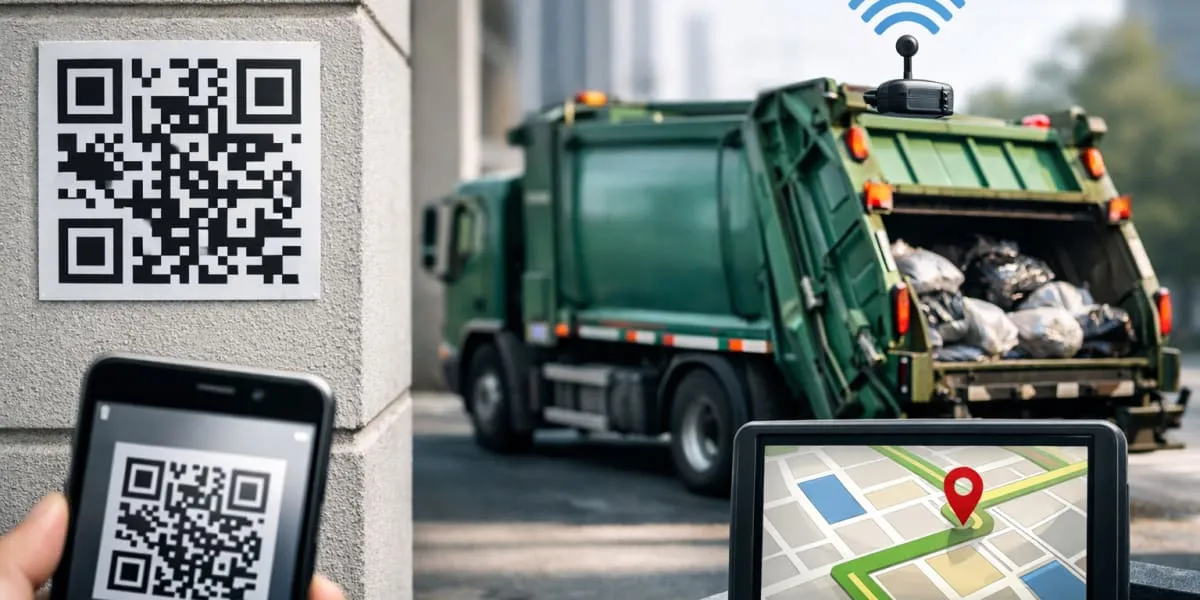
The Bengal government has unveiled measures to modernise urban civic services centred on a Quick Response (QR) code system to identify households and global positioning system (GPS) tracking of collection vehicles. The proposals were presented during the Urban Development and Municipal Affairs budget discussion in the state assembly by minister Agnimitra Paul. The measures were described as intended to make municipal services more transparent and citizen-friendly.

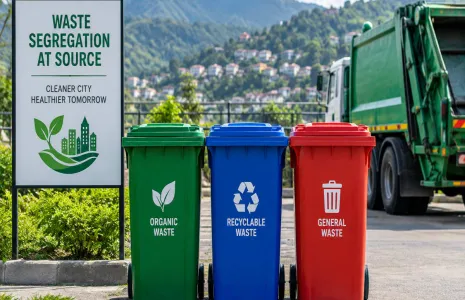
Every household in urban areas will be assigned a unique QR code and waste collection vehicles will be fitted with GPS trackers to allow real-time route monitoring and accountability. The minister noted around 75,000 Nirmal Bandhus and 6,000 Nirmal Sathis are engaged in collection and awareness across urban local bodies. Door-to-door collection has been rolled out in most municipal areas and the government is targeting 100 per cent segregation at source.

The state operates 16 waste processing plants, with 67 more under construction expected to become functional during the 2026-27 financial year, and work on another 32 units will begin. The administration has drawn a schedule to clear legacy waste dumps by 31 May 2027 to reclaim urban land, reduce pollution and prevent groundwater contamination. The plan emphasises scientific processing of daily waste and elimination of open dumping.

Authorities will introduce biometric attendance systems, material recovery facilities, decentralised processing units, composting sites and bio-CNG production across urban local bodies to promote circular economy practices. Citizen grievance redressal platforms related to sanitation will be strengthened to ensure timely complaint disposal. Reforms to the subsidised Maa Ahar canteen network will provide seating without any increase in meal prices.

The state operates 390 Maa Ahar canteens, with around 85,000 people availing meals daily and almost 100 canteens near hospitals. A food recovery initiative will collect surplus food from hotels, restaurants and social functions, store it through a dedicated cold-chain network, have it tested by food safety officers and distribute it to economically disadvantaged people. Necessary cold-chain infrastructure will be created to support the programme and technology will be used to monitor the process in real time.

The Bengal government has unveiled measures to modernise urban civic services centred on a Quick Response (QR) code system to identify households and global positioning system (GPS) tracking of collection vehicles. The proposals were presented during the Urban Development and Municipal Affairs budget discussion in the state assembly by minister Agnimitra Paul. The measures were described as intended to make municipal services more transparent and citizen-friendly. Every household in urban areas will be assigned a unique QR code and waste collection vehicles will be fitted with GPS trackers to allow real-time route monitoring and accountability. The minister noted around 75,000 Nirmal Bandhus and 6,000 Nirmal Sathis are engaged in collection and awareness across urban local bodies. Door-to-door collection has been rolled out in most municipal areas and the government is targeting 100 per cent segregation at source. The state operates 16 waste processing plants, with 67 more under construction expected to become functional during the 2026-27 financial year, and work on another 32 units will begin. The administration has drawn a schedule to clear legacy waste dumps by 31 May 2027 to reclaim urban land, reduce pollution and prevent groundwater contamination. The plan emphasises scientific processing of daily waste and elimination of open dumping. Authorities will introduce biometric attendance systems, material recovery facilities, decentralised processing units, composting sites and bio-CNG production across urban local bodies to promote circular economy practices. Citizen grievance redressal platforms related to sanitation will be strengthened to ensure timely complaint disposal. Reforms to the subsidised Maa Ahar canteen network will provide seating without any increase in meal prices. The state operates 390 Maa Ahar canteens, with around 85,000 people availing meals daily and almost 100 canteens near hospitals. A food recovery initiative will collect surplus food from hotels, restaurants and social functions, store it through a dedicated cold-chain network, have it tested by food safety officers and distribute it to economically disadvantaged people. Necessary cold-chain infrastructure will be created to support the programme and technology will be used to monitor the process in real time.

Next Story
Infrastructure Transport

Adani Eyes UK Port Operator Associated British Ports

Adani Ports and Special Economic Zone is evaluating a potential bid for Associated British Ports, the United Kingdom’s largest port operator, people aware of the discussions told Moneycontrol. A spokesperson said the company does not comment on market speculation and continuously evaluates opportunities that align with its long-term strategy. The spokesperson added that the approach aims to create sustainable value for stakeholders. The discussions remain at an early stage and may not result in a formal offer. Associated British Ports operates 21 ports across England, Scotland and Wales, inc..

Next Story
Infrastructure Urban

NPCIL Seeks Bids For Engineering And 3D Design Of Bharat Small Reactors

The Nuclear Power Corporation of India (NPCIL) has floated a tender for plant engineering and three-dimensional (3D) modelling of its 220 megawatt (MW) Bharat Small Reactors (BSRs). The reactors are based on proven 220 megawatt (MW) pressurised heavy water reactor (PHWR) technology and bids are to be submitted by August 10. The move marks a further step in India's plan to expand nuclear power capacity. The scope calls for generic design and engineering for civil, process, mechanical, piping, electrical and control and instrumentation systems, together with ventilation and air conditioning, pip..

Next Story
Infrastructure Urban

Supreme Court Quashes 2021 OM Allowing Retrospective Clearances

The Supreme Court quashed the 2021 Office Memorandum allowing retrospective environmental clearances for projects commenced without approval. A bench of Chief Justice Surya Kant and Justices Joymalya Bagchi and Vipul M Pancholi delivered a unanimous verdict applying prospectively to protect projects that had already received retrospective clearances from demolition and punitive measures. The court cited examples such as an AIIMS in Odisha, a greenfield airport in Vijayanagar in Karnataka and several common effluent treatment plants central to pollution control. The court held that post-facto c..

Advertisement

Subscribe to Our Newsletter

Get daily newsletters around different themes from Construction world.

STAY CONNECTED

Advertisement

Advertisement

Advertisement