
CAG slams Odisha for solid waste management failures
WATER & WASTE

CAG slams Odisha for solid waste management failures

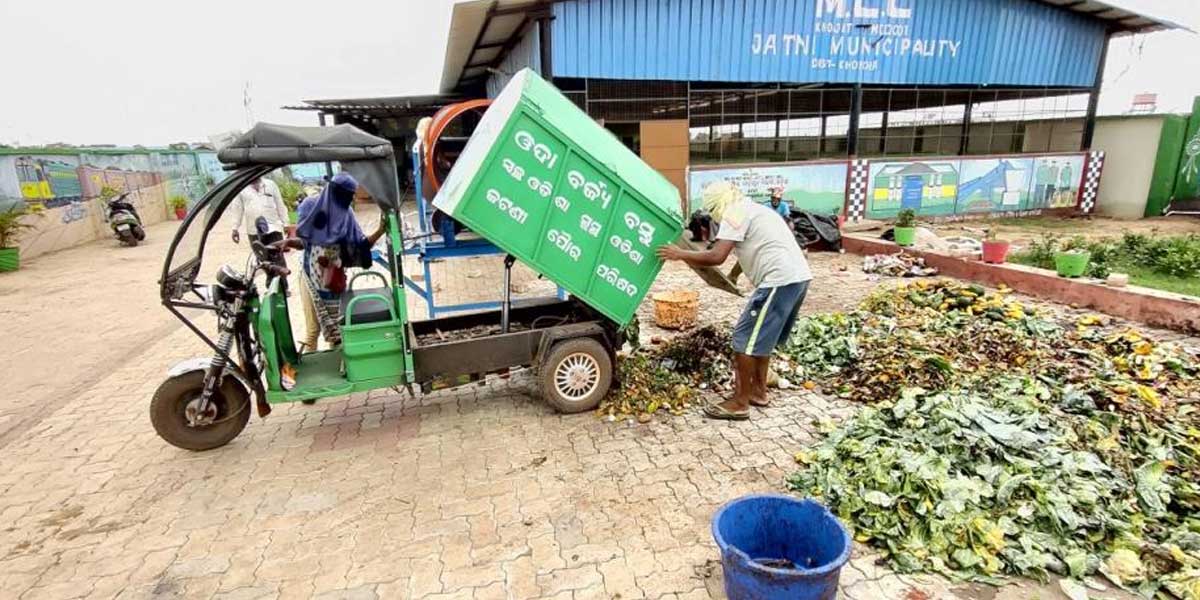
The Comptroller and Auditor General of India (CAG) has pointed out gross irregularities in solid waste management by Odisha’s state government and civic bodies in urban areas, from failure to frame any strategy or policy for safe disposal of waste to non-collection of user fees from the generators.

The CAG in its latest performance audit report on ‘Waste Management in Urban Areas’ underlined that the Odisha government did not initiate any strategy or policy to minimise, reuse or recycle waste till March 2021, leading to dumping of 90% of the waste at landfill and dump sites without processing.

“The Solid Waste Management (SWM) Rules 2016, notified on April 8, 2016, stipulated that the state government should prepare a State Policy and strategy on SWM within one year of notification of the Rules. However, the Housing and Urban Development (H&UD) department didn’t notify a State Policy for integrated SWM till February 2022,” the CAG stated.

In Smart Cities, a total 2,956 tonne of solid waste per day and 35,057 tonne of plastic waste per annum was disposed of without processing in the period of 2015-20. The audit further observed that the ULBs failed to provide basic facilities to households such as issuing bins for source segregation, collection of solid waste, sweeping of streets, lane, roads of wards of ULBs on daily basis and creation of public awareness, among other things.

See also:
UP team visits Indore to study solid waste management
After C&D plant protests, Nashik to create green buffer zone


The Comptroller and Auditor General of India (CAG) has pointed out gross irregularities in solid waste management by Odisha’s state government and civic bodies in urban areas, from failure to frame any strategy or policy for safe disposal of waste to non-collection of user fees from the generators. The CAG in its latest performance audit report on ‘Waste Management in Urban Areas’ underlined that the Odisha government did not initiate any strategy or policy to minimise, reuse or recycle waste till March 2021, leading to dumping of 90% of the waste at landfill and dump sites without processing. “The Solid Waste Management (SWM) Rules 2016, notified on April 8, 2016, stipulated that the state government should prepare a State Policy and strategy on SWM within one year of notification of the Rules. However, the Housing and Urban Development (H&UD) department didn’t notify a State Policy for integrated SWM till February 2022,” the CAG stated. In Smart Cities, a total 2,956 tonne of solid waste per day and 35,057 tonne of plastic waste per annum was disposed of without processing in the period of 2015-20. The audit further observed that the ULBs failed to provide basic facilities to households such as issuing bins for source segregation, collection of solid waste, sweeping of streets, lane, roads of wards of ULBs on daily basis and creation of public awareness, among other things. See also: UP team visits Indore to study solid waste managementAfter C&D plant protests, Nashik to create green buffer zone

Next Story
Infrastructure Urban

Implementation Status of Jal Jeevan Mission

Since August 2019 the Government has implemented Jal Jeevan Mission to provide assured potable water through household tap connections in rural India. At the start of the mission only 32.3 million (mn) rural households, representing 16.7 per cent, were reported to have tap water connections. States and union territories have reported that 125.8 mn additional rural households have since been provided with tap connections. As a result, of about 193.6 mn rural households roughly 158.2 mn, or 81.71 per cent, are reported to have tap water supply at home.\n\nThe State, district and village level st..

Next Story
Infrastructure Urban

Jal Jeevan Mission Reaches Eighty One Per Cent Rural Coverage

The Government reported substantial progress under the Jal Jeevan Mission, launched in August 2019 to provide tap water to every rural household. At launch only 32.3 million (mn) rural households had tap connections and states and Union territories reported provision of 125.8 mn additional households by March 2026. Consequently, out of about 193.6 mn rural households around 158.2 mn, or 81.71 per cent, are reported to have tap water at home. The Finance Minister announced extension of the mission until 2028 in the 2025-26 budget speech. The Swachh Bharat Mission Grameen, launched in October 20..

Next Story
Infrastructure Urban

Empowering Local Governance for Sustainable Rural Water Supply

The Ministry of Jal Shakti has aligned the Jal Jeevan Mission (JJM) with the 73rd Amendment to strengthen village level planning and community ownership of water supply. Gram Panchayats, village water and sanitation committees and Pani Samitis are to plan, implement, manage and maintain piped water systems, with gram sabha processes formalising handover and oversight. Implementation support agencies including non government organisations, community based organisations and self help groups have been empanelled to train local committees and promote women participation. Under JJM, the department ..

Advertisement

Subscribe to Our Newsletter

Get daily newsletters around different themes from Construction world.

STAY CONNECTED

Advertisement

Advertisement

Advertisement