

Delhi Steps Up Drainage Works to Tackle Waterlogging
WATER & WASTE

Delhi Steps Up Drainage Works to Tackle Waterlogging

The four priority projects include the Mundka Halt–Supplementary Drain, the MB Road Storm Water Drain, the Kirari–Rithala Trunk Drain and the storm water drain along Rohtak Road (NH-10). The government said these projects form the backbone of a long-term strategy to modernise Delhi’s drainage and sewerage systems in line with current urban, climatic and population pressures.

Gupta said Delhi’s original Drainage Master Plan was prepared in the 1970s and was never comprehensively revised despite rapid population growth and large-scale construction. As a result, drainage capacity failed to keep pace with urban expansion, leading to recurring waterlogging across several parts of the city. The revised approach factors in Delhi’s geography, climate variability and present-day infrastructure demands to prevent future flooding.

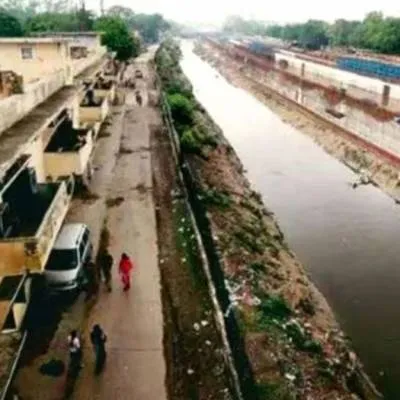
In west Delhi’s Kirari, Mundka, Bawana and Nangloi areas, a new 4.5 km trunk drain is proposed parallel to the railway line to address long-standing drainage issues. The project, being implemented by the Irrigation and Flood Control Department, involves an estimated investment of Rs 2.21 billion. Designed to drain rainwater from a catchment of about 1,520 acres, the drain will have a discharge capacity of 760 cusecs to handle peak monsoon flows. It will originate near Mundka Halt station and merge with the Supplementary Drain, integrating several secondary drains along the route. An MoU has already been signed with the Railways, and the project is targeted for completion within 15 months of final approvals.

In south Delhi, persistent flooding along the Lado Sarai T-point to Pul Prahladpur stretch has led to the inclusion of the MB Road Storm Water Drain in the master plan. The project covers an 11.38 km road stretch, with drains on both sides totalling 22.76 km. With an estimated cost of Rs 3.88 billion, the project is being executed by the Public Works Department and is scheduled for completion within 2.5 years, including pre-construction work. The project also includes provisions for shifting utilities, building footpaths and transplanting or felling around 500 trees.

Another major intervention is the 7.2 km Kirari–Rithala trunk drain in north-west Delhi, being developed by the Delhi Development Authority at a cost of Rs 2.50 billion. Designed with a discharge capacity of 1,160 cusecs, around 600 metres of the drain has already been constructed. Work had stalled due to pending tree-felling permissions, which have now been resolved.

Along Rohtak Road (NH-10), improvement of storm water drains is also under way on both sides of the corridor from Nangloi to Hirankudna and from Tikri Border to Hirankudna. This PWD project has an estimated cost of Rs 1.84 billion, of which Rs 1.05 billion has been provided by the central government in 2025–26 under the Special Assistance to States for Capital Investment scheme. The project is targeted for completion by March 2026.

The Chief Minister said the upgraded Drainage Master Plan aims to enhance the capacity of major drains, ensure faster discharge of rainwater into the Yamuna, ease pressure on sewer lines and deliver a permanent solution to monsoon waterlogging. Once completed, the projects are expected to provide sustained relief to large parts of Delhi that have long struggled with flooding during the rainy season.

The four priority projects include the Mundka Halt–Supplementary Drain, the MB Road Storm Water Drain, the Kirari–Rithala Trunk Drain and the storm water drain along Rohtak Road (NH-10). The government said these projects form the backbone of a long-term strategy to modernise Delhi’s drainage and sewerage systems in line with current urban, climatic and population pressures. Gupta said Delhi’s original Drainage Master Plan was prepared in the 1970s and was never comprehensively revised despite rapid population growth and large-scale construction. As a result, drainage capacity failed to keep pace with urban expansion, leading to recurring waterlogging across several parts of the city. The revised approach factors in Delhi’s geography, climate variability and present-day infrastructure demands to prevent future flooding. In west Delhi’s Kirari, Mundka, Bawana and Nangloi areas, a new 4.5 km trunk drain is proposed parallel to the railway line to address long-standing drainage issues. The project, being implemented by the Irrigation and Flood Control Department, involves an estimated investment of Rs 2.21 billion. Designed to drain rainwater from a catchment of about 1,520 acres, the drain will have a discharge capacity of 760 cusecs to handle peak monsoon flows. It will originate near Mundka Halt station and merge with the Supplementary Drain, integrating several secondary drains along the route. An MoU has already been signed with the Railways, and the project is targeted for completion within 15 months of final approvals. In south Delhi, persistent flooding along the Lado Sarai T-point to Pul Prahladpur stretch has led to the inclusion of the MB Road Storm Water Drain in the master plan. The project covers an 11.38 km road stretch, with drains on both sides totalling 22.76 km. With an estimated cost of Rs 3.88 billion, the project is being executed by the Public Works Department and is scheduled for completion within 2.5 years, including pre-construction work. The project also includes provisions for shifting utilities, building footpaths and transplanting or felling around 500 trees. Another major intervention is the 7.2 km Kirari–Rithala trunk drain in north-west Delhi, being developed by the Delhi Development Authority at a cost of Rs 2.50 billion. Designed with a discharge capacity of 1,160 cusecs, around 600 metres of the drain has already been constructed. Work had stalled due to pending tree-felling permissions, which have now been resolved. Along Rohtak Road (NH-10), improvement of storm water drains is also under way on both sides of the corridor from Nangloi to Hirankudna and from Tikri Border to Hirankudna. This PWD project has an estimated cost of Rs 1.84 billion, of which Rs 1.05 billion has been provided by the central government in 2025–26 under the Special Assistance to States for Capital Investment scheme. The project is targeted for completion by March 2026. The Chief Minister said the upgraded Drainage Master Plan aims to enhance the capacity of major drains, ensure faster discharge of rainwater into the Yamuna, ease pressure on sewer lines and deliver a permanent solution to monsoon waterlogging. Once completed, the projects are expected to provide sustained relief to large parts of Delhi that have long struggled with flooding during the rainy season.

Next Story
Infrastructure Energy

ONGC Caps Mori-5 Well in Five Days After Blowout

Oil and Natural Gas Corporation Limited (ONGC) has successfully established well control at the Mori-5 well, completing the capping operation within a record five days. The achievement underscores ONGC’s strong blowout response capability and operational discipline in managing critical field incidents.The blowout occurred on 5 January 2026 during service operations at the well being carried out by PEC contractor M/s Deep Industries Limited. ONGC immediately activated its in-house Crisis Management framework and mobilised specialised manpower and equipment to ensure rapid, safe and controlled..

Next Story
Infrastructure Urban

NIIT MTS Acquires SweetRush for Up to $26 Million

NIIT Learning Systems Limited, through its NIIT Managed Training Services (NIIT MTS) arm, has recently acquired 100 per cent of US-based SweetRush, Inc for an aggregate consideration of up to USD 26 million. The transaction was completed via NIIT MTS’ wholly owned subsidiary, NIIT (USA), Inc., and includes performance-linked earnouts over the next five years, subject to customary adjustments.Headquartered in San Francisco, SweetRush was founded in 2001 by Arturo Schwartzberg and Andrei Hedstrom. The company employs over 100 professionals, supported by an extended network of learning experts ..

Next Story
Infrastructure Urban

Lemon Tree–Fleur Restructuring to Create Two Focused Platforms

Lemon Tree Hotels Limited and Fleur Hotels Limited have recently announced that their Boards have approved a Composite Scheme of Arrangement to simplify group structure, sharpen strategic focus and unlock long-term shareholder value, subject to regulatory and shareholder approvals.The reorganisation will result in two distinct yet complementary platforms. Lemon Tree Hotels will operate as a pure-play, asset-light hotel management and brand platform, while Fleur Hotels, a subsidiary of Lemon Tree, will emerge as a large-scale hotel ownership and development platform with a strong growth pipelin..

Advertisement

Subscribe to Our Newsletter

Get daily newsletters around different themes from Construction world.

STAY CONNECTED

Advertisement

Advertisement

Advertisement

Advertisement

Open In App