Jammu And Kashmir Processes Nearly 87 Per Cent Of Daily Waste
WATER & WASTE

Jammu And Kashmir Processes Nearly 87 Per Cent Of Daily Waste

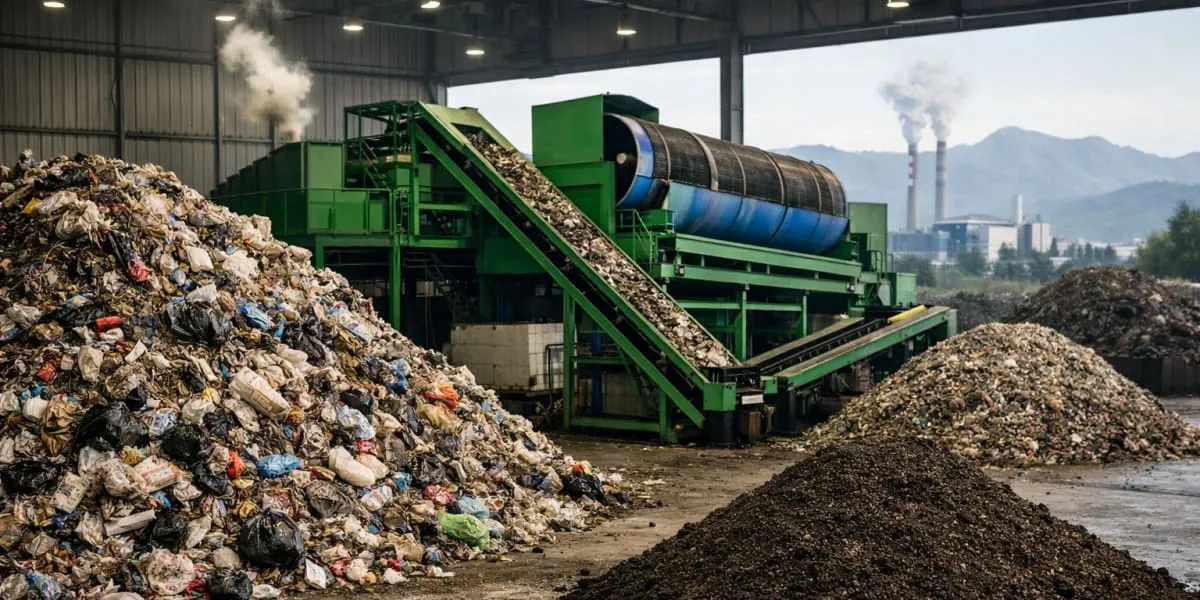
The Centre told the Rajya Sabha that Jammu and Kashmir processes nearly 87 per cent of the municipal solid waste generated in the Union Territory each day, according to data placed before the house. The figures showed that the region generates around 1,007 metric tonne (t) of municipal solid waste per day, of which 873 t are processed through reported waste?processing mechanisms. The processing figure was based on mechanisms reported by local urban bodies and reflects declared capacities rather than independent verification.

The information was supplied by the Ministry of Housing and Urban Affairs in response to a parliamentary question on scientific processing of municipal solid waste across the country. At the national level, States and Union Territories reported total municipal waste generation of 162,372 t per day, with 131,530 t per day being processed. Nationally, the processed total amounts to roughly 81 per cent of generated waste, indicating a substantial proportion is being managed through reported systems.

The Centre said it is providing financial assistance to States and Union Territories under the Solid Waste Management component of the Swachh Bharat Mission?Urban 2.0 for establishing facilities such as material recovery facilities, waste?to?compost plants, bio?methanation units and refuse?derived fuel facilities. It added that support also covers waste?to?energy plants, construction and demolition waste plants and compressed biogas plants. The assistance aims to augment local treatment capacity and promote technology adoption.

The data reflect substantial processing of municipal waste in Jammu and Kashmir while underscoring the need for continued investment in treatment technologies and local capacity building. In Jammu and Kashmir an estimated 134 t per day remain unprocessed, while at the national level about 30,842 t per day were reported as unprocessed, signalling continuing gaps. Officials indicated that reporting is based on mechanisms declared by urban local bodies, that capacities differ across districts, and that the Centre will continue to support infrastructure development and technical assistance.

The Centre told the Rajya Sabha that Jammu and Kashmir processes nearly 87 per cent of the municipal solid waste generated in the Union Territory each day, according to data placed before the house. The figures showed that the region generates around 1,007 metric tonne (t) of municipal solid waste per day, of which 873 t are processed through reported waste?processing mechanisms. The processing figure was based on mechanisms reported by local urban bodies and reflects declared capacities rather than independent verification. The information was supplied by the Ministry of Housing and Urban Affairs in response to a parliamentary question on scientific processing of municipal solid waste across the country. At the national level, States and Union Territories reported total municipal waste generation of 162,372 t per day, with 131,530 t per day being processed. Nationally, the processed total amounts to roughly 81 per cent of generated waste, indicating a substantial proportion is being managed through reported systems. The Centre said it is providing financial assistance to States and Union Territories under the Solid Waste Management component of the Swachh Bharat Mission?Urban 2.0 for establishing facilities such as material recovery facilities, waste?to?compost plants, bio?methanation units and refuse?derived fuel facilities. It added that support also covers waste?to?energy plants, construction and demolition waste plants and compressed biogas plants. The assistance aims to augment local treatment capacity and promote technology adoption. The data reflect substantial processing of municipal waste in Jammu and Kashmir while underscoring the need for continued investment in treatment technologies and local capacity building. In Jammu and Kashmir an estimated 134 t per day remain unprocessed, while at the national level about 30,842 t per day were reported as unprocessed, signalling continuing gaps. Officials indicated that reporting is based on mechanisms declared by urban local bodies, that capacities differ across districts, and that the Centre will continue to support infrastructure development and technical assistance.

Related Stories

Gold Stories

Next Story
Infrastructure Urban

Sabarmati Riverfront Two Plots Up for Auction at Rs2.24 bn Base Price

Two commercial plots on the western bank of the Sabarmati Riverfront will be auctioned with a base price of Rs 112 crore each, equivalent to Rs 1.12 bn apiece and Rs 2.24 billion in total. The parcels are located adjacent to the Metro Rail Bridge in Ahmedabad and form the first commercial offering after a prolonged pause. The Riverfront Development Corporation has framed the sale as part of a phased commercial release to revive development along the riverfront. The combined base valuation has been set by the corporation to reflect market rates along the riverfront. The corporation has fixed a ..

Next Story
Infrastructure Urban

Andhra Pradesh to Connect Over One Million Streetlights

Andhra Pradesh will undertake a statewide smart streetlighting programme across all 123 Urban Local Bodies (ULBs), bringing around 1.05 million (mn) streetlights under an AI enabled monitoring and management system. The programme will be implemented by Energy Efficiency Services Limited (EESL) with the Commissioner and Director of Municipal Administration under the state Municipal Administration and Urban Development Department. The project aims to convert conventional streetlighting into a digitally managed municipal service monitored and maintained remotely. The initial phase will cover abou..

Next Story
Infrastructure Urban

AMC To Procure Four Machines For Guard Rail Cleaning

Ahmedabad Municipal Corporation will introduce four specialised machines for cleaning guard railings along major roads and the central verges of BRTS and Metro corridors. The civic body plans to replace manual labour with mechanised cleaning to improve maintenance of road infrastructure and greenery. The purchase is estimated at Rs 82.8 million (mn), excluding GST. The proposal sets the base price of each machine at about Rs 20.7 million (mn) so four units total Rs 82.8 million (mn) before GST. 18 per cent GST will be applicable separately. During the warranty period each machine will operate ..

Advertisement

Subscribe to Our Newsletter

Get daily newsletters around different themes from Construction world.

STAY CONNECTED

Advertisement