


Kerala Firm Partners with J&K Govt to Protect Dal Lake
WATER & WASTE

Kerala Firm Partners with J&K Govt to Protect Dal Lake

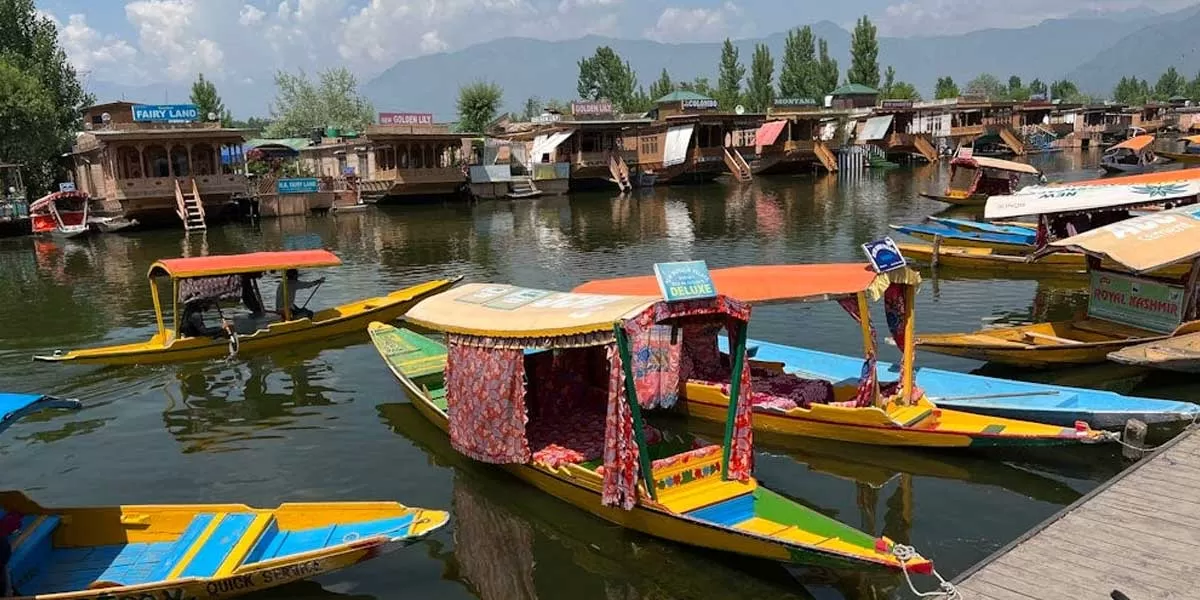
Samudra Planet, a Kerala-based company, has partnered with the Lake Conservation and Management Authority (LCMA) to address the longstanding issue of fecal waste disposal in Dal Lake. The company is utilising advanced microbial technology developed by the Defence Research and Development Organisation (DRDO) through a technology transfer agreement. This technology has been implemented by installing bio-digesters on a select number of houseboats on the lake, providing a sustainable and eco-friendly solution to protect the water body.

Dal Lake, a popular tourist destination, has faced significant environmental challenges due to the growing number of houseboats. The discharge of untreated human waste directly into the lake has contributed to water pollution, threatening its delicate ecosystem and affecting local communities dependent on it. The bio-digesters use anaerobic bacteria to break down human waste, converting it into pathogen-free, odourless water that can be safely discharged without contaminating the lake. The system is designed to be maintenance-free, durable, and customizable to meet the unique needs of houseboats.

The initiative follows the recommendations of a committee headed by E Sreedharan, former chief of the Delhi Metro Rail Corporation. The committee, established in 2018 by the Jammu and Kashmir High Court, aimed to identify measures to restore and preserve Dal Lake, which has been shrinking due to encroachment and untreated waste. The introduction of bio-digesters is seen as a critical step in combating pollution and restoring the lake’s ecological balance.

Samudra Planet’s collaboration with the Dal Lake Authority is expected to inspire other regions across India to adopt bio-digesters for protecting water bodies facing similar challenges. The technology ensures zero contamination of groundwater, promoting environmental sustainability in water conservation efforts.

Samudra Planet, a Kerala-based company, has partnered with the Lake Conservation and Management Authority (LCMA) to address the longstanding issue of fecal waste disposal in Dal Lake. The company is utilising advanced microbial technology developed by the Defence Research and Development Organisation (DRDO) through a technology transfer agreement. This technology has been implemented by installing bio-digesters on a select number of houseboats on the lake, providing a sustainable and eco-friendly solution to protect the water body. Dal Lake, a popular tourist destination, has faced significant environmental challenges due to the growing number of houseboats. The discharge of untreated human waste directly into the lake has contributed to water pollution, threatening its delicate ecosystem and affecting local communities dependent on it. The bio-digesters use anaerobic bacteria to break down human waste, converting it into pathogen-free, odourless water that can be safely discharged without contaminating the lake. The system is designed to be maintenance-free, durable, and customizable to meet the unique needs of houseboats. The initiative follows the recommendations of a committee headed by E Sreedharan, former chief of the Delhi Metro Rail Corporation. The committee, established in 2018 by the Jammu and Kashmir High Court, aimed to identify measures to restore and preserve Dal Lake, which has been shrinking due to encroachment and untreated waste. The introduction of bio-digesters is seen as a critical step in combating pollution and restoring the lake’s ecological balance. Samudra Planet’s collaboration with the Dal Lake Authority is expected to inspire other regions across India to adopt bio-digesters for protecting water bodies facing similar challenges. The technology ensures zero contamination of groundwater, promoting environmental sustainability in water conservation efforts.

Next Story
Resources

Anant Raj Appoints Anish Sarin as Director

Anant Raj has appointed Anish Sarin as Director on its Board, marking a key step in the company’s leadership transition and long-term growth strategy. The announcement was made during the company’s Q4 and FY26 results declaration, reflecting the induction of next-generation leadership as the company expands across real estate, cloud infrastructure and data centre businesses. Anish Sarin, grandson of veteran industrialist Ashok Sarin, represents the emerging leadership at Anant Raj. Educated at Regent’s University London, he brings a global business outlook along with a strong focus on t..

Next Story
Technology

Vedanta eyes AI-led value growth

Vedanta Group expects to unlock USD 300–400 million in additional value over the next three years through large-scale deployment of AI-led industrial technologies across its businesses. The group said its V-Spark DeepTech Ventures platform has already delivered nearly four times return on investment since inception.Vedanta is scaling AI, predictive analytics, Industrial Internet of Things, digital twins, machine learning, automation and connected manufacturing technologies across its metals, mining, energy and industrial operations. These deployments are aimed at improving productivity, lowe..

Next Story
Infrastructure Urban

Hindustan Zinc inks pact with Group Nirmal

Hindustan Zinc has signed an MoU with Group Nirmal to set up a zinc wire manufacturing facility at its Zinc Industrial Park in Khankhala, Bhilwara district, Rajasthan. The partnership will expand downstream manufacturing activity and support value-added zinc applications in India.Under the agreement, Group Nirmal will manufacture zinc wire products using Hindustan Zinc’s Special High Grade zinc. The products will cater to infrastructure, renewable energy, automotive and industrial engineering sectors.Zinc wire is used in thermal spray coating and metallising processes to protect steel struct..

Advertisement

Subscribe to Our Newsletter

Get daily newsletters around different themes from Construction world.

STAY CONNECTED

Advertisement

Advertisement

Advertisement