MoPSW Draws Up National Water Metro Guidelines for 18 Locations
WATER & WASTE

MoPSW Draws Up National Water Metro Guidelines for 18 Locations

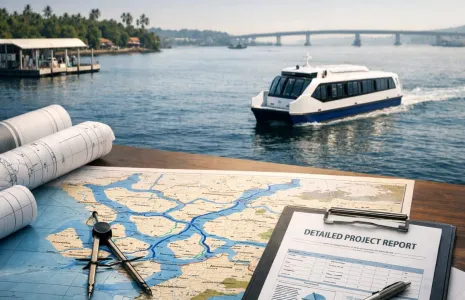
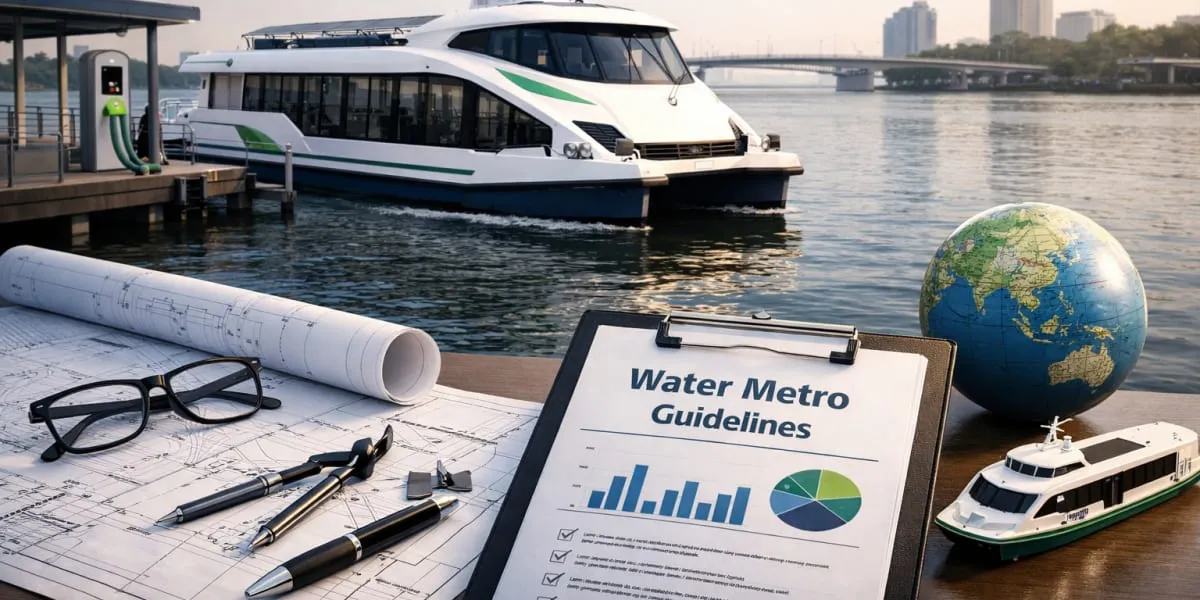
The Ministry of Ports, Shipping and Waterways (MoPSW) is preparing the National Water Metro Guidelines, 2026 to plan, build and operate eco-friendly water-based public transport across the country. The guidelines will establish safety standards, promote clean travel and set parameters for zero and low-emission technology, standard rules, financing options and environmental safeguards. The effort aims to improve coordination between water transport and other modes while supporting urban mobility ambitions.

The Inland Waterways Authority of India (IWAI), which works under the Ministry, has initiated feasibility studies for urban Water Metro systems at eighteen locations, with studies for fifteen already complete. The sites named in the official release include Ayodhya, Dhubri, Goa, Guwahati, Kollam, Kolkata, Prayagraj, Patna, Srinagar, Varanasi, Mumbai, Vasai, Mangalore on the Gurupura River, the Gandhinagar–Ahmedabad corridor on the Sabarmati River, Alleppey, the Lakshadweep Islands and the Andaman and Nicobar Islands. These locations span twelve states and union territories and were identified in the MoPSW press release dated 21 February 2025.

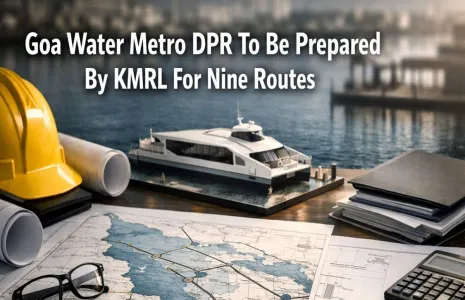
Kochi Metro Rail Limited (KMRL) has been appointed to carry out the studies and to assess technical feasibility, required infrastructure and operational models. The studies will evaluate vessel requirements, terminal and berth design, integration with land transport and the financial viability of routes. The aim is to provide a standardised template for project preparation and to inform detailed project reports.

Four hybrid electric vessels are now operating in Varanasi, Ayodhya, Patna and Kolkata and one Hydrogen Fuel Cell vessel has been deployed in Varanasi under other ministry initiatives reported in the official public release on 31 July, 2026. The guidelines are intended to guide procurement, safety protocols and environmental impact assessment while encouraging low-emission propulsion and clean energy adoption. MoPSW will use the feasibility outcomes to prioritise corridors and support stakeholders in moving projects from study to implementation.

The Ministry of Ports, Shipping and Waterways (MoPSW) is preparing the National Water Metro Guidelines, 2026 to plan, build and operate eco-friendly water-based public transport across the country. The guidelines will establish safety standards, promote clean travel and set parameters for zero and low-emission technology, standard rules, financing options and environmental safeguards. The effort aims to improve coordination between water transport and other modes while supporting urban mobility ambitions. The Inland Waterways Authority of India (IWAI), which works under the Ministry, has initiated feasibility studies for urban Water Metro systems at eighteen locations, with studies for fifteen already complete. The sites named in the official release include Ayodhya, Dhubri, Goa, Guwahati, Kollam, Kolkata, Prayagraj, Patna, Srinagar, Varanasi, Mumbai, Vasai, Mangalore on the Gurupura River, the Gandhinagar–Ahmedabad corridor on the Sabarmati River, Alleppey, the Lakshadweep Islands and the Andaman and Nicobar Islands. These locations span twelve states and union territories and were identified in the MoPSW press release dated 21 February 2025. Kochi Metro Rail Limited (KMRL) has been appointed to carry out the studies and to assess technical feasibility, required infrastructure and operational models. The studies will evaluate vessel requirements, terminal and berth design, integration with land transport and the financial viability of routes. The aim is to provide a standardised template for project preparation and to inform detailed project reports. Four hybrid electric vessels are now operating in Varanasi, Ayodhya, Patna and Kolkata and one Hydrogen Fuel Cell vessel has been deployed in Varanasi under other ministry initiatives reported in the official public release on 31 July, 2026. The guidelines are intended to guide procurement, safety protocols and environmental impact assessment while encouraging low-emission propulsion and clean energy adoption. MoPSW will use the feasibility outcomes to prioritise corridors and support stakeholders in moving projects from study to implementation.

Next Story
Infrastructure Transport

Surya Roshni delivers customised lighting for NCRTC RRTS stations

Surya Roshni has supplied customised indoor lighting solutions for 18 elevated stations on the National Capital Region Transport Corporation's (NCRTC) Rapid Rail Transit System (RRTS), strengthening its presence in India's infrastructure lighting segment.The project involved the design and deployment of lighting systems for platforms, concourses, foot overbridges (FOBs) and back-of-house (BOH) areas. According to the company, the luminaires were developed specifically to meet NCRTC's design, operational and performance requirements rather than using standard products.Surya introduced two custo..

Next Story
Real Estate

Hilton debuts Tapestry Collection brand in Vietnam

Hilton has opened NHAAN Resort & Spa Hoi An, Tapestry Collection by Hilton, marking the debut of the Tapestry Collection brand in Vietnam and expanding its lifestyle hospitality portfolio in Southeast Asia.Located along the Co Co River in Cam Thanh village, the 174-key resort provides access to Hoi An Ancient Town, Cua Dai Beach and the Cam Thanh Nipa Forest. The property has been designed by Vietnamese architect Vo Trong Nghia, incorporating biophilic architecture, locally sourced materials and riverfront landscapes.The resort offers a mix of guest rooms and suites, including family-frien..

Next Story
Building Material

Electrent expands lithium energy storage system portfolio

Electrent Energy has expanded its lithium-based energy storage portfolio with the launch of the ESS 850 and ESS 1050, targeting compact and maintenance-free power backup solutions for Indian homes.The new systems integrate a Home UPS and a LiFePO4 lithium battery into a single unit, extending the company's product range following the launch of its ESS 1350 and ESS 2500 models.Designed for apartments and smaller homes, the ESS 850 provides up to 1 hour 15 minutes of backup, while the ESS 1050 offers up to 1 hour 45 minutes on a typical 400 W household load. The systems can power essential appli..

Advertisement

Subscribe to Our Newsletter

Get daily newsletters around different themes from Construction world.

STAY CONNECTED

Advertisement

Advertisement

Advertisement